
HID 920PHRNEK00203 vs HID HID-920-PTNN: Specification Comparison
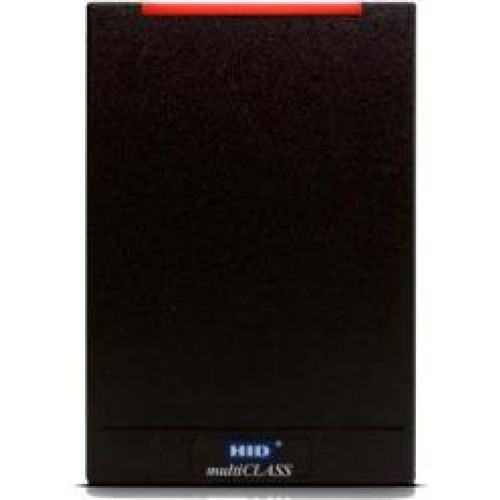
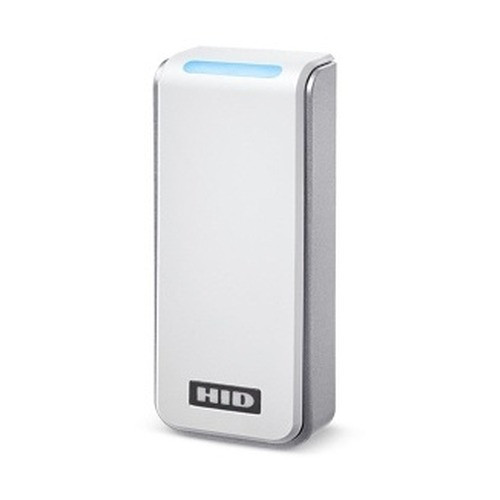
Both the HID 920PHRNEK00203 and the HID-920-PTNN are HID Multiclass SE RP40 series wall-mount access control readers supporting dual-frequency credential technologies (125 kHz and 13.56 MHz). A buyer evaluating a mid-range, wired OSDP reader for a mixed-credential facility would logically cross-shop these two units. The comparison focuses on credential breadth and encryption depth, physical form factor and environmental rating, and integration and power characteristics — the three axes that most differentiate readers in this class.
In This Guide
- Which reader supports a broader credential portfolio and stronger on-reader encryption?
- How do the two readers differ in physical form factor, housing, and environmental suitability?
- What are the differences in communication protocol implementation, power characteristics, and panel integration?
- Which should you choose: the 920PHRNEK00203 or the HID-920-PTNN?
- Side-by-Side Specs
- FAQ
Which reader supports a broader credential portfolio and stronger on-reader encryption?
The 920PHRNEK00203 specifies explicit support for six distinct credential technologies: 125 kHz Prox, iCLASS, MIFARE, DESFire, SEOS, and NFC/13.56 MHz. It further documents a Secure Identity Object (SIO) encryption layer and a FIPS 75-bit Secure Element on the reader itself, meaning credentials are encrypted end-to-end without relying solely on panel-side security.
The HID-920-PTNN specifies dual-frequency support (13.56 MHz and 125 kHz) covering cards, fobs, and HID Mobile Access-compatible mobile devices. No specific named credential protocols (e.g., iCLASS, DESFire, SEOS) are listed in its provided specifications, and no on-reader encryption standard or FIPS rating is stated. Mobile Access compatibility is listed as configurable, which is an advantage not documented for the 920PHRNEK00203.
How do the two readers differ in physical form factor, housing, and environmental suitability?
The 920PHRNEK00203 is documented with an IP65 ingress protection rating, a black (or optionally white with silver trim) housing, a pigtail wired configuration, and a weight of 1 lb. IP65 resistance to dust and low-pressure water jets makes it suitable for light industrial or semi-exposed mounting locations. A keypad variant (2×6 or 3×4 layout) is also noted in the provided specifications.
The HID-920-PTNN is described as a wall-switch-style proximity card reader with a black color and wired DC connectivity. No IP rating is stated in the provided specifications, which limits the ability to confirm suitability for anything beyond standard indoor environments. No weight, keypad option, or specific housing material is documented for this model.
What are the differences in communication protocol implementation, power characteristics, and panel integration?
Both readers implement OSDP (Open Supervised Device Protocol). The 920PHRNEK00203 specifies OSDP over RS-485 full-duplex (485FDX), which supports encrypted two-way communication and, per the provided specifications, remote firmware updates — a meaningful operational advantage for large or distributed deployments. No specific OSDP variant or RS-485 wiring topology is stated for the HID-920-PTNN beyond 'wired interface.'
Power management is documented only for the HID-920-PTNN, which claims up to 59% energy reduction through intelligent power management — a spec absent from the 920PHRNEK00203's provided data. The HID-920-PTNN also carries Environmental Product Declaration and Green Circle certifications, relevant for LEED-driven or sustainability-conscious procurement. The 920PHRNEK00203 documents a US country of origin; no such detail is provided for the HID-920-PTNN.
Which should you choose: the 920PHRNEK00203 or the HID-920-PTNN?
Our take: The 920PHRNEK00203 is the stronger choice when credential diversity, documented on-reader encryption, and environmental resilience are primary requirements. It explicitly names six credential technologies — Prox, iCLASS, MIFARE, DESFire, SEOS, and NFC — versus the HID-920-PTNN's unspecified dual-frequency coverage, and backs security with a FIPS 75-bit Secure Element not documented on the competing model. Its IP65 rating confirms suitability for light industrial or partially exposed locations where the HID-920-PTNN's environmental rating is unstated. Conversely, the HID-920-PTNN's documented 59% power reduction and sustainability certifications make it the more appropriate selection for energy-conscious or LEED-credited facilities, and its confirmed HID Mobile Access compatibility addresses sites moving toward smartphone-based credentials. Buyers standardized on OSDP panels will find both readers compatible, but should confirm the 920PHRNEK00203's RS-485 FDX wiring requirement against their panel's port configuration before specifying.
Side-by-Side Comparison
Spec-for-spec, from manufacturer data.
| Specification | HID 920PHRNEK00203 | HID HID-920-PTNN |
|---|---|---|
| Product Series | RP40 Multiclass SE | MultiCLASS SE RP40 |
| SKU | 920PHRNEK00203 | HID-920-PTNN |
| Reader Type | Proximity / Keypad / Multiclass | Wall Switch Proximity |
| 125 kHz Prox Support | Yes | Yes |
| 13.56 MHz Support | Yes (iCLASS, MIFARE, DESFire, SEOS, NFC) | Yes (specific protocols not stated) |
| Named Credential Technologies | Prox, iCLASS, MIFARE, DESFire, SEOS, NFC | Cards, fobs, mobile (protocols unspecified) |
| HID Mobile Access | Not stated | Configurable — Yes |
| On-Reader Encryption | FIPS 75-bit Secure Element (SIO) | Not stated |
| Communication Protocol | OSDP over RS-485 FDX | OSDP (wired; variant not stated) |
| Remote Firmware Update | Yes (via OSDP) | Not stated |
| IP Rating | IP65 | Not stated |
| Keypad Option | Yes (2×6 or 3×4) | Not stated |
| Housing Color | Black (white w/ silver trim optional) | Black |
| Power Management | Not stated | Up to 59% energy reduction |
| Sustainability Certifications | Not stated | EPD and Green Circle certified |
| Warranty | 2-year | 2-year |
| Weight | 1 lb | Not stated |
| Country of Origin | US | Not stated |
Frequently Asked Questions
Which should you choose: the 920PHRNEK00203 or the HID-920-PTNN?
The 920PHRNEK00203 is the stronger choice when credential diversity, documented on-reader encryption, and environmental resilience are primary requirements. It explicitly names six credential technologies — Prox, iCLASS, MIFARE, DESFire, SEOS, and NFC — versus the HID-920-PTNN's unspecified dual-frequency coverage, and backs security with a FIPS 75-bit Secure Element not documented on the competing model. Its IP65 rating confirms suitability for light industrial or partially exposed locations where the HID-920-PTNN's environmental rating is unstated. Conversely, the HID-920-PTNN's documented 59% power reduction and sustainability certifications make it the more appropriate selection for energy-conscious or LEED-credited facilities, and its confirmed HID Mobile Access compatibility addresses sites moving toward smartphone-based credentials. Buyers standardized on OSDP panels will find both readers compatible, but should confirm the 920PHRNEK00203's RS-485 FDX wiring requirement against their panel's port configuration before specifying.
Is the 920PHRNEK00203 or the HID-920-PTNN better for a site still running legacy 125 kHz Prox cards alongside newer iCLASS or SEOS credentials?
The 920PHRNEK00203 is the documented choice for that scenario. Its provided specifications explicitly list 125 kHz Prox, iCLASS, MIFARE, DESFire, SEOS, and NFC as supported technologies on a single unit. The HID-920-PTNN's specifications confirm dual-frequency (125 kHz / 13.56 MHz) coverage but do not name specific high-frequency protocols such as iCLASS or SEOS, so compatibility with those credential types cannot be confirmed from the available data.
Which reader is better suited for outdoor or semi-exposed mounting locations?
Based on the provided specifications, the 920PHRNEK00203 is the only model with a documented ingress protection rating (IP65), confirming resistance to dust and directed water spray. No IP rating is stated for the HID-920-PTNN, so its suitability for outdoor or semi-exposed locations cannot be verified from the available spec data alone.
Does either reader support mobile access via smartphone, and does that affect panel compatibility?
The HID-920-PTNN documents configurable HID Mobile Access compatibility, covering smartphones alongside cards and fobs. The 920PHRNEK00203 lists NFC/13.56 MHz as a supported credential type, but HID Mobile Access compatibility is not explicitly stated in its provided specifications. Both readers use OSDP, which is widely supported across third-party access control panels; the 920PHRNEK00203 further specifies RS-485 FDX wiring, which buyers should confirm against their panel's available ports.
More Access Control Reader Comparisons
- HID 920PHRNEK00203 vs Kantech KT-SG-MT-KP2
- HID 920PHRNEK00203 vs Kantech KT-SG-MT2
- HID 920PHRNEK00203 vs DMP USB
- HID 920PHRNEK00203 vs HID 920NWNNEKE00BM
- HID HID-920-PTNN vs Kantech KT-SG-MT-KP2
- HID HID-920-PTNN vs Kantech KT-SG-MT2
Access Control Reader Buying Guides
Get a Second Opinion on Your Camera Choice
Share your site layout, coverage goals, and budget. Our team will validate the camera selection, flag anything we would change, and recommend products that match the use case.