
Hanwha XRN-3220B4 vs Kantech ADVER30R5H3G: Specification Comparison
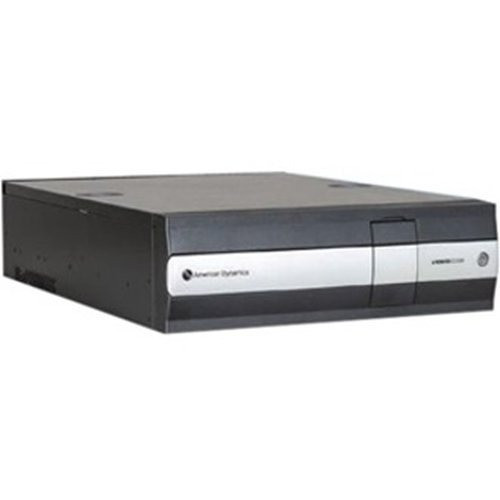
Both the Hanwha XRN-3220B4 and the Kantech ADVER30R5H3G are 32-channel network video recorders targeting mid-to-large surveillance deployments. The XRN-3220B4 is a pure-IP NVR with high-resolution 8K-class camera support, while the ADVER30R5H3G is a hybrid unit accommodating both analog and IP cameras in a 3U rack chassis. Buyers evaluating these products are typically comparing recording capacity, hybrid versus pure-IP architecture, storage scalability, and integration with broader VMS or access-control ecosystems—making a side-by-side examination of their specifications directly relevant.

In This Guide
- Which recorder delivers greater channel capacity, resolution ceiling, and recording bandwidth?
- How do the two units compare on storage capacity, redundancy, and physical build?
- Which unit offers broader integration, remote management, and ecosystem compatibility?
- Which should you choose: the XRN-3220B4 or the ADVER30R5H3G?
- Side-by-Side Specs
- FAQ
Which recorder delivers greater channel capacity, resolution ceiling, and recording bandwidth?
The Hanwha XRN-3220B4 supports up to 32 IP channels with a maximum camera resolution of 32MP at 15 fps, or 12MP at 30 fps, and a recording bandwidth ceiling of 520 Mbps. Simultaneous playback reaches 80 channels (32 local, 16 remote per user), and the unit supports up to 300 PTZ presets. The ADVER30R5H3G is specified as a 32-channel hybrid unit accepting both analog (SD) and IP cameras; its resolution ceiling is listed as VGA (640×480) in the provided specifications, and no recording bandwidth figure is supplied in the available spec data.
For pure-IP, high-resolution deployments—particularly those leveraging multi-megapixel or 4K/8K-class cameras—the XRN-3220B4's 32MP input ceiling and 520 Mbps bandwidth are concrete, verifiable advantages. The ADVER30R5H3G's hybrid analog+IP capability is a structural differentiator for sites with legacy analog infrastructure, but its VGA resolution ceiling as documented would limit image quality on the analog side. No resolution ceiling for its IP channel tier is stated in the provided specifications.
How do the two units compare on storage capacity, redundancy, and physical build?
The XRN-3220B4 provides 16 hot-swap SATA bays supporting up to 160TB in non-RAID mode, with RAID-5 and RAID-6 support across two arrays of 8 HDDs each, plus iSCSI external storage expansion. It also supports N+1 failover and Automatic Recovery Backup (ARB). Individual HDD capacity is listed at up to 10TB per bay. The unit is a metal chassis measuring 440×132×571.1mm and weighing approximately 14 kg (without HDDs), rated for 0°C to +40°C and 20–85% RH. Maximum power draw is 265W (with 16 HDDs installed).
The ADVER30R5H3G ships with 30TB of RAID-configured onboard storage in a 3U rackmount chassis (483×130×610mm, 25 lb / ~11.3 kg). Its power supply is rated at 400W (100–240VAC). No hot-swap specification, no individual HDD bay count, no external storage expansion protocol, and no RAID level detail are provided in the available spec data for the Kantech unit. The XRN-3220B4's 160TB scalability ceiling substantially exceeds the ADVER30R5H3G's documented 30TB, but the Kantech unit's specific RAID configuration and storage architecture details are absent from the provided specifications.
Which unit offers broader integration, remote management, and ecosystem compatibility?
The XRN-3220B4 runs embedded Linux and supports SUNAPI and ONVIF protocols, HTTP/CGI/RTP/RTSP, and is compatible with Windows 10 or higher and macOS 13.5.2 or higher for client software. Browser support includes Chrome, Edge, and Safari. Mobile clients are available for iOS and Android. Remote access supports up to 10 live unicast users and 3 simultaneous search users. Event actions include email, push notifications, PTZ preset, FTP, alarm output, buzzer, and shutdown. The unit logs up to 100,000 system and event entries each. It is explicitly optimized for Hanwha AI cameras for object attribute analytics.
The ADVER30R5H3G runs VideoEdge OS built on openSUSE Linux and communicates via RS-232 and IP/Ethernet. It is described as compatible with mid-to-large deployments and lists audio inputs at 32. The product type field inconsistently references 'Controller' and 'Biometric Reader,' which appears to reflect catalog data anomalies rather than actual device function. No remote user limits, browser support, mobile app, event action types, or VMS integration protocol details (beyond RS-232 and IP/Ethernet) are provided in the available specifications. Kantech's VideoEdge platform is known for integration with Kantech/Tyco access-control systems, but no such detail is present in the provided spec data.
Which should you choose: the XRN-3220B4 or the ADVER30R5H3G?
Our take: The XRN-3220B4 is the stronger choice when deploying a pure-IP, high-resolution surveillance system that demands maximum storage scalability and deep Hanwha ecosystem integration. Concretely: its 32MP resolution ceiling dwarfs the ADVER30R5H3G's documented VGA (640×480) analog resolution; its storage scales to 160TB across 16 hot-swap SATA bays versus the Kantech's fixed 30TB onboard; and its 520 Mbps recording bandwidth is a documented figure whereas no equivalent is provided for the ADVER30R5H3G. The ADVER30R5H3G is the appropriate selection for sites with existing analog camera infrastructure requiring a hybrid migration path, or for installations already standardized on the Kantech/VideoEdge access-control ecosystem—but buyers should be aware that several key performance specifications (bandwidth, IP resolution ceiling, RAID level, bay count) are absent from the provided Kantech spec data and should be verified against the manufacturer datasheet before purchase.
Side-by-Side Comparison
Spec-for-spec, from manufacturer data.
| Specification | Hanwha XRN-3220B4 | Kantech ADVER30R5H3G |
|---|---|---|
| Product Type | Pure-IP NVR | Hybrid (IP + Analog) NVR |
| Max Channels | 32 IP channels | 32 analog + IP expansion |
| Max Camera Resolution | 32MP @ 15fps / 12MP @ 30fps | VGA (640×480) documented; IP ceiling not stated |
| Recording Bandwidth | 520 Mbps | — |
| Simultaneous Playback | 80CH (32 local / 16 remote per user) | — |
| Storage Capacity (Max) | 160TB (16 SATA bays, non-RAID) | 30TB onboard (RAID-configured) |
| HDD Bays | 16 SATA (hot-swap) | — |
| External Storage | iSCSI | — |
| RAID Support | RAID-5 / RAID-6 (2 arrays x 8 HDDs) | RAID (level not specified) |
| Failover / Redundancy | N+1 failover, ARB | — |
| Display Outputs | Dual HDMI: 4K/30Hz + 1080p/60Hz | — |
| Operating System | Embedded Linux | VideoEdge OS (openSUSE Linux) |
| Protocols | SUNAPI, ONVIF, RTP, RTSP, HTTP, CGI | RS-232, IP/Ethernet |
| Remote Users (Live) | 10 unicast | — |
| Power Supply | 100–240VAC, max 265W (with 16 HDDs) | 400W, 100–240VAC |
| Operating Temperature | 0°C to +40°C | — |
Frequently Asked Questions
Which should you choose: the XRN-3220B4 or the ADVER30R5H3G?
The XRN-3220B4 is the stronger choice when deploying a pure-IP, high-resolution surveillance system that demands maximum storage scalability and deep Hanwha ecosystem integration. Concretely: its 32MP resolution ceiling dwarfs the ADVER30R5H3G's documented VGA (640×480) analog resolution; its storage scales to 160TB across 16 hot-swap SATA bays versus the Kantech's fixed 30TB onboard; and its 520 Mbps recording bandwidth is a documented figure whereas no equivalent is provided for the ADVER30R5H3G. The ADVER30R5H3G is the appropriate selection for sites with existing analog camera infrastructure requiring a hybrid migration path, or for installations already standardized on the Kantech/VideoEdge access-control ecosystem—but buyers should be aware that several key performance specifications (bandwidth, IP resolution ceiling, RAID level, bay count) are absent from the provided Kantech spec data and should be verified against the manufacturer datasheet before purchase.
Is the XRN-3220B4 or ADVER30R5H3G better for larger deployments with high-resolution IP cameras?
Based on the provided specifications, the XRN-3220B4 is better suited to large high-resolution IP deployments. It supports cameras up to 32MP at 15 fps, handles up to 520 Mbps recording bandwidth, scales to 160TB across 16 hot-swap SATA bays with RAID-5/6 and N+1 failover, and supports 80-channel simultaneous playback. The ADVER30R5H3G's IP resolution ceiling is not stated in the available specs; its documented resolution ceiling is VGA (640×480) on the analog side, and no recording bandwidth figure is provided.
Can the ADVER30R5H3G work with existing analog cameras while I migrate to IP?
Yes—the ADVER30R5H3G is specified as a hybrid unit supporting both IP and SD analog cameras simultaneously across 32 channels, making it explicitly suited to analog-to-IP migration scenarios. The XRN-3220B4, by contrast, is a pure-IP NVR with 32 network input channels only; it has no analog input capability per the provided specifications.
Which unit has better redundancy and storage protection against drive failure?
The XRN-3220B4 provides explicitly documented redundancy: RAID-5 and RAID-6 across two 8-HDD arrays, hot-swap drive support, N+1 failover, and Automatic Recovery Backup (ARB), with iSCSI external storage expansion also available. The ADVER30R5H3G is described as having 30TB of RAID-configured storage, but the specific RAID level, hot-swap capability, and failover mechanisms are not detailed in the provided specification data.
Get a Second Opinion on Your Camera Choice
Share your site layout, coverage goals, and budget. Our team will validate the camera selection, flag anything we would change, and recommend products that match the use case.