
Hanwha XNB-6000 vs i-PRO S71300A-F3: Specification Comparison
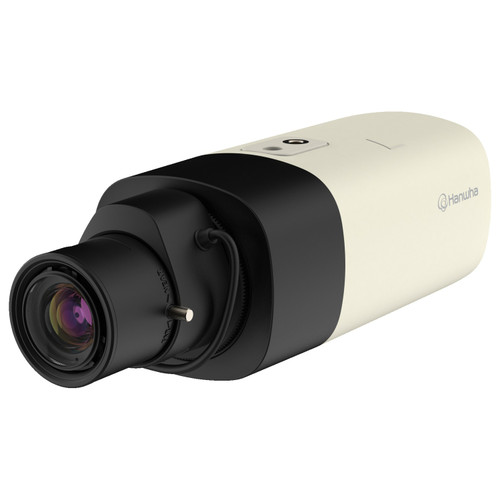
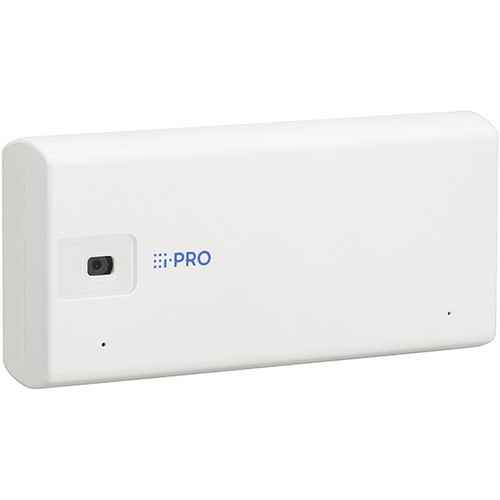
Both the Hanwha XNB-6000 and the i-PRO WV-S71300A-F3 are wired, PoE-powered 2MP box cameras targeting fixed-scene surveillance applications. The XNB-6000 is positioned as an outdoor-capable, lens-interchangeable platform with broad dynamic range, while the S71300A-F3 is a compact indoor mini-box with a fixed integrated lens and AI-driven analytics. Installers and IT buyers cross-shopping these two will find meaningful differences in low-light performance, environmental rating, mounting flexibility, and analytics architecture.
In This Guide
How do the imaging specs compare?
Both cameras use an approximately 1/2.8-inch CMOS sensor delivering 2MP resolution at up to 30fps. The XNB-6000 specifies a maximum frame rate of 60fps (at reduced resolution modes, per spec), whereas the S71300A-F3 spec sheet lists 30fps as its stated frame rate with no higher-rate mode documented. Low-light sensitivity is a significant differentiator: the XNB-6000 is rated at 0.01 Lux in color and 0.001 Lux in B/W with auto ICR day/night switching, making it suitable for near-darkness environments. The S71300A-F3 specifies a minimum illumination of 0.2 Lux with no separate B/W mode illumination figure provided in the supplied spec data.
Wide dynamic range is available only on the XNB-6000, which specifies 150dB WDR (SSDR) along with BLC and HLC. The S71300A-F3 lists BLC and HLC but does not specify a WDR rating or dB figure in the provided specifications. The XNB-6000 accepts interchangeable C/CS-mount lenses including DC auto-iris, P-iris, manual, and I-CS types, giving installers control over focal length and aperture for the scene. The S71300A-F3 ships with a fixed 3.2mm F2.0 lens (81.1° horizontal field of view) and offers no field-replaceable lens option per the provided spec. The S71300A-F3 does specify DORI distances: Detect at 44.9m, Identify at 4.5m, which the XNB-6000 spec does not include.
What about installation and environment?
Environmental protection is a clear dividing line. The XNB-6000 carries an IP66 rating, meaning it is dust-tight and protected against powerful water jets, qualifying it for outdoor and harsh indoor deployments. The S71300A-F3 is rated IP44, protecting against solid objects greater than 1mm and water splashing from any direction — an indoor-only rating. Operating temperature ranges also differ: the XNB-6000 operates from -10°C to +55°C, while the S71300A-F3 operates from -10°C to +40°C per the provided spec, a narrower upper thermal tolerance. Neither camera specifies an IK impact rating in the supplied specifications.
Power input for the XNB-6000 is PoE (IEEE 802.3af, Class 3), 12VDC, or 24VAC, with a maximum draw of 7.5W, giving installers multiple power options. The S71300A-F3 is PoE Class 0 (up to ~15.4W budget under 802.3af) with no alternate power input documented in the provided specs. The XNB-6000 mounts via C or CS mount and supports video output via CVBS and Micro USB for installation/alignment purposes. The S71300A-F3 mount type is listed as 'Rack' in the provided spec data; no C/CS mount or lens-interchangeability is documented. The XNB-6000 weighs 420g (0.93 lb); the S71300A-F3 weighs approximately 157g excluding base/cover.
Which fits your VMS and analytics better?
Both cameras support ONVIF and H.265/H.264/MJPEG compression. The XNB-6000 additionally supports ONVIF Profiles S, G, and T, Hanwha's SUNAPI (HTTP API), and the Wisenet open platform for third-party app installation. It supports up to 10 simultaneous streaming profiles, unicast to 20 users or multicast, and a protocol stack that includes SNMPv1/v2c/v3, 802.1X (EAP-TLS, EAP-LEAP), SRTP, and LLDP. The S71300A-F3 supports up to 14 simultaneous users and lists HTTPS, user authentication, and host authentication; its specific ONVIF profile versions and supported protocol list are not detailed in the provided specifications.
Analytics differ architecturally. The XNB-6000 provides a broad event-based analytics suite: defocus detection, directional detection, fog detection, face detection, motion detection (8 polygonal zones), digital auto tracking, appear/disappear, enter/exit, loitering, tampering, virtual line, audio detection, and sound classification. It also includes digital image stabilization via a built-in gyro sensor, and supports RS-485/422 serial for PTZ control integration. The S71300A-F3 specifies an Ambarella CV22 SoC and lists 8 AI detection types including people, face, vehicles, non-mask detection, plus AI sound classification (gunshot, yell, vehicle horn, glass break) and scene change detection. Edge storage on the XNB-6000 is dual Micro SD/SDHC/SDXC slots supporting up to 512GB (256GB × 2); the S71300A-F3 lists microSD storage support but no slot count or maximum capacity is provided in the supplied spec. The S71300A-F3 includes two built-in omnidirectional electret condenser microphones; the XNB-6000 provides a selectable audio input (mic-in, line-in, or built-in mic) and a line output.
Which should you choose: the XNB-6000 or the S71300A-F3?
Our take: The XNB-6000 is the stronger choice when the deployment involves outdoor or variable-environment locations, challenging lighting, or lens-flexibility requirements. Its 150dB WDR versus no documented WDR rating on the S71300A-F3, its 0.001 Lux B/W minimum illumination versus 0.2 Lux on the S71300A-F3, and its IP66 rating versus IP44 on the S71300A-F3 represent concrete performance advantages for mixed-light or exterior scenes. Dual SD card slots (max 512GB) add edge redundancy the S71300A-F3 spec does not match. Conversely, the S71300A-F3 is the appropriate selection for controlled indoor environments where its fixed 3.2mm F2.0 lens, Ambarella CV22 AI SoC with documented 8-type AI detection, dual built-in microphones, DORI-rated detection distances, and a 5-year warranty (versus 3-year on the XNB-6000) better serve the use case. Platform teams committed to Hanwha Wisenet VMS should favor the XNB-6000; i-PRO VMS environments will integrate the S71300A-F3 more natively.
Side-by-Side Comparison
Spec-for-spec, from manufacturer data.
| Specification | Hanwha XNB-6000 | i-PRO S71300A-F3 |
|---|---|---|
| Resolution | 2MP (1920 × 1080) | 2MP (1920 × 1080) |
| Image Sensor | 1/2.8" CMOS | Approx. 1/2.8 type CMOS |
| Lens / Focal Length | Interchangeable: C/CS mount (DC auto-iris, P-iris, Manual, I-CS) | Fixed 3.2mm F2.0 (81.1° H FoV) |
| Min. Illumination | 0.01 Lux color / 0.001 Lux B/W | 0.2 Lux (B/W figure not specified) |
| Wide Dynamic Range | 150dB WDR (SSDR) | — (not specified) |
| Max Frame Rate | 60fps | 30fps |
| Video Compression | H.265 / H.264 / MJPEG | H.265 / H.264 / MJPEG |
| IP Rating | IP66 | IP44 |
| Operating Temperature | -10°C to +55°C | -10°C to +40°C |
| Power Input / PoE Class | PoE 802.3af Class 3; 12VDC; 24VAC — max 7.5W | PoE Class 0 (~15.4W budget); no alternate input specified |
| Edge Storage | Dual Micro SD/SDHC/SDXC — max 512GB (256GB × 2) | microSD (slot count / max capacity not specified) |
| Audio | Selectable mic-in / line-in / built-in mic; line out | 2× built-in omnidirectional electret condenser microphones |
| Analytics | Defocus, directional, fog, face, loitering, enter/exit, virtual line, tamper, auto tracking, +more | 8 AI types: people, face, vehicle, non-mask, occupancy, +AI sound classification (gunshot, yell, horn, glass break) |
| Dimensions (W × H × D) | 73.1 × 66.6 × 147.8mm (2.88" × 2.62" × 5.82") | Not specified in provided specs (excluding base/cover) |
| Weight | 420g (0.93 lb) | Approx. 157g (excluding base/cover) |
| Warranty | 3-year | 5-year |
Frequently Asked Questions
Which should you choose: the XNB-6000 or the S71300A-F3?
The XNB-6000 is the stronger choice when the deployment involves outdoor or variable-environment locations, challenging lighting, or lens-flexibility requirements. Its 150dB WDR versus no documented WDR rating on the S71300A-F3, its 0.001 Lux B/W minimum illumination versus 0.2 Lux on the S71300A-F3, and its IP66 rating versus IP44 on the S71300A-F3 represent concrete performance advantages for mixed-light or exterior scenes. Dual SD card slots (max 512GB) add edge redundancy the S71300A-F3 spec does not match. Conversely, the S71300A-F3 is the appropriate selection for controlled indoor environments where its fixed 3.2mm F2.0 lens, Ambarella CV22 AI SoC with documented 8-type AI detection, dual built-in microphones, DORI-rated detection distances, and a 5-year warranty (versus 3-year on the XNB-6000) better serve the use case. Platform teams committed to Hanwha Wisenet VMS should favor the XNB-6000; i-PRO VMS environments will integrate the S71300A-F3 more natively.
Is the XNB-6000 or S71300A-F3 better for low-light performance?
Based on the provided specifications, the XNB-6000 is significantly more capable in low light. It is rated at 0.001 Lux in B/W mode with auto ICR day/night switching and 150dB WDR. The S71300A-F3 specifies a minimum illumination of 0.2 Lux with no separate B/W figure or WDR dB rating documented in the supplied specs.
Can either camera be installed outdoors?
The XNB-6000 carries an IP66 rating, making it suitable for outdoor installation. The S71300A-F3 is rated IP44, which is an indoor-only rating that provides protection against splashing water but not jets or immersion. Only the XNB-6000 is specified for outdoor use based on the provided specs.
Which camera has the better warranty and AI analytics?
The S71300A-F3 carries a 5-year warranty versus the XNB-6000's 3-year warranty. For AI analytics, the S71300A-F3 specifies an Ambarella CV22 SoC with 8 documented AI detection types including people, face, vehicle, non-mask, and AI sound classification. The XNB-6000 offers a broad event analytics suite including loitering, enter/exit, virtual line, and directional detection, but does not specify a dedicated AI SoC in the provided specifications.
Get a Second Opinion on Your Camera Choice
Share your site layout, coverage goals, and budget. Our team will validate the camera selection, flag anything we would change, and recommend products that match the use case.