
Hanwha XNB-6003 vs i-PRO S1136A: Specification Comparison
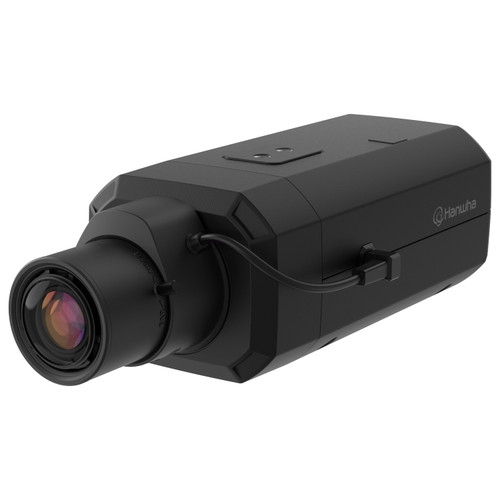
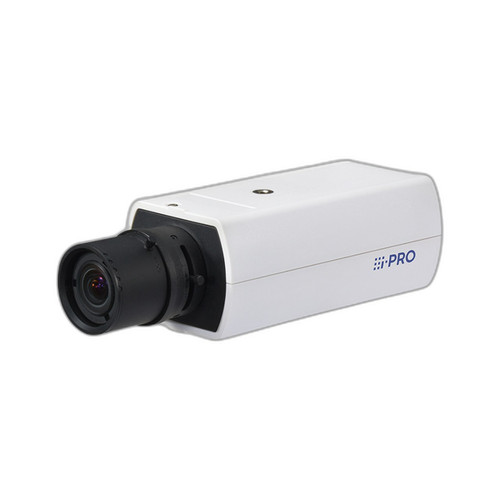
Both the Hanwha XNB-6003 and the i-PRO WV-S1136A are 2MP (1920×1080) indoor box IP cameras drawing from 1/2.8-inch CMOS sensors, making them direct cross-shop candidates for integrators specifying fixed-lens indoor box cameras. The comparison covers imaging performance, installation requirements, and integration capabilities—including AI analytics depth, cybersecurity posture, and VMS compatibility—to help installers and IT buyers match each model to the right deployment context.
In This Guide
How do the imaging specs compare?
Both cameras share a 1/2.8-inch progressive CMOS sensor at 1920×1080. The XNB-6003 reaches 120 fps at full resolution versus the S1136A's 60 fps cap—a meaningful delta for fast-motion or forensic slow-motion use cases. In low light, the S1136A edges out the XNB-6003: color minimum illumination is 0.006 lx (30IRE, F1.2, 1/30s) versus 0.007 lx, and B/W drops to 0.004 lx (50IRE) on the S1136A versus 0.0007 lx on the XNB-6003—though the XNB-6003's B/W figure uses different IRE/shutter conditions that are not directly equivalent, so caution is warranted when comparing those numbers directly.
Wide dynamic range also diverges: the XNB-6003 claims extremeWDR at 150 dB, while the S1136A's Super Dynamic tops out at 144 dB (configurable 0–31 levels). The XNB-6003 adds a built-in gyro-based digital image stabilizer and LDC (lens distortion correction) not listed in the S1136A specs. Lens mount options differ substantially: the XNB-6003 supports DC auto iris, P-iris, manual, and I-CS with C/CS mounts, whereas the S1136A specifies auto/manual focus with presets but does not enumerate mount type or supported iris types in the provided specs.
What about installation and environment?
Both cameras are rated for indoor use only; neither spec sheet lists an IP or IK ingress/impact rating. Operating temperature range gives the XNB-6003 a slight edge: -10°C to +55°C versus -10°C to +50°C for the S1136A. The XNB-6003 also specifies a storage temperature range of -50°C to +60°C; the S1136A does not list storage temperature in the provided specs.
Power requirements differ by PoE class: the XNB-6003 is PoE Class 3 (max 12.95 W, also accepts 12 VDC), while the S1136A is PoE Class 2 (max 7 W, also accepts 12 VDC). The lower draw of the S1136A is a tangible advantage on power-budget-constrained switches. Physical size and weight also separate them: the XNB-6003 measures 81×67×165 mm at 880 g, compared to the S1136A at 75×57×146 mm and approximately 370 g—the S1136A is notably lighter and more compact, which may affect bracket selection and conduit routing.
Which fits your VMS and analytics better?
Both cameras support ONVIF Profile S/G/M/T and include H.265/H.264 with CBR/VBR, MQTT, 802.1X, and HTTPS. The XNB-6003 adds Gigabit Ethernet (10/100/1000BASE-T) versus the S1136A's 10/100BASE-TX—relevant when streaming multiple high-frame-rate profiles. The XNB-6003 supports up to 10 streaming profiles with 3 virtual channels and up to 20 unicast users; the S1136A supports up to 14 simultaneous users. Edge storage on both is microSD, with the XNB-6003 offering dual microSD slots up to 1 TB (512 GB × 2) versus the S1136A's single slot up to 512 GB.
AI analytics depth differs meaningfully. The XNB-6003 provides classified object detection (person, face, vehicle, license plate), vehicle sub-type attributes, virtual line/area crossing with direction, people counting, queue management, and heatmap—all described as AI-engine-based. The S1136A lists AI Video Motion Detection, face/people detection, AI sound classification (gunshot, yell, vehicle horn, glass break), and scene change detection. The XNB-6003 also adds RS-485 serial interface, 2 configurable alarm I/O ports, and broader alarm trigger options including MQTT subscription. The S1136A has 3 alarm inputs and 1 alarm output plus AUX out. On cybersecurity, the S1136A specifies FIPS 140-2 Level 3 with secure boot, signed firmware, and an NXP EdgeLock SE050F hardware security element; the XNB-6003 specifies TPM 2.0 at FIPS 140-2 Level 2—one tier lower by certification level.
Which should you choose: the XNB-6003 or the S1136A?
Our take: The XNB-6003 is the stronger choice when frame rate, analytics depth, or dual-card edge redundancy are the primary requirements. It delivers 120 fps versus 60 fps on the S1136A, a wider WDR rating (150 dB vs. 144 dB), dual microSD slots totaling 1 TB versus a single 512 GB slot, and a richer AI analytics suite including license plate detection, queue management, and heatmap that the S1136A does not list. Conversely, the S1136A wins on cybersecurity posture—FIPS 140-2 Level 3 with hardware-rooted secure boot and signed firmware versus Level 2 on the XNB-6003—and on power budget at 7 W (PoE Class 2) versus 12.95 W (Class 3), which matters on loaded switches. The S1136A also carries a 5-year warranty versus 3 years for the XNB-6003. Choose the XNB-6003 for high-frame-rate forensic or analytics-heavy deployments; specify the S1136A where FIPS Level 3 compliance, lower power draw, or a longer warranty term are governing requirements.
Side-by-Side Comparison
Spec-for-spec, from manufacturer data.
| Specification | Hanwha XNB-6003 | i-PRO S1136A |
|---|---|---|
| Resolution | 1920×1080 (2MP) | 1920×1080 (2MP) |
| Image Sensor | 1/2.8" progressive CMOS | Approx. 1/2.8" CMOS |
| Max Frame Rate | 120 fps @ 1080p | 60 fps @ 1080p |
| Min Illumination (Color) | 0.007 lx | 0.006 lx (30IRE, F1.2, 1/30s) |
| Min Illumination (B/W) | 0.0007 lx | 0.004 lx (50IRE, F1.2, 1/30s) |
| Wide Dynamic Range | 150 dB (extremeWDR) | 144 dB (Super Dynamic, level 0–31) |
| Video Compression | H.265 / H.264 / MJPEG | H.265 / H.264 / MJPEG |
| Lens / Mount | DC auto iris, P-iris, Manual, I-CS; C/CS mount | Auto/manual focus with presets; mount type not specified in provided specs |
| Operating Temperature | -10°C to +55°C | -10°C to +50°C |
| Power Input / PoE Class | PoE 802.3af Class 3 (12.95 W max) / 12 VDC | PoE 802.3af Class 2 (7 W max) / 12 VDC |
| Edge Storage | Dual microSD slots, max 1 TB (512 GB × 2) | Single microSD slot, up to 512 GB |
| Alarm I/O | 2 configurable I/O ports | 3 alarm inputs, 1 alarm output, 1 AUX output |
| ONVIF Profiles | S / G / T / M | S / G / M / T |
| Cybersecurity Certification | TPM 2.0, FIPS 140-2 Level 2 | FIPS 140-2 Level 3, secure boot, signed firmware, NXP EdgeLock SE050F |
| Dimensions (W×H×D) | 81×67×165 mm (3.19×2.64×6.48") | 75×57×146 mm |
| Weight | 880 g (1.94 lb) | Approx. 370 g (0.82 lb) |
| Warranty | 3 years | 5 years |
Frequently Asked Questions
Which should you choose: the XNB-6003 or the S1136A?
The XNB-6003 is the stronger choice when frame rate, analytics depth, or dual-card edge redundancy are the primary requirements. It delivers 120 fps versus 60 fps on the S1136A, a wider WDR rating (150 dB vs. 144 dB), dual microSD slots totaling 1 TB versus a single 512 GB slot, and a richer AI analytics suite including license plate detection, queue management, and heatmap that the S1136A does not list. Conversely, the S1136A wins on cybersecurity posture—FIPS 140-2 Level 3 with hardware-rooted secure boot and signed firmware versus Level 2 on the XNB-6003—and on power budget at 7 W (PoE Class 2) versus 12.95 W (Class 3), which matters on loaded switches. The S1136A also carries a 5-year warranty versus 3 years for the XNB-6003. Choose the XNB-6003 for high-frame-rate forensic or analytics-heavy deployments; specify the S1136A where FIPS Level 3 compliance, lower power draw, or a longer warranty term are governing requirements.
Is the XNB-6003 or WV-S1136A better for low-light performance?
Based on the provided specs, the S1136A's color minimum illumination is 0.006 lx (30IRE, F1.2, 1/30s) versus 0.007 lx for the XNB-6003—a slight advantage. In B/W mode the S1136A specifies 0.004 lx (50IRE, F1.2, 1/30s); the XNB-6003 specifies 0.0007 lx, but under different measurement conditions (no IRE or aperture stated in the provided data), making a direct numerical comparison unreliable. Buyers should request same-condition test data from each manufacturer before making a low-light decision.
Which camera is better suited for a cybersecurity-sensitive deployment?
The WV-S1136A carries FIPS 140-2 Level 3 certification backed by an NXP EdgeLock hardware security element, secure boot, and signed firmware—one certification tier above the XNB-6003's TPM 2.0 at FIPS 140-2 Level 2. For government, healthcare, or financial environments where Level 3 hardware-rooted trust is a specified requirement, the S1136A has the documented edge.
Can either camera handle a high-frame-rate requirement such as 120 fps?
Only the XNB-6003 supports 120 fps at 1920×1080 per its specifications. The WV-S1136A is rated at a maximum of 60 fps at 1920×1080. If 120 fps capture is required—for example, in gaming arcades, cashier lanes, or high-speed assembly line monitoring—the XNB-6003 is the only option between these two models.
Get a Second Opinion on Your Camera Choice
Share your site layout, coverage goals, and budget. Our team will validate the camera selection, flag anything we would change, and recommend products that match the use case.