
Hanwha XNB-6001 vs i-PRO S1136A: Specification Comparison
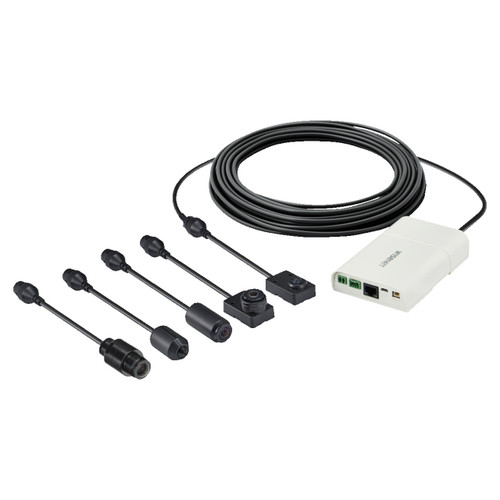
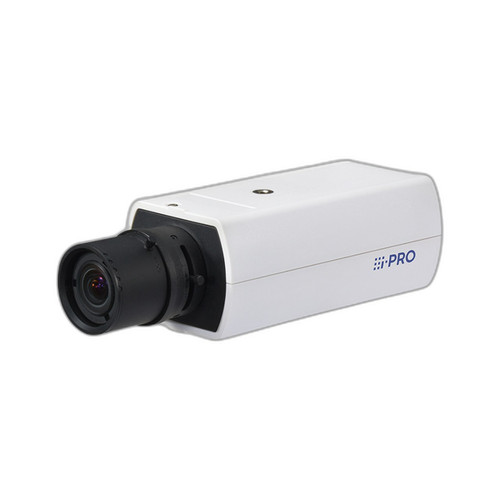
Both the Hanwha XNB-6001 and the i-PRO WV-S1136A are 2MP (1920×1080) wired indoor/outdoor fixed box IP cameras powered by PoE, targeting the same resolution tier and installation profile. Buyers evaluating covert mini-box designs for flexible-lens deployments will find both products competing directly on imaging performance, dynamic range, analytics depth, and cybersecurity posture. This comparison draws exclusively from the manufacturer specifications provided for each model.
In This Guide
How do the imaging specs compare?
The i-PRO WV-S1136A carries a specified 1/2.8-inch CMOS sensor with a minimum illumination of 0.006 lx (color, 30IRE, F1.2, 1/30s) and 0.004 lx (B/W, 50IRE, F1.2, 1/30s), along with ICR-based day/night switching (Auto1/Auto2/Auto3 modes including IR-optimized and SCC modes). Its Super Dynamic WDR reaches a specified maximum of 144 dB at level 31, with granular 0–31 level control and Adaptive Black Stretch (0–255 range). The XNB-6001 spec sheet does not state sensor size or minimum illumination figures; its WDR is specified at 120 dB. Day/night on the Hanwha is electrical (no ICR stated), and DNR is branded SSNR V with no numeric adjustment range specified.
On frame rate, both cameras deliver 60 fps at 1080p. The XNB-6001 lists 30 fps as its primary frame rate with 60 fps as the maximum; the S1136A specifies 60 fps as its primary rated frame rate at full 1080p resolution. The S1136A also adds a 2048×1536 (4:3) resolution mode not present in the XNB-6001 spec. The XNB-6001 supports optional interchangeable CS-mount lenses (SLA-T1080F, SLA-T2480, SLA-T2480V, SLA-T4680, SLA-T4680V); the S1136A spec lists auto/manual focus with presets but does not enumerate compatible lenses. IR night vision is noted for both; IR range is not quantified in either spec sheet provided.
What about installation and environment?
The Hanwha XNB-6001 is rated IP66 and specifies an operating range of -10°C to +55°C (-14°F to +131°F), making it suitable for outdoor use in weather-exposed locations. It draws a maximum of 6.5 W over PoE (IEEE 802.3af, Class 3) or 6 W on 12 VDC. Its body measures 131.1 × 28 × 86 mm and weighs 245 g (0.54 lb). It also provides a Micro USB Type B port and CVBS output for installation alignment, and supports Flip/Mirror/Hallway view (90°/270°) rotation.
The i-PRO WV-S1136A is specified for indoor use only with no IP or IK rating listed in the provided specs. Its operating range is -10°C to +50°C (14°F to 122°F), 5°C narrower at the upper end than the XNB-6001. It draws a maximum of 7 W over PoE (802.3af, Class 2) and measures 75 × 57 × 146 mm at 370 g (0.82 lb). It provides a composite video monitor output (1.0 V, 75Ω) for installation adjustment and supports 0°/90°/180°/270° image rotation. The S1136A carries UL (UL62368-1), c-UL, CE, and IEC62368-1 safety certifications and FCC/ICES-003/EN55032/EN55035 EMC listings; equivalent certifications are not listed in the XNB-6001 spec sheet provided.
Which fits your VMS and analytics better?
Both cameras support ONVIF Profiles S, G, M, and T, ensuring broad VMS compatibility. The XNB-6001 additionally exposes Wisenet SUNAPI (HTTP API) and the Wisenet Open Platform for third-party app integration. The S1136A adds MQTT and SFTP to its protocol list; the XNB-6001 does not list either. The XNB-6001 supports up to 20 unicast users and up to 10 simultaneous stream profiles; the S1136A supports up to 14 simultaneous users. Audio compression on the XNB-6001 covers G.711 μ-law and G.726 (ADPCM, 8 kHz); the S1136A adds AAC-LC (16–128 kbps) as a third codec. The XNB-6001 supports up to 32 four-point polygonal privacy masks (with color and mosaic options) and 8 eight-point motion detection zones; the S1136A offers up to 8 privacy zones and 4 VMD areas.
On-camera analytics differ significantly. The XNB-6001 lists defocus detection, directional detection, fog detection, face detection, motion detection, digital auto tracking, appear/disappear, enter/exit, loitering, tampering, and virtual line—all specified as on-camera. The S1136A specifies AI Video Motion Detection, AI Face/People Detection, plus AI Sound Classification (gunshot, yell, vehicle horn, glass break) and Scene Change Detection; its product listing also references AI Vehicle Detection, AI Non-mask Detection, and AI Occupancy Detection. The S1136A's SoC is identified as an Ambarella CV25M. Edge storage on the XNB-6001 is rated to 256 GB microSD; the S1136A supports 2–512 GB microSD. Cybersecurity on the S1136A includes FIPS 140-2 Level 3 (NXP EdgeLock SE050F), secure boot, and signed firmware; the XNB-6001 specifies HTTPS/SSL, Digest Auth, IP filtering, user access log, and 802.1X (EAP-TLS, EAP-LEAP) but does not list hardware security element or signed firmware in the provided spec.
Which should you choose: the XNB-6001 or the S1136A?
Our take: The WV-S1136A is the stronger choice when cybersecurity certification, superior low-light sensitivity, and AI-class analytics are the primary drivers. Its 144 dB Super Dynamic WDR outperforms the XNB-6001's 120 dB by 24 dB, its specified minimum illumination of 0.004 lx (B/W) is a concrete low-light advantage the XNB-6001 spec does not address, and its FIPS 140-2 Level 3 hardware security element with signed firmware addresses government and enterprise cybersecurity requirements the XNB-6001 does not claim. The XNB-6001 is the stronger choice for outdoor or weather-exposed deployments: its IP66 rating and wider operating ceiling (+55°C vs +50°C) cover environments where the S1136A—indoor-rated only—cannot be installed. The XNB-6001 also supports a named range of interchangeable CS-mount lenses and allows up to 32 privacy masks versus the S1136A's 8, which may matter in complex scene configurations. Buyers on Wisenet VMS infrastructure benefit from the XNB-6001's SUNAPI and Open Platform ecosystem.
Side-by-Side Comparison
Spec-for-spec, from manufacturer data.
| Specification | Hanwha XNB-6001 | i-PRO S1136A |
|---|---|---|
| Resolution | 1920×1080 (2MP) | 1920×1080 (2MP); also 2048×1536 (4:3) |
| Image Sensor | Not specified | 1/2.8-inch CMOS |
| Min. Illumination (Color) | Not specified | 0.006 lx (30IRE, F1.2, 1/30s) |
| Min. Illumination (B/W) | Not specified | 0.004 lx (50IRE, F1.2, 1/30s) |
| Wide Dynamic Range | 120 dB | 144 dB (Super Dynamic, configurable 0–31 levels) |
| Max Frame Rate | 60 fps (primary rated: 30 fps) | 60 fps @ 1080p (primary rated) |
| Day/Night | Auto (electrical) | ICR: Off/On/Auto1/Auto2(IR)/Auto3(SCC) |
| Video Compression | H.265, H.264 (Main/Baseline/High), MJPEG | H.265, H.264 (CBR/VBR), MJPEG |
| Audio Compression | G.711 μ-law, G.726 (ADPCM 8 kHz) | G.726, G.711, AAC-LC (16–128 kbps) |
| IP Rating | IP66 | Not specified (indoor only) |
| Operating Temperature | -10°C to +55°C (-14°F to +131°F) | -10°C to +50°C (14°F to 122°F) |
| Power Input / PoE Class | PoE IEEE 802.3af Class 3 / 12 VDC; max 6.5 W (PoE) | PoE 802.3af Class 2; max 7 W |
| Edge Storage | microSD/SDHC/SDXC up to 256 GB | microSD 2–512 GB |
| ONVIF Profiles | S, G, T | S, G, M, T |
| Cybersecurity | HTTPS/SSL, Digest Auth, 802.1X (EAP-TLS/LEAP), IP filtering | FIPS 140-2 Level 3, secure boot, signed firmware, 802.1X |
| Dimensions (W×H×D) | 131.1 × 28 × 86 mm | 75 × 57 × 146 mm |
| Weight | 245 g (0.54 lb) | 370 g (0.82 lb) |
| Warranty | 3-year | 5-year |
Frequently Asked Questions
Which should you choose: the XNB-6001 or the S1136A?
The WV-S1136A is the stronger choice when cybersecurity certification, superior low-light sensitivity, and AI-class analytics are the primary drivers. Its 144 dB Super Dynamic WDR outperforms the XNB-6001's 120 dB by 24 dB, its specified minimum illumination of 0.004 lx (B/W) is a concrete low-light advantage the XNB-6001 spec does not address, and its FIPS 140-2 Level 3 hardware security element with signed firmware addresses government and enterprise cybersecurity requirements the XNB-6001 does not claim. The XNB-6001 is the stronger choice for outdoor or weather-exposed deployments: its IP66 rating and wider operating ceiling (+55°C vs +50°C) cover environments where the S1136A—indoor-rated only—cannot be installed. The XNB-6001 also supports a named range of interchangeable CS-mount lenses and allows up to 32 privacy masks versus the S1136A's 8, which may matter in complex scene configurations. Buyers on Wisenet VMS infrastructure benefit from the XNB-6001's SUNAPI and Open Platform ecosystem.
Is the XNB-6001 or WV-S1136A better for low-light performance?
Based on the provided specifications, the WV-S1136A has a stated advantage: its minimum illumination is specified at 0.006 lx (color) and 0.004 lx (B/W) with a 1/2.8-inch CMOS sensor and ICR day/night switching. The XNB-6001 spec sheet does not list a minimum illumination figure or sensor size, so a direct numerical comparison cannot be made from the available data.
Can either camera be used outdoors?
The XNB-6001 carries an IP66 weatherproof rating and an operating temperature range of -10°C to +55°C, making it suitable for outdoor installations. The WV-S1136A is specified as an indoor camera with no IP or IK rating listed in its provided specifications and should not be deployed in weather-exposed locations.
Which camera has better cybersecurity credentials for government or enterprise use?
The WV-S1136A specifies FIPS 140-2 Level 3 certification via an NXP EdgeLock SE050F hardware security element, plus secure boot and signed firmware—features explicitly required by many federal and enterprise security policies. The XNB-6001 specifies HTTPS/SSL, Digest Authentication, 802.1X (EAP-TLS, EAP-LEAP), and IP filtering, but does not claim FIPS 140-2 certification or a hardware security element in the provided specifications.
Get a Second Opinion on Your Camera Choice
Share your site layout, coverage goals, and budget. Our team will validate the camera selection, flag anything we would change, and recommend products that match the use case.