
i-PRO S1136A vs i-PRO U11300-V2: Specification Comparison
Both the i-PRO WV-S1136A and WV-U11300-V2 are 2MP indoor wired box IP cameras from i-PRO, sharing the same resolution class, form factor, and general deployment profile. Buyers evaluating these two models are typically choosing between a fixed-lens, high-frame-rate platform with advanced on-camera AI analytics (S1136A) and a motorized varifocal zoom model optimized for flexible field-of-view adjustment in installations where lens repositioning without physical access is a priority (U11300-V2). The comparison covers imaging performance, installation characteristics, and VMS/analytics integration.
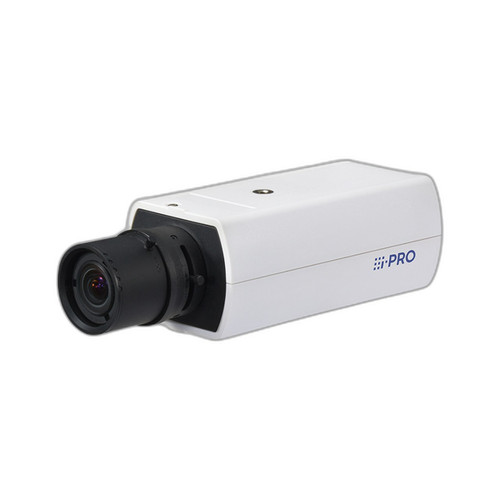
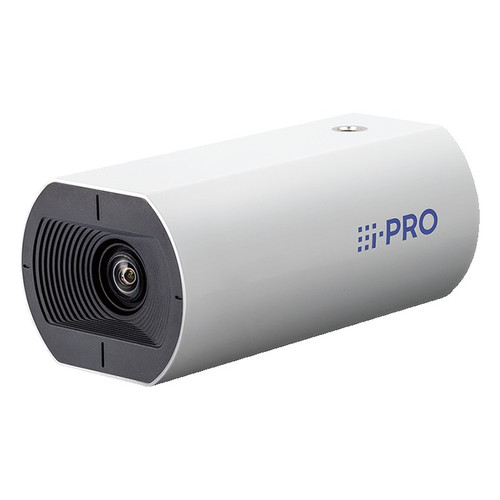
In This Guide
How do the imaging specs compare?
Both cameras share a 1/2.8-inch CMOS sensor and identical white balance modes (ATW1/ATW2/AWC), but diverge significantly on frame rate and dynamic range. The S1136A delivers up to 60 fps at 1920×1080, while the U11300-V2 is capped at 30 fps at the same resolution — a meaningful difference for capturing fast motion or running forensic review. The S1136A also posts a wider Super Dynamic range of 144 dB versus 120 dB for the U11300-V2, giving it an advantage in high-contrast mixed-lighting scenes. Both support configurable Super Dynamic levels from 0 to 31.
On low-light performance the picture is more nuanced. The S1136A specifies a color minimum illumination of 0.006 lx (30IRE, F1.2, 1/30s) and 0.004 lx in B&W (50IRE). The U11300-V2 spec sheet lists two illumination figures: 0.1 lx color / 0.04 lx B&W in one row, and 0.006 lx color / 0.0025 lx B&W in a second row — the lower figures likely reflect a longer shutter integration mode. The U11300-V2's maximum aperture is F2.0 (wide) vs the S1136A's fixed F1.2, which gives the S1136A a light-gathering advantage at equivalent shutter speeds. The U11300-V2 adds a 2.5x motorized varifocal lens (2.9–7.3 mm, 43°–100° horizontal FoV) that the fixed-lens S1136A cannot match, with DORI identify range reaching 9.7 m at tele.
What about installation and environment?
Both cameras are rated for indoor use only with an operating temperature of -10 °C to +50 °C and 10–90% relative humidity (no condensation). Neither product spec lists an IP or IK ingress/impact rating in the provided data, so no comparison on environmental sealing can be made. Both are powered via PoE 802.3af (Class 2), but power consumption differs: the S1136A draws up to 7 W while the U11300-V2 draws only 4.3 W — a relevant consideration for switch port budgeting in dense deployments.
The S1136A is physically larger (75 × 57 × 146 mm) and heavier (approx. 370 g) than the U11300-V2 (59 × 49 × 116 mm with base bracket, approx. 165 g). The S1136A includes a 3.5 mm audio in/out jack and dedicated alarm I/O terminals (3× alarm IN, 1× alarm OUT, 1× AUX OUT) plus a composite video monitor output for lens adjustment. The U11300-V2 offers motorized zoom and motorized focus, which reduces the need for physical access during commissioning. The S1136A supports image rotation at 0°/90°/180°/270°; no equivalent rotation spec is listed for the U11300-V2.
Which fits your VMS and analytics better?
The S1136A supports ONVIF Profiles G, M, S, and T. The U11300-V2 supports ONVIF Profiles G, S, and T — it does not list Profile M in the provided specifications. Profile M covers metadata including analytics events, so VMS platforms relying on Profile M for AI event streams will find broader compatibility with the S1136A. Both support H.265/H.264 with CBR/VBR, Smart Coding with variable GOP (1s–60s), JPEG at 10 quality steps, and the same audio compression codecs (G.726, G.711, AAC-LC 16–128 kbps). Both support up to 14 simultaneous users and identical IPv4/IPv6 protocol stacks including MQTT, SFTP, and SRTP.
On-camera analytics differ substantially. The S1136A lists AI Video Motion Detection, Face Detection, People Detection, Vehicle Detection, Non-mask Detection, Occupancy Detection, and Scene Change Detection, plus AI Sound Classification (gunshot, yell, vehicle horn, glass break) and a declared Ambarella CV25M SoC. The U11300-V2 spec lists only VMD and SCD in the analytics fields — no AI classifications or sound analytics are listed in the provided data. Both cameras support microSD/SDHC/SDXC edge storage up to 512 GB. The S1136A adds FIPS 140-2 Level 3 certification and signed firmware; the U11300-V2 lists HTTPS, digest/host auth, and GlobalSign certificate but does not cite FIPS 140-2 in the provided specifications. Both carry a 5-year warranty.
Which should you choose: the S1136A or the U11300-V2?
Our take: The S1136A is the stronger choice when frame rate, dynamic range, on-camera AI analytics, or FIPS-grade cybersecurity are decision criteria. It delivers 60 fps versus the U11300-V2's 30 fps, a 144 dB Super Dynamic range versus 120 dB, and a significantly broader AI analytics suite — face, people, vehicle, occupancy, non-mask, and AI sound classification — versus VMD/SCD only on the U11300-V2. It also adds ONVIF Profile M and FIPS 140-2 Level 3 certification not present in the U11300-V2 specs. The U11300-V2 is the better fit when optical flexibility is the priority: its 2.5x motorized varifocal lens (2.9–7.3 mm, 43°–100° horizontal FoV) allows remote zoom and focus adjustment without physical lens changes, and its lower 4.3 W power draw (versus 7 W) eases PoE switch budgeting. Choose the S1136A for high-motion, analytics-driven, or compliance-sensitive deployments; choose the U11300-V2 where lens flexibility and lower power consumption outweigh the need for advanced analytics.
Side-by-Side Comparison
Spec-for-spec, from manufacturer data.
| Specification | i-PRO S1136A | i-PRO U11300-V2 |
|---|---|---|
| Resolution | 2MP (1920×1080) | 2MP (1920×1080) |
| Image Sensor | 1/2.8-inch CMOS | 1/2.8-inch CMOS |
| Lens / Focal Length | Fixed (F1.2) | Motorized varifocal 2.9–7.3 mm (F2.0–F3.0) |
| Optical Zoom | — | 2.5x motorized |
| Horizontal Field of View | Not specified | 43°–100° |
| Min Illumination (Color) | 0.006 lx (30IRE, F1.2, 1/30s) | 0.006 lx (F1.2 equivalent conditions not confirmed) |
| Min Illumination (B&W) | 0.004 lx (50IRE, F1.2, 1/30s) | 0.0025 lx (conditions partially specified) |
| Max Frame Rate | 60 fps @ 1920×1080 | 30 fps @ 1920×1080 |
| Dynamic Range (WDR) | 144 dB Super Dynamic (level 0–31) | 120 dB Super Dynamic (level 0–31) |
| Video Compression | H.265, H.264, MJPEG | H.265, H.264, JPEG |
| ONVIF Profiles | G, M, S, T | G, S, T |
| Edge Analytics | AI VMD, Face, People, Vehicle, Non-mask, Occupancy, SCD, AI Sound Classification | VMD, SCD only (per provided specs) |
| Audio I/O | 3.5 mm stereo in + out (line/mic) | Mic input / audio output (mode selectable) |
| Alarm I/O Terminals | 3× IN, 1× OUT, 1× AUX OUT | Not specified in provided data |
| Power / PoE | PoE 802.3af, Class 2, max 7 W | PoE 802.3af, Class 2, 4.3 W |
| Edge Storage | microSD 2 GB–512 GB | microSD 2 GB–512 GB |
| Cybersecurity | FIPS 140-2 Level 3, signed firmware, secure boot | HTTPS, digest/host auth, GlobalSign cert (FIPS not listed) |
| Operating Temperature | -10 °C to +50 °C | -10 °C to +50 °C |
| Dimensions (W×H×D) | 75 × 57 × 146 mm | 59 × 49 × 116 mm (with base bracket) |
| Weight | Approx. 370 g | Approx. 165 g |
| Warranty | 5-Year | 5-Year |
Frequently Asked Questions
Which should you choose: the S1136A or the U11300-V2?
The S1136A is the stronger choice when frame rate, dynamic range, on-camera AI analytics, or FIPS-grade cybersecurity are decision criteria. It delivers 60 fps versus the U11300-V2's 30 fps, a 144 dB Super Dynamic range versus 120 dB, and a significantly broader AI analytics suite — face, people, vehicle, occupancy, non-mask, and AI sound classification — versus VMD/SCD only on the U11300-V2. It also adds ONVIF Profile M and FIPS 140-2 Level 3 certification not present in the U11300-V2 specs. The U11300-V2 is the better fit when optical flexibility is the priority: its 2.5x motorized varifocal lens (2.9–7.3 mm, 43°–100° horizontal FoV) allows remote zoom and focus adjustment without physical lens changes, and its lower 4.3 W power draw (versus 7 W) eases PoE switch budgeting. Choose the S1136A for high-motion, analytics-driven, or compliance-sensitive deployments; choose the U11300-V2 where lens flexibility and lower power consumption outweigh the need for advanced analytics.
Is the S1136A or U11300-V2 better for low-light performance?
Based on the provided specifications, both cameras list 0.006 lx as a color minimum illumination figure. However, the S1136A uses a fixed F1.2 aperture lens, which gathers more light than the U11300-V2's F2.0 (wide) to F3.0 (tele) varifocal aperture at equivalent shutter speeds. The U11300-V2 also lists a B&W figure of 0.0025 lx in one spec row versus 0.004 lx for the S1136A, but that figure's test conditions are not fully consistent across the U11300-V2 spec sheet. For fixed-lens low-light deployments, the S1136A's F1.2 aperture is a documented advantage.
Can I use either camera with my VMS if it requires ONVIF Profile M for analytics metadata?
Only the S1136A lists ONVIF Profile M support in the provided specifications. The U11300-V2 is listed as supporting Profiles G, S, and T only. If your VMS relies on Profile M to receive AI analytics event streams, the S1136A is the compatible choice. Both cameras support Profiles G, S, and T.
Which camera is better for an installation where I need to adjust the field of view remotely after mounting?
The U11300-V2 is the appropriate choice for that scenario. It includes a 2.5x motorized zoom and motorized focus lens with a focal length range of 2.9–7.3 mm and a horizontal field of view of 43°–100°, allowing remote zoom and focus adjustment via the camera interface. The S1136A has a fixed lens with auto/manual focus presets but does not specify a varifocal or motorized zoom capability in the provided specifications.
Get a Second Opinion on Your Camera Choice
Share your site layout, coverage goals, and budget. Our team will validate the camera selection, flag anything we would change, and recommend products that match the use case.