
Hanwha XNB-6005 vs i-PRO S1136A: Specification Comparison
The Hanwha XNB-6005 and i-PRO WV-S1136A are both 2MP (1920×1080) indoor box IP cameras targeting professional fixed-surveillance installations. Both deliver 60fps, PoE power, H.265/H.264 compression, ONVIF compatibility, and microSD edge storage. The comparison is relevant for integrators choosing between Hanwha's Wisenet ecosystem with its broader analytics suite and i-PRO's platform with FIPS 140-2 Level 3 cybersecurity certification and AI-based on-camera analytics.
In This Guide
How do the imaging specs compare?
Both cameras use approximately 1/2-inch-class CMOS sensors — the XNB-6005 specifies a 1/2" sensor while the WV-S1136A specifies a 1/2.8" sensor, giving the XNB-6005 a larger imaging surface. Minimum illumination at color is identical at 0.006 lux for both (measured at F1.2); however, the WV-S1136A specifies B&W sensitivity of 0.004 lux (50IRE, F1.2, 1/30s) versus the XNB-6005's 0.0006 lux B&W — a significant advantage on paper for the XNB-6005 in monochrome low-light conditions, though the IRE reference differs between datasheets.
Wide dynamic range differs materially: the XNB-6005 is rated at 150dB WDR (SSDR), while the WV-S1136A delivers up to 144dB Super Dynamic (configurable levels 0–31). Both support BLC and HLC. The XNB-6005 adds built-in gyro-based digital image stabilization, not specified for the WV-S1136A. Both cameras support Day/Night via ICR auto-switching. Lens mount is C/CS on the XNB-6005; the WV-S1136A does not specify a lens mount type in the provided specs.
What about installation and environment?
Both cameras are rated for indoor use with no IP or IK rating specified in the provided specs for either model. Operating temperature for the XNB-6005 is -10°C to +55°C; the WV-S1136A is rated -10°C to +50°C — a 5°C narrower upper limit. The XNB-6005 accepts PoE (IEEE 802.3af, Class 3), 24VAC, or 12VDC, with a maximum draw of 8.5W. The WV-S1136A accepts PoE (802.3af) at a maximum of 7W and is also listed with 12VDC; it is PoE Class 2, which imposes a lower power budget. The XNB-6005's multi-input power flexibility (PoE + 24VAC + 12VDC) is an advantage in legacy or hybrid infrastructure.
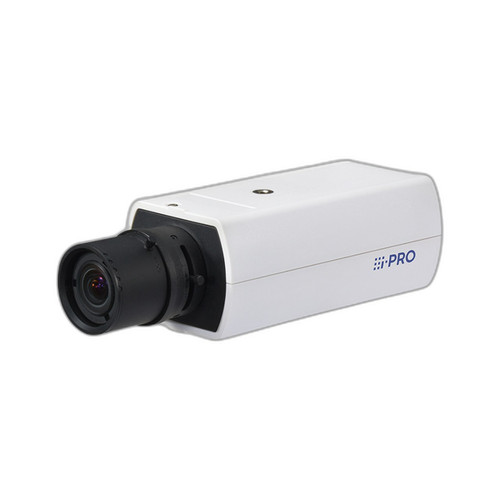
Physical dimensions are similar: XNB-6005 measures 73.1(W) × 66.6(H) × 147.8(D) mm and weighs 420g; the WV-S1136A measures 75(W) × 57(H) × 146(D) mm and weighs approximately 370g. The XNB-6005 includes RS-485 serial interface and 1 alarm input / 1 alarm output. The WV-S1136A provides 3 alarm inputs, 1 alarm output, and 1 AUX output — more alarm terminal capacity. Both include a composite video monitor output for lens adjustment.
Which fits your VMS and analytics better?
Both cameras conform to ONVIF Profiles S, G, and T. The WV-S1136A additionally supports ONVIF Profile M; the XNB-6005 does not list Profile M. The XNB-6005 supports Wisenet SUNAPI (HTTP API) and Wisenet Open Platform for third-party app hosting. The WV-S1136A is certified to FIPS 140-2 Level 3 (EdgeLock SE050F NXP) with secure boot and signed firmware — a cybersecurity posture not claimed by the XNB-6005 in the provided specs. The WV-S1136A also lists NDAA compliance; the XNB-6005 does not state this in its provided specs.
On analytics, the XNB-6005 specifies a broader rule-based analytics list: defocus detection, directional detection, fog detection, face detection, digital auto-tracking, appear/disappear, enter/exit, loitering, tampering, virtual line, and audio/sound classification. The WV-S1136A specifies AI-based analytics including AI VMD, face detection, people detection, and AI sound classification (gunshot, yell, vehicle horn, glass break), plus scene change detection. Both support audio input and output; the WV-S1136A adds an AAC-LC audio codec not listed for the XNB-6005. Edge storage is microSD up to 512GB on the XNB-6005 (2-slot) and up to 512GB on the WV-S1136A (single card, multiple capacity options). The XNB-6005 supports up to 20 unicast users / 10 streaming profiles; the WV-S1136A supports up to 14 simultaneous users.
Which should you choose: the XNB-6005 or the S1136A?
Our take: The XNB-6005 is the stronger choice when power-input flexibility, broader rule-based analytics, higher concurrent stream count, or wider operating temperature headroom are priorities. It accepts PoE Class 3 (8.5W max), 24VAC, and 12VDC versus the WV-S1136A's PoE Class 2 (7W max) and 12VDC, supports 10 simultaneous streaming profiles versus 14 users but up to 20 unicast connections, and operates to +55°C versus the WV-S1136A's +50°C. The WV-S1136A is the stronger choice when cybersecurity certification and government-compliance are mandatory: it carries FIPS 140-2 Level 3 and NDAA compliance not specified for the XNB-6005, adds ONVIF Profile M, provides 3 alarm inputs versus 1, and draws only 7W max. Platform integrators standardized on Wisenet/SUNAPI will favor the XNB-6005; those requiring certified cybersecurity posture or i-PRO VMS compatibility should specify the WV-S1136A.
Side-by-Side Comparison
Spec-for-spec, from manufacturer data.
| Specification | Hanwha XNB-6005 | i-PRO S1136A |
|---|---|---|
| Resolution | 1920×1080 (2MP) | 1920×1080 (2MP) |
| Image Sensor | 1/2" CMOS | 1/2.8" CMOS |
| Min. Illumination (Color) | 0.006 lux (F1.2) | 0.006 lux (30IRE, F1.2, 1/30s) |
| Min. Illumination (B&W) | 0.0006 lux | 0.004 lux (50IRE, F1.2, 1/30s) |
| Wide Dynamic Range | 150dB (SSDR) | 144dB Super Dynamic (levels 0–31) |
| Max Frame Rate | 60fps | 60fps @ 1920×1080 |
| Video Compression | H.265, H.264, MJPEG | H.265, H.264, MJPEG |
| Lens Mount | C-mount / CS-mount | — |
| Operating Temperature | -10°C to +55°C | -10°C to +50°C |
| Power Input / PoE Class | PoE 802.3af Class 3; 24VAC; 12VDC | PoE 802.3af Class 2; 12VDC |
| Max Power Draw | 8.5W | 7W |
| Alarm I/O | 1 input / 1 output | 3 inputs / 1 output / 1 AUX output |
| Edge Storage | microSD/SDHC/SDXC, 2-slot, up to 512GB | microSD, up to 512GB |
| ONVIF Profiles | S, G, T | S, G, M, T |
| Cybersecurity Certifications | — | FIPS 140-2 Level 3; NDAA Compliant; Signed Firmware |
| Warranty | 3 years | 5 years |
| Dimensions (W×H×D) | 73.1×66.6×147.8 mm | 75×57×146 mm |
| Weight | 420g (0.93 lb) | 370g (0.82 lb) |
Frequently Asked Questions
Which should you choose: the XNB-6005 or the S1136A?
The XNB-6005 is the stronger choice when power-input flexibility, broader rule-based analytics, higher concurrent stream count, or wider operating temperature headroom are priorities. It accepts PoE Class 3 (8.5W max), 24VAC, and 12VDC versus the WV-S1136A's PoE Class 2 (7W max) and 12VDC, supports 10 simultaneous streaming profiles versus 14 users but up to 20 unicast connections, and operates to +55°C versus the WV-S1136A's +50°C. The WV-S1136A is the stronger choice when cybersecurity certification and government-compliance are mandatory: it carries FIPS 140-2 Level 3 and NDAA compliance not specified for the XNB-6005, adds ONVIF Profile M, provides 3 alarm inputs versus 1, and draws only 7W max. Platform integrators standardized on Wisenet/SUNAPI will favor the XNB-6005; those requiring certified cybersecurity posture or i-PRO VMS compatibility should specify the WV-S1136A.
Is the XNB-6005 or WV-S1136A better for low-light performance?
Both cameras specify 0.006 lux color sensitivity at F1.2. In B&W mode, the XNB-6005 is rated at 0.0006 lux versus the WV-S1136A's 0.004 lux — a lower floor on paper for the XNB-6005, though the measurement conditions (IRE reference) differ between datasheets, so direct numeric comparison should be validated against a controlled test.
Which camera has better cybersecurity for government or regulated deployments?
The WV-S1136A specifies FIPS 140-2 Level 3 certification (NXP EdgeLock SE050F), secure boot, signed firmware, and NDAA compliance. The XNB-6005 does not claim these certifications in its provided specifications. For federally regulated or NDAA-sensitive installations, the WV-S1136A is the documented choice.
Can both cameras work with third-party VMS platforms via ONVIF?
Yes. Both support ONVIF Profiles S, G, and T. The WV-S1136A additionally supports ONVIF Profile M (metadata), which enables richer analytics integration with compatible VMS platforms. The XNB-6005 does not list Profile M but adds Wisenet SUNAPI (HTTP API) for Wisenet-ecosystem VMS integration.
Get a Second Opinion on Your Camera Choice
Share your site layout, coverage goals, and budget. Our team will validate the camera selection, flag anything we would change, and recommend products that match the use case.