
Hanwha XNB-6000 vs i-PRO S1136A: Specification Comparison
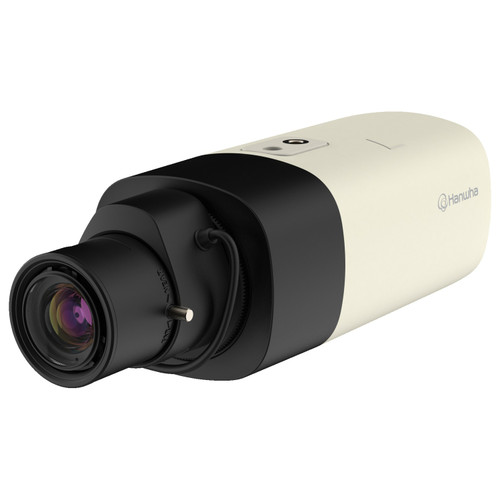
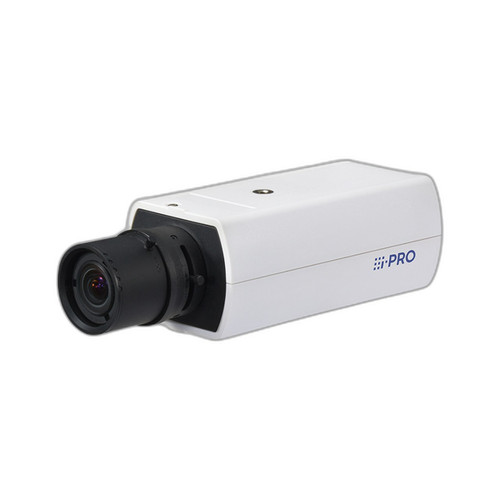
Both the Hanwha XNB-6000 and the i-PRO WV-S1136A are 2MP wired box cameras designed for installations requiring a separately sourced lens. They share the same sensor size class (1/2.8" CMOS), PoE 802.3af power, H.265/H.264 compression, ONVIF compliance, and microSD edge storage. The comparison is relevant for integrators selecting a 2MP box camera for indoor or sheltered outdoor deployments where WDR performance, AI analytics depth, cybersecurity posture, and VMS compatibility are primary decision drivers.
In This Guide
How do the imaging specs compare?
Both cameras use a 1/2.8" CMOS sensor at 2MP (1920×1080). The Hanwha XNB-6000 claims a wider dynamic range at 150 dB versus the i-PRO WV-S1136A's 144 dB Super Dynamic (configurable 0–31 levels). Low-light sensitivity differs by measurement convention: the XNB-6000 rates color sensitivity at 0.01 lux and B/W at 0.001 lux; the S1136A specifies color at 0.006 lux (30IRE, F1.2, 1/30s) and B/W at 0.004 lux (50IRE, F1.2, 1/30s). Because the two manufacturers use different IRE reference points, a direct numeric comparison should be treated as indicative rather than definitive.
Both support 60fps at 1080p. The XNB-6000 accepts C-mount, CS-mount, DC auto iris, P-iris, Manual, and I-CS lenses with optional Hanwha SLA-series lenses called out in the spec. The S1136A supports Auto/Manual focus with presets; lens mount type is not explicitly stated in the provided specification. The XNB-6000 includes a built-in gyro-based digital image stabilization (DIS) feature; the S1136A spec does not list an equivalent. Both include BLC and HLC backlight compensation modes.
What about installation and environment?
The XNB-6000 carries an IP66 weatherproof rating, making it suitable for outdoor or dusty/wet indoor environments. The S1136A is rated for indoor use only; no IP ingress rating is listed in the provided specification. Operating temperature ranges differ slightly: XNB-6000 is rated -10°C to +55°C while the S1136A is rated -10°C to +50°C. Neither product lists an IK impact rating in the provided specifications.
Both cameras are powered via PoE 802.3af. The XNB-6000 is PoE Class 3 (max 7.5W) and also accepts 12VDC or 24VAC. The S1136A is PoE Class 2 (max 7W) and lists 12VDC as its voltage; the provided spec does not confirm 24VAC support. Dimensionally the cameras are nearly identical: XNB-6000 at 73.1×66.6×147.8mm / 420g versus S1136A at 75×57×146mm / 370g. The XNB-6000 also includes a Micro USB output (1280×720) and CVBS output for installation alignment; the S1136A provides a composite monitor output (1.0V, 75Ω) for the same purpose. The XNB-6000 has 2 microSD slots (max 512GB combined); the S1136A has 1 microSD slot (max 512GB).
Which fits your VMS and analytics better?
Both cameras support ONVIF Profiles S, G, and T. The S1136A additionally supports ONVIF Profile M, which covers metadata and analytics event reporting — the XNB-6000's provided spec lists ONVIF Profile S/G/T only. The XNB-6000 exposes Wisenet SUNAPI (HTTP API) and the Wisenet open platform for SDK-level integration. The S1136A lists the Ambarella CV25M SoC and supports FIPS 140-2 Level 3 encryption with secure boot and signed firmware — cybersecurity certifications that are not listed in the XNB-6000's provided specification.
For analytics, the XNB-6000 lists a broad set of on-camera events: defocus detection, directional detection, fog detection, face detection, motion detection, digital auto tracking, appear/disappear, enter/exit, loitering, tampering, virtual line, audio detection, and sound classification — all described as 'analytics events.' The S1136A lists AI-branded analytics including AI Video Motion Detection, Face/People Detection, AI Sound Classification (gunshot, yell, vehicle horn, glass break), Scene Change Detection, and in the product attribute data: vehicle detection, occupancy detection, and non-mask detection. Both cameras support audio input and output, RS-485/422 is listed for the XNB-6000 only. The XNB-6000 has 1 alarm input and 1 alarm output; the S1136A has 3 alarm inputs and 1 alarm output plus 1 AUX output. The XNB-6000 supports up to 32 privacy masking zones; the S1136A supports up to 8. The XNB-6000 supports SNMP v1/v2c/v3 and Bonjour; the S1136A adds SFTP and MQTT to its protocol list.
Which should you choose: the XNB-6000 or the S1136A?
Our take: The XNB-6000 is the stronger choice when outdoor or wet-environment deployment, broader lens compatibility, or a larger privacy-masking zone count (32 vs 8) are required, given its IP66 rating, wider 150 dB WDR versus 144 dB, dual microSD slots for up to 512 GB across two cards, and DC auto iris / P-iris / I-CS lens support with 24VAC input. The S1136A is the stronger choice when cybersecurity compliance is a mandate — it is the only model with FIPS 140-2 Level 3 certification, secure boot, and signed firmware listed in the provided specs — and it adds ONVIF Profile M for analytics metadata interoperability that the XNB-6000's spec does not claim. The S1136A also draws slightly less power (Class 2 vs Class 3) and offers 3 alarm inputs versus 1. Choose the XNB-6000 for outdoor-rated, lens-flexible installs on Wisenet VMS; choose the S1136A for government, healthcare, or compliance-sensitive indoor deployments.
Side-by-Side Comparison
Spec-for-spec, from manufacturer data.
| Specification | Hanwha XNB-6000 | i-PRO S1136A |
|---|---|---|
| Resolution | 2MP (1920×1080) | 2MP (1920×1080) |
| Image Sensor | 1/2.8" CMOS | 1/2.8" CMOS (approx.) |
| Max Frame Rate | 60fps | 60fps @ 1920×1080 |
| Min Illumination (Color) | 0.01 lux | 0.006 lux (30IRE, F1.2, 1/30s) |
| Min Illumination (B/W) | 0.001 lux | 0.004 lux (50IRE, F1.2, 1/30s) |
| Wide Dynamic Range | 150 dB | 144 dB Super Dynamic (level 0–31) |
| Lens Mount | C-mount / CS-mount; DC auto iris, P-iris, Manual, I-CS | Not specified in provided spec |
| Video Compression | H.265 / H.264 / MJPEG | H.265 / H.264 / MJPEG |
| ONVIF Profiles | S / G / T | S / G / M / T |
| IP Rating | IP66 | — (indoor only; no IP rating listed) |
| Operating Temperature | -10°C to +55°C | -10°C to +50°C |
| Power Input / PoE Class | PoE 802.3af Class 3; 12VDC; 24VAC — max 7.5W | PoE 802.3af Class 2; 12VDC — max 7W |
| Edge Storage | 2× microSD/SDHC/SDXC, max 512GB (256GB×2) | 1× microSD, 2–512GB |
| Alarm I/O | 1 input / 1 output | 3 inputs / 1 output / 1 AUX output |
| Cybersecurity | HTTPS, 802.1X (EAP-TLS/EAP-LEAP), Digest auth, IP filtering | FIPS 140-2 Level 3, secure boot, signed firmware, 802.1X |
| Dimensions (W×H×D) | 73.1 × 66.6 × 147.8 mm | 75 × 57 × 146 mm |
| Weight | 420 g (0.93 lb) | 370 g (0.82 lb) |
| Warranty | 3 years | 5 years |
Frequently Asked Questions
Which should you choose: the XNB-6000 or the S1136A?
The XNB-6000 is the stronger choice when outdoor or wet-environment deployment, broader lens compatibility, or a larger privacy-masking zone count (32 vs 8) are required, given its IP66 rating, wider 150 dB WDR versus 144 dB, dual microSD slots for up to 512 GB across two cards, and DC auto iris / P-iris / I-CS lens support with 24VAC input. The S1136A is the stronger choice when cybersecurity compliance is a mandate — it is the only model with FIPS 140-2 Level 3 certification, secure boot, and signed firmware listed in the provided specs — and it adds ONVIF Profile M for analytics metadata interoperability that the XNB-6000's spec does not claim. The S1136A also draws slightly less power (Class 2 vs Class 3) and offers 3 alarm inputs versus 1. Choose the XNB-6000 for outdoor-rated, lens-flexible installs on Wisenet VMS; choose the S1136A for government, healthcare, or compliance-sensitive indoor deployments.
Is the XNB-6000 or S1136A better for low-light performance?
Based on the published specs, the XNB-6000 rates B/W sensitivity at 0.001 lux while the S1136A rates B/W at 0.004 lux — both at different IRE reference points (the manufacturers do not use identical test conditions), so a strict numeric comparison is indicative only. The XNB-6000 also claims a wider 150 dB WDR versus the S1136A's 144 dB Super Dynamic. If low-light figures at the same test standard matter, request manufacturer test reports.
Can the XNB-6000 be installed outdoors while the S1136A cannot?
Yes. The XNB-6000 carries an IP66 ingress protection rating, meaning it is rated against dust ingress and water jets, making it suitable for outdoor or wet-area installations. The S1136A is specified as an indoor camera and no IP rating appears in its provided specification, so outdoor use is not supported per the available spec data.
Which camera has stronger cybersecurity credentials?
The i-PRO S1136A. Its provided specification lists FIPS 140-2 Level 3 certification (via NXP EdgeLock SE050F secure element), secure boot, and signed firmware. The Hanwha XNB-6000 spec lists HTTPS/SSL, Digest authentication, IP address filtering, user access logs, and 802.1X (EAP-TLS, EAP-LEAP), but does not cite FIPS 140-2 or secure boot in the provided specification.
Get a Second Opinion on Your Camera Choice
Share your site layout, coverage goals, and budget. Our team will validate the camera selection, flag anything we would change, and recommend products that match the use case.