
Hanwha X530L-28GPX-90 vs Hanwha IGS950/28PS-910: Specification Comparison
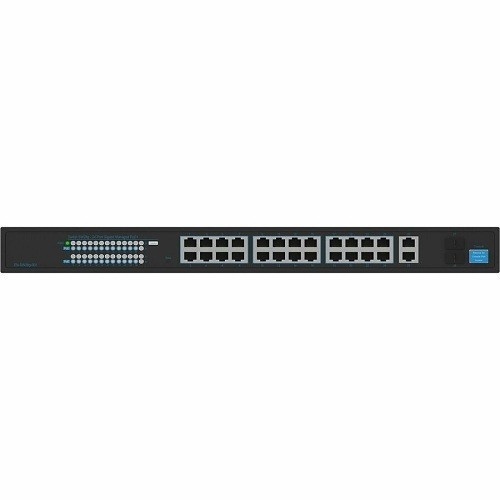
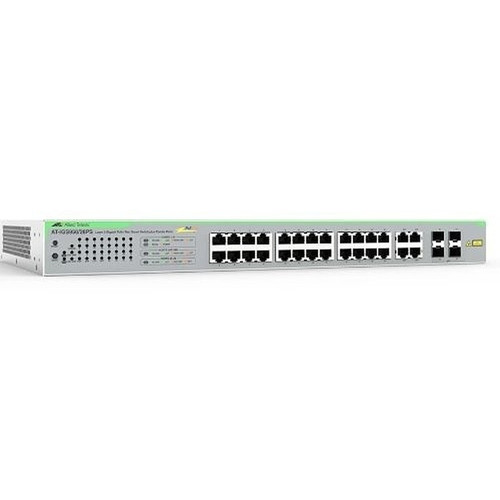
Both the Hanwha HV-X530L-28GPX-90 and HV-IGS950/28PS-910 are 24-port PoE+ managed switches designed for surveillance network aggregation, making them genuine cross-shop candidates for installers sizing a camera LAN. The X530L-28GPX-90 targets larger, higher-density deployments with a 740W PoE budget and 10GbE uplinks, while the IGS950/28PS-910 addresses mid-scale installations at a lower power envelope with standard SFP uplinks. This comparison evaluates the three dimensions that drive switch selection in physical-security deployments: PoE power and port capacity, uplink and switching throughput, and compliance, management, and deployment flexibility.
In This Guide
- Which switch delivers more PoE power, and is it enough for your camera count?
- How do the uplink speeds and switching fabric compare for high-bandwidth aggregation?
- Which switch offers stronger compliance credentials and management flexibility?
- Which should you choose: the X530L-28GPX-90 or the IGS950/28PS-910?
- Side-by-Side Specs
- FAQ
Which switch delivers more PoE power, and is it enough for your camera count?
The HV-X530L-28GPX-90 provides a 740W total PoE budget across 24 x 1GbE PoE+ (802.3at) ports. At a maximum per-port draw of 30W (802.3at), that budget supports approximately 24 simultaneous high-power cameras at roughly 30W each, or a realistic mixed load of PTZ, multi-sensor, and fixed cameras without power-starving any port.
The HV-IGS950/28PS-910 offers 370W total across the same 24 x 802.3at PoE+ ports — exactly half the budget. A 24-camera deployment averaging 15W per camera fits within that envelope, but a mixed load including PTZ cameras (typically 25–30W) or multi-sensor units will require careful per-port power planning to stay within the 370W ceiling.
For deployments where every port may carry a high-power camera simultaneously, the X530L-28GPX-90's 740W budget provides a decisive margin. The IGS950/28PS-910 is adequate for mid-scale or lower-average-draw camera mixes but will require load calculations before commissioning.
How do the uplink speeds and switching fabric compare for high-bandwidth aggregation?
The HV-X530L-28GPX-90 is equipped with four 10GbE SFP+ uplink ports and a 128Gbps wire-speed switching fabric. Four 10G uplinks provide 40Gbps of aggregate uplink capacity, comfortably absorbing the full 24Gbps of downlink gigabit traffic with headroom for future growth and enabling high-speed stacking or NVR connectivity.
The HV-IGS950/28PS-910 specifies four SFP uplink ports. The spec does not state the SFP uplink speed — 1GbE SFP is standard for this class unless otherwise specified, and no higher speed is documented in the provided data. Switching fabric throughput is also not stated for the IGS950/28PS-910. Buyers requiring confirmed 10GbE uplink performance cannot verify that from the available specifications.
For high-resolution multi-stream environments or large NVR bandwidth demands, the X530L-28GPX-90's explicitly documented 10GbE uplinks and 128Gbps fabric offer a clear, spec-verified advantage. The IGS950/28PS-910's uplink throughput should be confirmed against the datasheet before deployment in bandwidth-intensive installations.
Which switch offers stronger compliance credentials and management flexibility?
The HV-X530L-28GPX-90 carries both NDAA and TAA certifications, making it eligible for U.S. federal, state, and local government procurements subject to those requirements. Management is handled via Hanwha's FrameworkTM (AMF) platform. It also supports a Stackable design for multi-unit aggregation and is ONVIF-compliant, ensuring broad camera interoperability beyond Hanwha's own line. The spec notes Protection Switched Ring topology support for network redundancy.
The HV-IGS950/28PS-910 specifies a web-based management interface requiring no external software, which lowers the management infrastructure burden for smaller integrators. It supports IEEE 802.1Q Tagged VLAN and ring topology via its SFP uplinks for network redundancy. Mount flexibility is broader — both wall and rack mounting are documented versus rack-only for the X530L-28GPX-90. NDAA and TAA compliance are not stated in the provided specifications.
Government and regulated-sector buyers requiring NDAA/TAA will need the X530L-28GPX-90. Integrators prioritizing management simplicity or wall-mount deployments in smaller facilities may find the IGS950/28PS-910's web-only interface and dual mount option practical. VMS/camera compatibility claims are explicit only for the X530L-28GPX-90.
Which should you choose: the X530L-28GPX-90 or the IGS950/28PS-910?
Our take: The HV-X530L-28GPX-90 is the stronger choice when deploying high-power cameras at full port density, requiring confirmed 10GbE uplink throughput, or targeting government and regulated-sector projects. Its 740W PoE budget is double the IGS950/28PS-910's 370W, directly determining how many high-draw cameras — PTZ, multi-sensor, or heater-equipped — can run simultaneously without load-shedding. Its four explicitly documented 10GbE SFP+ uplinks and 128Gbps switching fabric provide verified bandwidth headroom the IGS950/28PS-910 cannot confirm from available specs. NDAA and TAA certification on the X530L-28GPX-90 are mandatory differentiators for federal or TAA-restricted contracts. The IGS950/28PS-910 is a reasonable fit for mid-scale installations with lower average camera draw, where its 370W budget is sufficient and its software-free web management reduces overhead — particularly in wall-mount scenarios where the IGS950/28PS-910's dual-mount flexibility is an advantage the X530L-28GPX-90 does not offer.
Side-by-Side Comparison
Spec-for-spec, from manufacturer data.
| Specification | Hanwha X530L-28GPX-90 | Hanwha IGS950/28PS-910 |
|---|---|---|
| SKU | HV-X530L-28GPX-90 | HV-IGS950/28PS-910 |
| PoE Access Ports | 24 x 1GbE PoE+ | 24 x 1GbE PoE+ |
| PoE Standard | 802.3at (PoE+) | 802.3at (PoE+) |
| Total PoE Budget | 740W | 370W |
| Uplink Ports | 4 x 10GbE SFP+ | 4 x SFP (speed not specified) |
| Switching Fabric | 128Gbps wire-speed | — |
| Stackable | Yes | — |
| Mount Type | Rack | Wall; Rack |
| NDAA Compliant | Yes | — |
| TAA Compliant | Yes | — |
| VLAN Support | — | IEEE 802.1Q Tagged VLAN |
| Ring Topology | Protection Switched Ring | Yes (via SFP uplinks) |
| Management | FrameworkTM (AMF) | Web-based (no external software) |
| ONVIF Compatible | Yes | — |
| VMS Compatibility | Hanwha cameras; ONVIF | — |
| Warranty | 5-Year | 5-Year |
Frequently Asked Questions
Which should you choose: the X530L-28GPX-90 or the IGS950/28PS-910?
The HV-X530L-28GPX-90 is the stronger choice when deploying high-power cameras at full port density, requiring confirmed 10GbE uplink throughput, or targeting government and regulated-sector projects. Its 740W PoE budget is double the IGS950/28PS-910's 370W, directly determining how many high-draw cameras — PTZ, multi-sensor, or heater-equipped — can run simultaneously without load-shedding. Its four explicitly documented 10GbE SFP+ uplinks and 128Gbps switching fabric provide verified bandwidth headroom the IGS950/28PS-910 cannot confirm from available specs. NDAA and TAA certification on the X530L-28GPX-90 are mandatory differentiators for federal or TAA-restricted contracts. The IGS950/28PS-910 is a reasonable fit for mid-scale installations with lower average camera draw, where its 370W budget is sufficient and its software-free web management reduces overhead — particularly in wall-mount scenarios where the IGS950/28PS-910's dual-mount flexibility is an advantage the X530L-28GPX-90 does not offer.
Is the HV-X530L-28GPX-90 or HV-IGS950/28PS-910 better for larger deployments with high-power PTZ cameras?
The HV-X530L-28GPX-90 is better suited. Its 740W PoE budget is double the IGS950/28PS-910's 370W, meaning it can sustain more high-draw PTZ cameras — which can consume up to 30W each — across all 24 ports without exceeding the power ceiling. The IGS950/28PS-910's 370W budget limits average per-port draw to roughly 15W in a fully-loaded 24-camera scenario.
Do both switches meet NDAA and TAA requirements for government projects?
Only the HV-X530L-28GPX-90 is documented as NDAA and TAA certified in the provided specifications. The HV-IGS950/28PS-910's specs do not mention NDAA or TAA compliance. Government buyers with those procurement requirements should select the X530L-28GPX-90 and verify compliance documentation against the applicable regulation before specifying.
Can the HV-IGS950/28PS-910 be wall-mounted, and does the X530L-28GPX-90 support that installation?
Yes — the HV-IGS950/28PS-910 specifies both wall and rack mounting. The HV-X530L-28GPX-90 specifies rack-mount only. Installers who need to mount the switch directly to a wall — common in smaller IDF closets or camera enclosures — should specify the IGS950/28PS-910 for that form-factor requirement.
More Network Switch Comparisons
- Vivotek GEV-288A-370 vs Axis T8524
- Vivotek GEV-288A-370 vs Cradlepoint SW2400P-GN
- Vivotek GEV-288A-370 vs Allied Telesis AT-x530L-28GPX-901
- Vivotek GEV-288A-370 vs Ubiquiti USW-ENTERPRISE-24-POE
- Axis T8524 vs Cradlepoint SW2400P-GN
- Axis T8524 vs Allied Telesis AT-x530L-28GPX-901
Network Switch Buying Guides
Get a Second Opinion on Your Camera Choice
Share your site layout, coverage goals, and budget. Our team will validate the camera selection, flag anything we would change, and recommend products that match the use case.