
Hanwha X530L-18GHXM-90 vs Hanwha IGS950/20PS-910: Specification Comparison
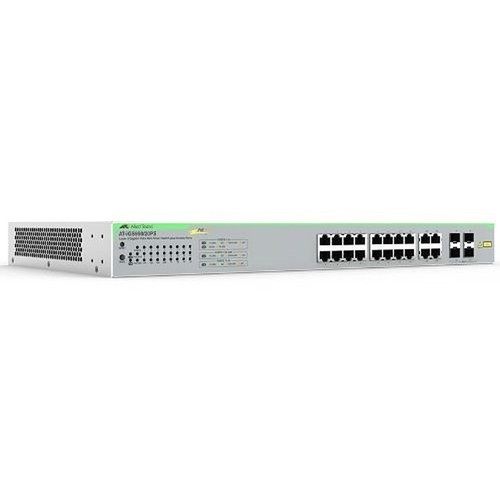
Both products are 16-port PoE managed switches from Hanwha's HV line, purpose-built for IP surveillance deployments. The HV-X530L-18GHXM-90 is a PoE++ (802.3bt) Class 8 switch targeting high-power endpoints such as PTZ cameras, multi-sensor units, and thermal imagers, with multi-speed ports and 10G fiber uplinks. The HV-IGS950/20PS-910 is a PoE+ (802.3at) Gigabit switch suited to standard IP camera and sensor deployments. Both carry 5-year warranties and rack-mount options, making them legitimate cross-shop candidates for a 16-port surveillance edge switch.
In This Guide
- How do the PoE power budget and per-port delivery compare between the X530L-18GHXM-90 and IGS950/20PS-910?
- What switching performance and uplink capacity does each switch deliver for high-density video traffic?
- How do the two switches differ in physical footprint, compliance status, and management capability?
- Which should you choose: the X530L-18GHXM-90 or the IGS950/20PS-910?
- Side-by-Side Specs
- FAQ
How do the PoE power budget and per-port delivery compare between the X530L-18GHXM-90 and IGS950/20PS-910?
The X530L-18GHXM-90 provides a 720W aggregate PoE++ budget across 16 ports, delivering up to 90W per port under the 802.3bt Class 8 standard. This supports the most power-hungry surveillance endpoints — high-wattage PTZ cameras, multi-sensor panoramic units, and thermal imagers that commonly draw 60–90W.
The IGS950/20PS-910 carries a 370W aggregate PoE+ budget under the 802.3at standard, roughly half the total power capacity of the X530L. The 802.3at standard caps per-port delivery at 30W, which is sufficient for conventional fixed IP cameras, intercoms, and sensors but cannot power Class 4+ high-wattage devices. Note: the IGS950/20PS-910 spec sheet lists a conflicting figure of 130W under 'Power Watts' alongside the 370W total budget; buyers should confirm the operative budget with Hanwha documentation before provisioning.
For deployments mixing standard cameras with high-power PTZ or thermal units, the X530L-18GHXM-90's 720W / 90W-per-port envelope is decisive. For all-standard-camera deployments, the IGS950/20PS-910's 370W budget may be adequate, though the conflicting power figures warrant clarification.
What switching performance and uplink capacity does each switch deliver for high-density video traffic?
The X530L-18GHXM-90 features a 200Gbps non-blocking switching fabric at 148.8Mpps forwarding rate, with sub-microsecond latency (5.23µs–8.35µs across speed tiers). Its 16 PoE++ access ports are multi-speed (100M/1G/2.5G/5G), and the two dedicated uplinks are dual 10 Gigabit SFP+ fiber ports. This architecture prevents throughput saturation even when all 16 ports run high-bitrate 4K or multi-stream video simultaneously.
The IGS950/20PS-910 is specified as a Gigabit PoE+ switch. Its uplinks consist of four SFP ports (fiber-capable, preserving all 16 RJ-45 PoE ports). Switching fabric capacity, forwarding rate, and latency figures are not provided in the available specifications for the IGS950/20PS-910; buyers requiring those numbers should request the full datasheet.
On throughput and uplinks, the X530L-18GHXM-90 provides verifiable, quantified performance metrics — 200Gbps fabric, 10G uplinks, and sub-microsecond latency — while the IGS950/20PS-910's internal performance specifications are absent from the data provided. The IGS950/20PS-910 does offer four SFP uplinks versus two on the X530L, which may provide more fiber aggregation flexibility in some topologies.
How do the two switches differ in physical footprint, compliance status, and management capability?
The X530L-18GHXM-90 measures 1.73 x 12.72 x 17.36 in (shipping dimensions 18.15 x 14.61 x 6.02 in) and weighs 13.89 lb. It supports both wall-mount and rack-mount installation. It is explicitly documented as NDAA and TAA compliant, which is a procurement requirement for U.S. federal, state, and many enterprise contracts. Country of origin is Singapore. Its Ethernet capabilities reference EPSRing™ protection-switched ring topology, indicating advanced managed features including ring redundancy.
The IGS950/20PS-910 is specified as a managed switch with rack-mount support. Physical dimensions and weight are not provided in the available specifications. NDAA and TAA compliance status is not stated in the available specifications. Country of origin is not stated. The form factor is described as a managed switch, but specific management feature details (CLI, SNMP version, web GUI, ring redundancy) are not enumerated in the provided data.
For U.S. government or compliance-sensitive deployments, the X530L-18GHXM-90's explicit NDAA/TAA documentation is a clear differentiator. The IGS950/20PS-910's compliance posture cannot be confirmed from the available specifications alone.
Which should you choose: the X530L-18GHXM-90 or the IGS950/20PS-910?
Our take: The X530L-18GHXM-90 is the stronger choice when the deployment includes high-power PTZ cameras, multi-sensor units, or thermal imagers, or when NDAA/TAA compliance is a procurement requirement. Three concrete spec deltas define the gap: the X530L delivers 720W total / 90W per port (802.3bt) versus the IGS950/20PS-910's 370W total / 30W per port (802.3at); the X530L's switching fabric is a documented 200Gbps non-blocking with dual 10G SFP+ uplinks, while the IGS950/20PS-910's fabric capacity and latency are unspecified in available data; and the X530L carries explicit NDAA and TAA compliance documentation, which the IGS950/20PS-910 does not provide in available specs. The IGS950/20PS-910 may suit smaller all-standard-camera deployments on a tighter budget where four SFP uplink ports are preferred, but buyers should resolve the conflicting 130W/370W power figures before purchasing.
Side-by-Side Comparison
Spec-for-spec, from manufacturer data.
| Specification | Hanwha X530L-18GHXM-90 | Hanwha IGS950/20PS-910 |
|---|---|---|
| PoE Standard | PoE++ (802.3bt) Class 8 | PoE+ (802.3at) |
| Total PoE Power Budget | 720W | 370W (see note: 130W also listed in specs) |
| Max Power Per Port | 90W | 30W (802.3at maximum) |
| PoE Access Ports | 16x multi-speed (100M/1G/2.5G/5G) | 16x Gigabit |
| Uplink Ports | 2x 10G SFP+ | 4x SFP |
| Switching Fabric | 200Gbps non-blocking | — |
| Forwarding Rate | 148.8Mpps | — |
| Latency | 5.23µs–8.35µs (sub-microsecond) | — |
| Mount Type | Wall; Rack | Rack |
| Dimensions (in) | 1.73 x 12.72 x 17.36 | — |
| Weight | 13.89 lb | — |
| Country of Origin | Singapore (SG) | — |
| NDAA / TAA Compliant | Yes (explicitly stated) | — |
| Form Factor | Managed Switch | Managed Switch |
| Warranty | 5-Year | 5-Year |
| Housing Color | White | White |
Frequently Asked Questions
Which should you choose: the X530L-18GHXM-90 or the IGS950/20PS-910?
The X530L-18GHXM-90 is the stronger choice when the deployment includes high-power PTZ cameras, multi-sensor units, or thermal imagers, or when NDAA/TAA compliance is a procurement requirement. Three concrete spec deltas define the gap: the X530L delivers 720W total / 90W per port (802.3bt) versus the IGS950/20PS-910's 370W total / 30W per port (802.3at); the X530L's switching fabric is a documented 200Gbps non-blocking with dual 10G SFP+ uplinks, while the IGS950/20PS-910's fabric capacity and latency are unspecified in available data; and the X530L carries explicit NDAA and TAA compliance documentation, which the IGS950/20PS-910 does not provide in available specs. The IGS950/20PS-910 may suit smaller all-standard-camera deployments on a tighter budget where four SFP uplink ports are preferred, but buyers should resolve the conflicting 130W/370W power figures before purchasing.
Can the IGS950/20PS-910 power PTZ cameras and thermal imagers the same way the X530L-18GHXM-90 can?
Not equivalently. The IGS950/20PS-910 uses 802.3at (PoE+), which caps per-port delivery at 30W. High-wattage PTZ and thermal cameras that require 60–90W require 802.3bt (PoE++) Class 8, which only the X530L-18GHXM-90 provides at up to 90W per port. Check your camera's power draw specification before selecting a switch.
Is the X530L-18GHXM-90 or IGS950/20PS-910 better for U.S. government or federal surveillance projects?
The X530L-18GHXM-90 is explicitly documented as NDAA and TAA compliant in the available specifications. The IGS950/20PS-910's NDAA and TAA compliance status is not stated in the provided specifications. For federally funded or government projects where NDAA/TAA compliance is a contract requirement, the X530L-18GHXM-90 has a verifiable compliance declaration; the IGS950/20PS-910 would require direct confirmation from Hanwha before use on such projects.
Does the IGS950/20PS-910 have more uplink flexibility than the X530L-18GHXM-90?
The IGS950/20PS-910 provides four SFP uplink ports for fiber connectivity without consuming any of its 16 PoE RJ-45 ports, which can offer more fiber aggregation paths. The X530L-18GHXM-90 has two dedicated 10 Gigabit SFP+ uplinks, which provide significantly higher per-uplink bandwidth (10G vs. the IGS950/20PS-910's SFP speed, which is not specified in available data). The better choice depends on whether uplink count or uplink bandwidth is the priority for your network topology.
More Network Switch Comparisons
- Vivotek GEL-205A-260 vs TP-Link SL1218MP
- Vivotek GEL-205A-260 vs Allied Telesis AT-x530L-18GHXm-10
- Vivotek GEL-205A-260 vs Ubiquiti USW-LITE-16-POE
- Vivotek GEL-205A-260 vs Ubiquiti USW-16-POE
- TP-Link SL1218MP vs Allied Telesis AT-x530L-18GHXm-10
- TP-Link SL1218MP vs Ubiquiti USW-LITE-16-POE
Network Switch Buying Guides
Get a Second Opinion on Your Camera Choice
Share your site layout, coverage goals, and budget. Our team will validate the camera selection, flag anything we would change, and recommend products that match the use case.