
Hanwha PRN-3200B4 vs Kantech ADVER30R5H3G: Specification Comparison
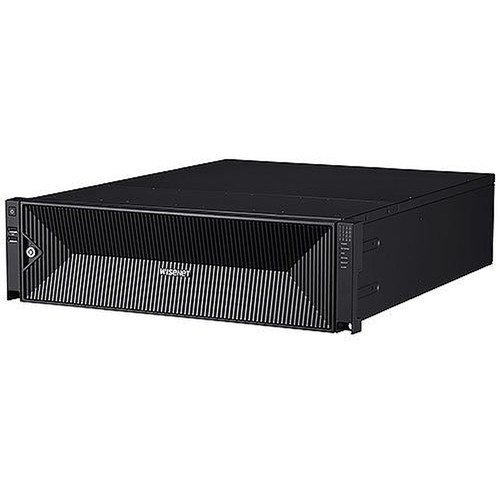
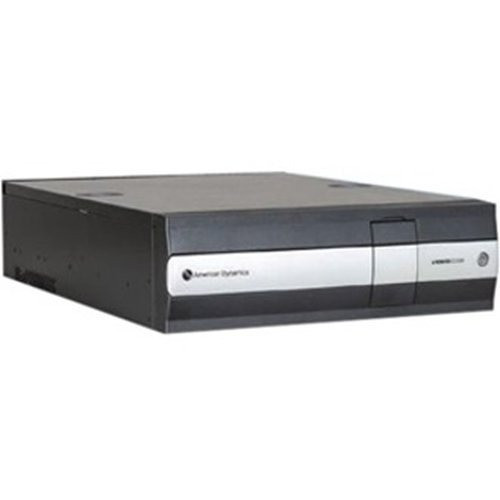
Both the Hanwha PRN-3200B4 and the Kantech ADVER30R5H3G are 32-channel rackmount NVRs positioned for mid-to-large surveillance deployments. The PRN-3200B4 is a pure-IP NVR running embedded Linux with 8K decoding capability and deep AI analytics integration. The ADVER30R5H3G is a 3U hybrid NVR supporting analog and IP cameras simultaneously on the VideoEdge platform. This comparison covers recording capacity and resolution, storage and physical build, and ecosystem integration—the three axes most consequential for an installer selecting between these two units.
In This Guide
- How do recording bandwidth, resolution, and channel capacity compare between the two units?
- How do onboard storage capacity, physical build, and power requirements differ?
- Which unit offers broader integration, access control tie-in, and remote management capability?
- Which should you choose: the PRN-3200B4 or the ADVER30R5H3G?
- Side-by-Side Specs
- FAQ
How do recording bandwidth, resolution, and channel capacity compare between the two units?
The PRN-3200B4 supports up to 400 Mbps recording bandwidth across 32 IP channels with a maximum camera resolution of 32MP. It decodes 32MP at 15fps, 12MP at 30fps, and 8.3MP at 120fps locally, and supports a 36-division multi-screen display with dual HDMI outputs (4K@30Hz and 1080p@60Hz). Simultaneous playback reaches 80 channels (32 local, 16 per remote user, max 3 remote users). Codec support covers H.265, H.264, MJPEG, and WiseStream variants.
The ADVER30R5H3G is specified as a 32-channel hybrid unit accepting both analog SD and IP cameras. Its listed maximum resolution is VGA (640×480) in the spec data, though marketing copy references broader IP expansion. Compression support is listed as H.265 and H.264. Specific recording bandwidth figures, per-channel frame rates, and multi-screen division counts are not provided in the available specifications for this model.
For bandwidth and resolution, the PRN-3200B4 provides substantially more detailed specifications. The ADVER30R5H3G's hybrid analog+IP capability is a meaningful architectural difference for sites with legacy analog infrastructure, but its resolution ceiling per spec (VGA) is dramatically lower than the PRN-3200B4's 32MP ceiling—buyers should verify the ADVER30R5H3G's IP channel resolution ceiling against Kantech's full datasheet before drawing conclusions.
How do onboard storage capacity, physical build, and power requirements differ?
The PRN-3200B4 ships without drives but accommodates 16 SATA hot-swap bays supporting up to 10TB drives each, yielding a maximum raw capacity of 160TB. It supports iSCSI external storage expansion and RAID-5/6 configurations across two 8-HDD arrays. The chassis measures 440×132×571.1mm and weighs approximately 13.6 kg without HDDs. Power draw peaks at 285W (972.5 BTU) with 16 drives installed; input accepts 100–240VAC, 50/60Hz. Operating temperature range is 0°C to 40°C at 20–85% RH non-condensing.
The ADVER30R5H3G ships with 30TB of RAID-configured storage pre-installed in a 3U chassis (483×130×610mm, 25 lb / ~11.3 kg). Its power supply is rated at 400W, 100–240VAC. Operating temperature and humidity specifications are not listed in the available data. Drive count, individual drive capacity, and RAID level are not specified in the provided specs.
The ADVER30R5H3G's pre-configured 30TB is a practical advantage for straightforward deployments, while the PRN-3200B4's 160TB ceiling and hot-swap RAID support better serves large or growing installations. The PRN-3200B4's 285W peak is lower than the ADVER30R5H3G's 400W supply rating, though actual loaded draw for the ADVER30R5H3G is not specified.
Which unit offers broader integration, access control tie-in, and remote management capability?
The PRN-3200B4 integrates with the Wisenet ecosystem (SUNAPI, Wisenet AI cameras) and supports ONVIF Profile-S for third-party cameras. Network protocol coverage includes IPv4/IPv6, HTTPS, SNMP, DDNS, RTSP, RTP, IGMP, and uPnP. Remote management is supported via web browser (Chrome, Edge, Safari on Windows 10 and macOS 10.13), Smart Viewer CMS, Wisenet Mobile (iOS/Android), and PTZ controller SPC-2000. Security features include 802.1x, IP address filtering, user access logging, device certificates via Hanwha Techwin Root CA, and signed firmware. AI search covers person, face, vehicle, and license plate attributes when paired with Wisenet AI cameras. N+1 failover and ARB redundancy are supported.
The ADVER30R5H3G runs VideoEdge OS (openSUSE Linux) and lists RS-232 and IP/Ethernet as its communication interfaces. Its spec data includes a 'Reader Type: Biometric' field and 'Product Type: Controller' classification, suggesting integration with the Kantech access control platform—a meaningful differentiator for unified video-and-access deployments. Compatible VMS and specific software client details are not elaborated in the available specifications. ONVIF support, remote user limits, and security protocol details are not listed.
The PRN-3200B4 delivers a fully documented integration stack with explicit protocol lists, AI analytics, and mobile/web client specifications. The ADVER30R5H3G's apparent Kantech access control integration is a unique capability not present in the PRN-3200B4's spec set, but the depth of that integration and the full VMS feature set cannot be confirmed from the provided data alone.
Which should you choose: the PRN-3200B4 or the ADVER30R5H3G?
Our take: The PRN-3200B4 is the stronger choice when the deployment is pure-IP, resolution and bandwidth headroom are priorities, and the site runs—or plans to run—Wisenet AI cameras. Spec-for-spec: it supports 32MP camera resolution versus the ADVER30R5H3G's listed VGA ceiling; it delivers 400 Mbps recording bandwidth where no equivalent figure is specified for the Kantech unit; and it scales to 160TB raw (16 hot-swap bays, RAID-5/6) against the ADVER30R5H3G's pre-configured 30TB. The ADVER30R5H3G is the more appropriate selection when a site has existing analog cameras requiring hybrid integration, or when unified Kantech access control and video management on a single platform is a hard requirement—capabilities absent from the PRN-3200B4's specification set. Installers should obtain the full ADVER30R5H3G datasheet to confirm IP-channel resolution limits and VMS client details before finalizing either choice.
Side-by-Side Comparison
Spec-for-spec, from manufacturer data.
| Specification | Hanwha PRN-3200B4 | Kantech ADVER30R5H3G |
|---|---|---|
| Product Type | Pure-IP NVR (embedded Linux) | Hybrid NVR / Controller (VideoEdge / openSUSE Linux) |
| Max Camera Channels | 32 IP | 32 analog + IP expansion |
| Max Camera Resolution | 32MP | VGA (640×480) per spec |
| Recording Bandwidth | 400 Mbps | — |
| Video Compression | H.265, H.264, MJPEG, WiseStream | H.265, H.264 |
| Local Display Output | Dual HDMI: 4K@30Hz + 1080p@60Hz | — |
| Multi-Screen Divisions | 36 max | — |
| Internal Storage Bays | 16 × SATA hot-swap (max 10TB/drive) | — |
| Max Raw Storage | 160TB | 30TB (RAID, pre-configured) |
| External Storage | iSCSI | — |
| RAID Support | RAID-5/6 | RAID-configured (level not specified) |
| Max Power Draw | 285W (972.5 BTU, 16 HDDs) | 400W supply rated |
| Input Voltage | 100–240VAC, 50/60Hz | 100–240VAC |
| Ethernet Ports | 3 × RJ-45 1Gbps | — |
| ONVIF Support | Yes (Profile-S) | — |
| AI Search | Person, face, vehicle, license plate | — |
| Access Control Integration | — | Kantech platform (biometric reader type listed) |
| Redundancy | N+1 failover, ARB | — |
| Operating Temperature | 0°C to 40°C | — |
| Weight (no drives) | 13.6 kg (30 lb) | ~11.3 kg (25 lb) |
| Form Factor | Rackmount (2U-class chassis) | 3U Rackmount |
Frequently Asked Questions
Which should you choose: the PRN-3200B4 or the ADVER30R5H3G?
The PRN-3200B4 is the stronger choice when the deployment is pure-IP, resolution and bandwidth headroom are priorities, and the site runs—or plans to run—Wisenet AI cameras. Spec-for-spec: it supports 32MP camera resolution versus the ADVER30R5H3G's listed VGA ceiling; it delivers 400 Mbps recording bandwidth where no equivalent figure is specified for the Kantech unit; and it scales to 160TB raw (16 hot-swap bays, RAID-5/6) against the ADVER30R5H3G's pre-configured 30TB. The ADVER30R5H3G is the more appropriate selection when a site has existing analog cameras requiring hybrid integration, or when unified Kantech access control and video management on a single platform is a hard requirement—capabilities absent from the PRN-3200B4's specification set. Installers should obtain the full ADVER30R5H3G datasheet to confirm IP-channel resolution limits and VMS client details before finalizing either choice.
Is the PRN-3200B4 or ADVER30R5H3G better for larger deployments?
The PRN-3200B4 scales further by raw storage: its 16 SATA bays support up to 160TB with RAID-5/6 and hot-swap, plus iSCSI expansion, compared to the ADVER30R5H3G's pre-installed 30TB. For channel count both are rated at 32, but the PRN-3200B4 specifies 400 Mbps bandwidth and supports N+1 failover, which are meaningful for dense, high-resolution IP-camera deployments. The ADVER30R5H3G's storage ceiling is not specified beyond the included 30TB.
Can either unit work with existing analog cameras?
The ADVER30R5H3G is explicitly specified as a hybrid unit supporting both analog SD and IP cameras, making it the appropriate choice for sites with legacy analog infrastructure. The PRN-3200B4 is a pure-IP NVR; analog camera integration is not listed in its specifications.
Which unit supports access control integration?
The ADVER30R5H3G's spec data lists 'Reader Type: Biometric' and classifies the product as a 'Controller,' indicating integration with the Kantech access control ecosystem—a capability not present in the PRN-3200B4's specifications. The PRN-3200B4 is a standalone video NVR with no access control integration listed. Buyers requiring unified video and access control on a single Kantech platform should evaluate the ADVER30R5H3G, subject to confirmation from the full Kantech datasheet.
Get a Second Opinion on Your Camera Choice
Share your site layout, coverage goals, and budget. Our team will validate the camera selection, flag anything we would change, and recommend products that match the use case.