
Hanwha GS970M/28PS-10 vs Hanwha IGS950/28PS-910: Specification Comparison
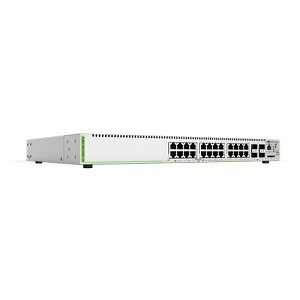
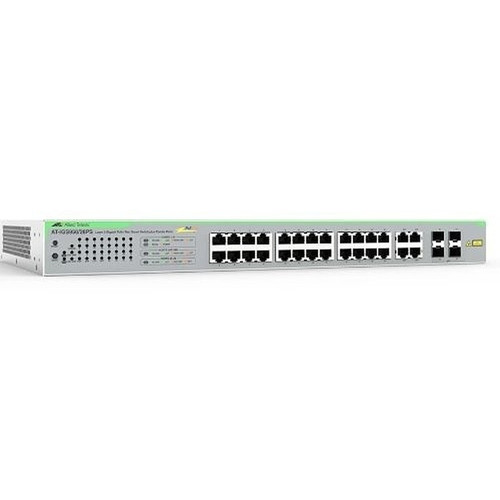
Both the Hanwha HV-GS970M/28PS-10 and HV-IGS950/28PS-910 are 24-port PoE+ managed switches targeting mid-scale physical security deployments—specifically IP camera and edge-device infrastructure. Both share a 24-port 802.3at PoE+ configuration, a 370W power budget, four SFP uplink ports, wall/rack mounting options, a white housing, and a five-year warranty. The comparison examines where their documented switching architecture, feature sets, and management capabilities diverge to help installers and IT buyers select the right platform for their network tier.
In This Guide
- How do the switching architecture and Layer capability differ between the two models?
- Are the PoE power budget, port counts, and uplink capabilities equivalent across both switches?
- Which switch offers more documented management and network integration options?
- Which should you choose: the GS970M/28PS-10 or the IGS950/28PS-910?
- Side-by-Side Specs
- FAQ
How do the switching architecture and Layer capability differ between the two models?
The GS970M/28PS-10 specifies a 56 Gbps non-blocking switching fabric and is documented as a Layer 3 managed switch, meaning it can perform inter-VLAN routing and support multi-subnet topologies without an external router. This is a meaningful distinction for deployments that span multiple VLANs or physical locations where routing at the access layer reduces dependency on upstream infrastructure.
The IGS950/28PS-910 does not have a switching fabric capacity or Layer designation listed in the provided specifications. Its form factor is listed as 'Managed Switch,' and its storage field references IEEE 802.1Q Tagged VLAN support, confirming VLAN awareness, but whether it operates at Layer 2 or Layer 3 cannot be determined from the available spec data. Buyers requiring confirmed Layer 3 capability should note this gap.
Are the PoE power budget, port counts, and uplink capabilities equivalent across both switches?
Both switches match on the core power and port specification: 24 × Gigabit 802.3at PoE+ access ports and a 370W total PoE budget, which supports roughly 15.4W per port at full load across all 24 ports. Both also provide four SFP uplink ports rated for 100/1000Base-X on the GS970M/28PS-10; the IGS950/28PS-910 specs confirm four SFP uplinks but do not explicitly state the speed rating in the provided data.
The IGS950/28PS-910 bullet points reference ring topology support via its SFP uplinks, implying redundant uplink or ERPS/ring-protection capability—a feature relevant for resilient surveillance ring networks. The GS970M/28PS-10 specs do not explicitly mention ring topology support. Neither spec sheet provides per-port PoE wattage maximums beyond the 802.3at (30W) standard ceiling.
Both models support wall and rack mounting. Housing color is white for both, consistent with Hanwha's surveillance-accessory line aesthetic.
Which switch offers more documented management and network integration options?
The GS970M/28PS-10 explicitly lists SNMP, a web interface, and CLI as management interfaces, and its management field also references 'FrameworkTM Plus.' SNMP support (with RFC 2819 RMON MIB groups 1, 2, 3, and 9 noted in the port/Ethernet rate fields) enables integration with NMS platforms and aligns with enterprise-grade monitoring workflows. CLI access is relevant for scripted configuration and automated provisioning.
The IGS950/28PS-910 documents a web-based management interface and explicitly states no external software is required. However, SNMP and CLI are not listed in the provided specifications for this model. The storage field notes '32MB UKCA IEEE 802.1Q Tagged VLAN,' confirming VLAN tagging support, but SNMP or programmatic management capability is unconfirmed from the available data.
Both units carry a five-year warranty. The IGS950/28PS-910 includes a UKCA marking reference, which may be relevant for UK/EU market compliance documentation, though neither spec set provides full regulatory certification lists.
Which should you choose: the GS970M/28PS-10 or the IGS950/28PS-910?
Our take: The GS970M/28PS-10 is the stronger choice when confirmed Layer 3 routing, SNMP-based monitoring, and CLI management are required. Its 56 Gbps non-blocking fabric is a documented throughput figure the IGS950/28PS-910 does not supply, giving network engineers a concrete capacity baseline for high-channel-count camera deployments. SNMP with RMON MIB (groups 1, 2, 3, 9) and CLI access make it integrable with enterprise NMS platforms, whereas the IGS950/28PS-910 documents only a web interface. Where the IGS950/28PS-910 differentiates itself is ring topology support via SFP uplinks—a feature not confirmed on the GS970M/28PS-10—making it a candidate for resilient ring-network surveillance architectures. Both switches are otherwise matched on PoE budget (370W), port count (24 × 802.3at), uplinks (4 × SFP), warranty (5-year), and mounting options. Select the GS970M/28PS-10 for multi-subnet, SNMP-managed deployments; evaluate the IGS950/28PS-910 where ring redundancy is the priority and Layer 3 is not required.
Side-by-Side Comparison
Spec-for-spec, from manufacturer data.
| Specification | Hanwha GS970M/28PS-10 | Hanwha IGS950/28PS-910 |
|---|---|---|
| SKU | HV-GS970M/28PS-10 | HV-IGS950/28PS-910 |
| PoE Access Ports | 24 × Gigabit 802.3at | 24 × Gigabit 802.3at |
| Total PoE Budget | 370W | 370W |
| Uplink Ports | 4 × SFP (100/1000Base-X) | 4 × SFP |
| Uplink Speed Rating | 100/1000Base-X | — |
| Switching Fabric | 56 Gbps non-blocking | — |
| Layer | Layer 3 managed | — |
| SNMP Support | Yes (RMON MIB groups 1,2,3,9) | — |
| CLI Management | Yes | — |
| Web Interface | Yes | Yes |
| Ring Topology Support | — | Yes (per bullet) |
| VLAN Support | — | IEEE 802.1Q Tagged VLAN |
| Mount Type | Wall; Rack | Wall; Rack |
| Housing Color | White | White |
| Warranty | 5-Year | 5-Year |
| UKCA Marking Referenced | — | Yes |
Frequently Asked Questions
Which should you choose: the GS970M/28PS-10 or the IGS950/28PS-910?
The GS970M/28PS-10 is the stronger choice when confirmed Layer 3 routing, SNMP-based monitoring, and CLI management are required. Its 56 Gbps non-blocking fabric is a documented throughput figure the IGS950/28PS-910 does not supply, giving network engineers a concrete capacity baseline for high-channel-count camera deployments. SNMP with RMON MIB (groups 1, 2, 3, 9) and CLI access make it integrable with enterprise NMS platforms, whereas the IGS950/28PS-910 documents only a web interface. Where the IGS950/28PS-910 differentiates itself is ring topology support via SFP uplinks—a feature not confirmed on the GS970M/28PS-10—making it a candidate for resilient ring-network surveillance architectures. Both switches are otherwise matched on PoE budget (370W), port count (24 × 802.3at), uplinks (4 × SFP), warranty (5-year), and mounting options. Select the GS970M/28PS-10 for multi-subnet, SNMP-managed deployments; evaluate the IGS950/28PS-910 where ring redundancy is the priority and Layer 3 is not required.
Is the GS970M/28PS-10 or IGS950/28PS-910 better for deployments that need inter-VLAN routing at the switch level?
Based on the provided specifications, the GS970M/28PS-10 is documented as a Layer 3 managed switch, which means it can route traffic between VLANs natively. The IGS950/28PS-910 does not have a Layer designation listed in its available specs, so Layer 3 routing capability cannot be confirmed for that model from the provided data.
Can either switch be monitored via SNMP in an existing NMS or VMS platform?
The GS970M/28PS-10 explicitly lists SNMP (with RFC 2819 RMON MIB groups 1, 2, 3, and 9) as a supported management protocol. The IGS950/28PS-910 specs do not list SNMP support—only a web-based management interface is documented. Buyers requiring SNMP integration should confirm IGS950/28PS-910 SNMP capability directly with Hanwha before specifying it.
Do both switches support the same total PoE power budget for powering cameras?
Yes—both the GS970M/28PS-10 and IGS950/28PS-910 specify a 370W total PoE power budget across 24 × 802.3at (PoE+) ports. At the 802.3at ceiling of 30W per port, this budget supports approximately 12 fully loaded cameras simultaneously, or more cameras at typical 12–15W draw.
More Network Switch Comparisons
- Vivotek GEV-288A-370 vs Axis T8524
- Vivotek GEV-288A-370 vs Cradlepoint SW2400P-GN
- Vivotek GEV-288A-370 vs Allied Telesis AT-x530L-28GPX-901
- Vivotek GEV-288A-370 vs Ubiquiti USW-ENTERPRISE-24-POE
- Axis T8524 vs Cradlepoint SW2400P-GN
- Axis T8524 vs Allied Telesis AT-x530L-28GPX-901
Network Switch Buying Guides
Get a Second Opinion on Your Camera Choice
Share your site layout, coverage goals, and budget. Our team will validate the camera selection, flag anything we would change, and recommend products that match the use case.