
Geovision ABL471W-0010 vs Geovision TBL480W-0010: Specification Comparison
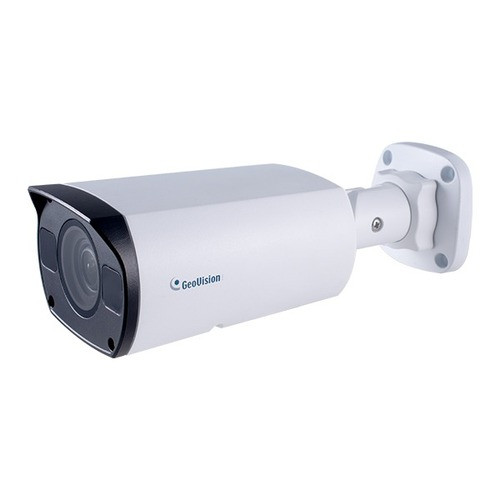
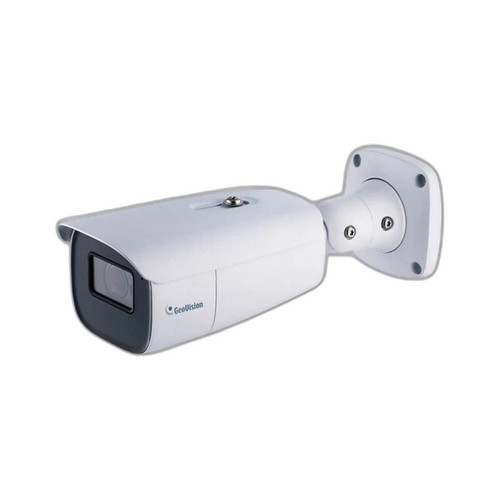
Both the Geovision ABL471W-0010 and TBL480W-0010 are 4MP fixed bullet IP cameras positioned for perimeter and general-surveillance deployments. They share the same resolution class, form factor, compression baseline, and PoE power delivery, making them a legitimate cross-shop for installers evaluating Geovision's bullet lineup. This comparison draws exclusively from the provided specifications; where a spec is absent for either model it is noted rather than assumed.
In This Guide
How do the imaging specs compare?
Both cameras deliver 4MP resolution with 850nm IR illumination and WDR Pro for high-contrast scene handling. The ABL471W-0010 specifies a 4.3mm fixed lens, giving buyers a concrete focal length to evaluate coverage angles and identification distance before deployment. The TBL480W-0010 does not specify a focal length in the provided data, which makes pre-installation field-of-view calculations impossible without referencing the full datasheet directly.
On compression, the ABL471W-0010 explicitly supports both H.265 and H.264, useful in mixed NVR environments where legacy recorders may not decode H.265. The TBL480W-0010 lists H.265 only. Minimum illumination figures, image sensor size, and maximum frame rate are absent from both models' provided specs, so low-light sensitivity cannot be numerically compared here.
What about installation and environment?
Both cameras are wall-mountable bullet form factors powered by PoE, eliminating the need for a separate power run. The TBL480W-0010 additionally lists ceiling as a supported mount type, giving it slightly more placement flexibility out of the box. Neither model's provided specs include an IP ingress-protection rating, IK impact rating, operating temperature range, or enclosure material, all of which are critical for outdoor and vandal-prone deployments — installers must consult the manufacturer datasheets before specifying either unit for harsh environments.
PoE class, cable distance limits, and conduit requirements are not stated in either spec set. Both are categorized as IPCAM under cable category, consistent with standard Cat5e/Cat6 Ethernet runs.
Which fits your VMS and analytics better?
Both cameras declare ONVIF Profile S compliance, making them compatible with any Profile S-conformant NVR or VMS platform. The TBL480W-0010 explicitly names Geovision-native VMS and third-party NVR platforms in its VMS compatibility field; the ABL471W-0010 lists ONVIF Profile S only. Neither spec set mentions edge analytics, on-board SD card storage, audio input/output, or alarm I/O — buyers requiring those capabilities should verify against the respective PDF datasheets before making a selection.
Which should you choose: the ABL471W-0010 or the TBL480W-0010?
Our take: The ABL471W-0010 is the stronger choice when a known fixed focal length and dual-codec flexibility are required. It specifies a 4.3mm lens, enabling pre-deployment coverage planning, whereas the TBL480W-0010 provides no focal length in the available data. The ABL471W-0010 also supports both H.265 and H.264, accommodating legacy NVRs that lack H.265 decode capability — the TBL480W-0010 lists H.265 only. Conversely, the TBL480W-0010 gains a ceiling mount option alongside wall, offers broader stated VMS compatibility including native Geovision platform references, and may suit facilities already standardized on Geovision VMS. Both cameras share 4MP resolution, 850nm IR, WDR Pro, ONVIF Profile S, and PoE. Because IP rating, operating temperature, IR range, and minimum illumination are absent from both spec sets, neither model can be unconditionally recommended for outdoor or low-light-critical applications without datasheet review.
Side-by-Side Comparison
Spec-for-spec, from manufacturer data.
| Specification | Geovision ABL471W-0010 | Geovision TBL480W-0010 |
|---|---|---|
| Resolution | 4MP | 4MP |
| Camera Type | Fixed Bullet | Fixed Bullet |
| Lens / Focal Length | 4.3mm fixed | — (not specified) |
| IR Illumination | IR, 850nm | IR, 850nm |
| IR Range | — (not specified) | — (not specified) |
| WDR | WDR Pro | WDR Pro |
| Min. Illumination | — (not specified) | — (not specified) |
| Video Compression | H.265; H.264 | H.265 |
| Max Frame Rate | — (not specified) | — (not specified) |
| Power Input | PoE | PoE |
| PoE Class | — (not specified) | — (not specified) |
| Mount Type | Wall | Wall; Ceiling |
| IP Rating | — (not specified) | — (not specified) |
| IK / Impact Rating | — (not specified) | — (not specified) |
| Operating Temperature | — (not specified) | — (not specified) |
| ONVIF | Profile S | Profile S |
| VMS Compatibility | ONVIF Profile S | ONVIF Profile S; Geovision; Third-party NVR platforms |
| Edge Storage | — (not specified) | — (not specified) |
| Audio | — (not specified) | — (not specified) |
| Connectivity | Ethernet | PoE (Ethernet) |
Frequently Asked Questions
Which should you choose: the ABL471W-0010 or the TBL480W-0010?
The ABL471W-0010 is the stronger choice when a known fixed focal length and dual-codec flexibility are required. It specifies a 4.3mm lens, enabling pre-deployment coverage planning, whereas the TBL480W-0010 provides no focal length in the available data. The ABL471W-0010 also supports both H.265 and H.264, accommodating legacy NVRs that lack H.265 decode capability — the TBL480W-0010 lists H.265 only. Conversely, the TBL480W-0010 gains a ceiling mount option alongside wall, offers broader stated VMS compatibility including native Geovision platform references, and may suit facilities already standardized on Geovision VMS. Both cameras share 4MP resolution, 850nm IR, WDR Pro, ONVIF Profile S, and PoE. Because IP rating, operating temperature, IR range, and minimum illumination are absent from both spec sets, neither model can be unconditionally recommended for outdoor or low-light-critical applications without datasheet review.
Is the ABL471W-0010 or TBL480W-0010 better for low light?
Neither model's provided specs include a minimum illumination figure or IR range distance, so a direct low-light comparison cannot be made from the available data. Both cameras use 850nm IR illumination and WDR Pro. Consult each model's full datasheet for lux ratings and IR throw distance before specifying for low-light or no-light environments.
Can I use either camera with a non-Geovision NVR?
Yes. Both cameras declare ONVIF Profile S compliance, which enables integration with any ONVIF Profile S-conformant VMS or NVR. The TBL480W-0010 additionally lists third-party NVR platforms in its compatibility field. The ABL471W-0010 also supports H.264 alongside H.265, which may be an advantage with older third-party recorders that do not decode H.265.
Which camera is easier to position — the ABL471W-0010 or TBL480W-0010?
The TBL480W-0010 supports both wall and ceiling mounting per its provided specs, while the ABL471W-0010 lists wall mount only. For lens aiming, the ABL471W-0010 has the advantage of a stated 4.3mm focal length, allowing the installer to calculate field of view in advance. The TBL480W-0010 provides no focal length in the available data, requiring a datasheet lookup before placement planning.
Get a Second Opinion on Your Camera Choice
Share your site layout, coverage goals, and budget. Our team will validate the camera selection, flag anything we would change, and recommend products that match the use case.