
Hanwha C7083R vs i-PRO U1542LA: Specification Comparison
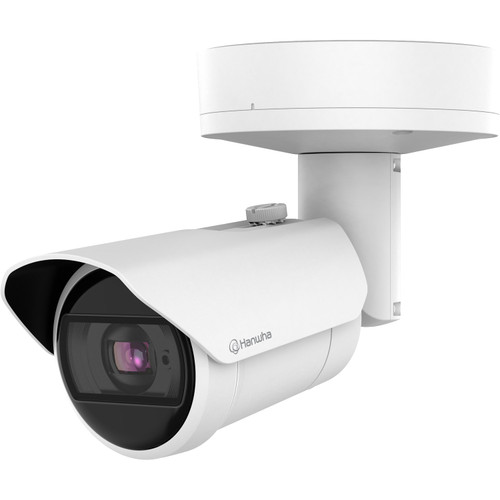
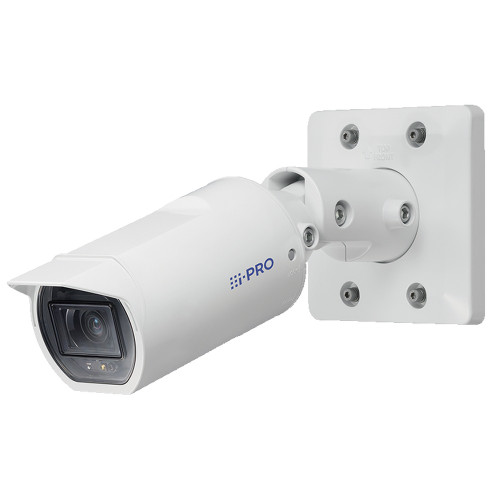
Both the Hanwha XNO-C7083R and the i-PRO WV-U1542LA are 4MP outdoor fixed bullet cameras powered by PoE, positioned for perimeter and general-purpose surveillance in commercial and industrial installations. This comparison examines how their imaging capabilities, environmental ratings, and integration features differ so installers and IT buyers can select the right unit for their specific deployment requirements.
In This Guide
How do the imaging specs compare?
The XNO-C7083R uses a 1/2.8" progressive CMOS sensor delivering 2592×1520 at up to 60 fps, while the WV-U1542LA uses an approximately 1/2.7" CMOS sensor outputting 2688×1520 at a maximum of 30 fps. The Hanwha's doubled frame rate is a meaningful advantage in scenes with fast-moving subjects. On low-light performance the gap is significant: the C7083R reaches 0.038 Lux in color mode and 0 Lux with IR active, versus 0.3 Lux color and 0.12 Lux B&W for the U1542LA. The Hanwha also claims 120 dB extremeWDR compared to the i-PRO's maximum of 102 dB Super Dynamic, a roughly 18 dB advantage in high-contrast scenes.
Lens ranges differ as well. The C7083R offers a 2.8–10 mm motorized varifocal with a 3.6× zoom ratio and a maximum aperture of F1.4 at wide, providing a horizontal field of view up to 110°. The U1542LA covers 2.9–7.3 mm at 2.5× optical zoom with a maximum aperture of F2.0 at wide, yielding up to 103° horizontal. The C7083R's wider aperture at the wide end contributes to its lower minimum illumination figure. IR range is 40 m for the C7083R versus 20 m for the U1542LA, a 2× difference in rated illumination distance. DORI detect distances reflect this: at wide the C7083R reaches 36.3 m versus the U1542LA's 40.7 m, while at tele the C7083R extends to 193.5 m versus 126.7 m.
What about installation and environment?
Both cameras carry IP66 and IK10 ratings, and both are NEMA 4X compliant, so neither has an advantage on ingress protection or impact resistance. The C7083R adds an IP67 rating and an operating temperature range of -40°C to +55°C. The U1542LA is rated -30°C to +50°C, a narrower window on both ends. For cold-climate or high-heat deployments the Hanwha's broader thermal tolerance is a practical specification advantage. The i-PRO specifies wind resistance to 40 m/s (approx. 89 mph) and includes a Temish anti-condensation element; neither of these specifications is listed for the Hanwha.
On power, the C7083R draws up to 12.95 W and supports PoE IEEE 802.3af Class 3, plus 12 VDC as an alternate input. The U1542LA draws 7.2 W at PoE Class 0 on IEEE 802.3af, making it friendlier to switch port budgets on constrained infrastructure. The C7083R includes a built-in gyro sensor for digital image stabilization, relevant for pole or vibration-prone mounts. The Hanwha ships at 1,640 g versus the i-PRO's 860 g, nearly double the mass, which affects bracket selection and conduit planning. The C7083R lists compatible gang boxes (single, double, 4" octagon, 4" square) and includes a backbox; mounting accessory details are not listed in the U1542LA's provided specifications.
Which fits your VMS and analytics better?
Both cameras support ONVIF, but the C7083R covers Profiles S, G, T, and M, while the U1542LA covers Profiles G, S, and T only. The Hanwha's ONVIF Profile M support extends metadata interoperability for analytics-aware VMS platforms. The C7083R includes AI-based analytics covering person, face, vehicle type (car/bus/truck/motorcycle/bicycle), and license plate detection, virtual line crossing with direction, virtual area intrusion, and business intelligence functions (people counting, queue management, heatmap). The U1542LA lists VMD across 4 areas and scene-change detection; no AI object classification is specified in the provided data.
Audio support differs materially. The C7083R provides both audio input (mic/line selectable, 2.5 VDC bias) and audio output (line out, 1 Vrms), with G.711 and G.726 compression. The U1542LA lists no audio input or output in its specifications. Edge storage on both tops out at 512 GB microSDXC. The C7083R supports up to 10 streaming profiles with 3 virtual channels and unicast to 20 simultaneous users; the U1542LA supports up to 14 simultaneous users. The Hanwha supports MQTT on the alarm trigger side, WiseStream II/III smart codec, and SRTP; the i-PRO also lists MQTT and GOP control but does not specify SRTP in the provided data. The C7083R lists 2 configurable I/O ports; the U1542LA lists no external I/O terminals in the provided specifications.
Which should you choose: the C7083R or the U1542LA?
Our take: The XNO-C7083R is the stronger choice when frame rate, low-light performance, and on-camera analytics are primary requirements. The C7083R captures at 60 fps versus the U1542LA's 30 fps, reaches 0.038 Lux color sensitivity against the U1542LA's 0.3 Lux, and delivers 120 dB WDR versus 102 dB—meaningful deltas in motion-heavy or high-contrast scenes. Its 40 m IR range doubles the U1542LA's 20 m, and it adds AI object classification, bidirectional audio, 2 alarm I/O ports, and ONVIF Profile M absent from the U1542LA's specifications. The U1542LA is more power-efficient at 7.2 W (PoE Class 0) versus the C7083R's 12.95 W (Class 3), weighs roughly half as much, and carries a 5-year warranty versus the C7083R's 3-year warranty. Specify the U1542LA where switch port power budgets are constrained, lighter mounting loads are required, or an i-PRO VMS ecosystem is already in place.
Side-by-Side Comparison
Spec-for-spec, from manufacturer data.
| Specification | Hanwha C7083R | i-PRO U1542LA |
|---|---|---|
| Resolution | 2592×1520 (4MP) | 2688×1520 (4MP) |
| Image Sensor | 1/2.8" progressive CMOS | Approx. 1/2.7" CMOS |
| Max Frame Rate | 60 fps @ 4MP | 30 fps |
| Lens / Focal Length | 2.8–10 mm motorized varifocal (3.6×) | 2.9–7.3 mm motorized varifocal (2.5×) |
| Max Aperture (Wide) | F1.4 | F2.0 |
| Min Illumination | 0.038 Lux (color) / 0 Lux (IR) | 0.3 Lux (color) / 0.12 Lux (B&W) |
| Wide Dynamic Range | 120 dB (extremeWDR) | 102 dB (Super Dynamic, level 31) |
| IR Range | 40 m (131 ft) | 20 m (66 ft) |
| Video Compression | H.265, H.264, MJPEG | H.265, H.264, MJPEG |
| ONVIF Profiles | S, G, T, M | G, S, T |
| IP Rating | IP66 / IP67 / NEMA 4X | IP66 / NEMA 4X |
| IK / Impact Rating | IK10 | IK10 |
| Operating Temperature | -40°C to +55°C | -30°C to +50°C |
| Power Input / PoE Class | PoE 802.3af Class 3 / 12 VDC; 12.95 W max | PoE 802.3af Class 0; 7.2 W |
| Audio | Input (mic/line) + Output (line out) | Not specified |
| Alarm I/O | 2 configurable I/O ports | Not specified |
| Edge Storage | microSD/SDHC/SDXC up to 512 GB | microSDXC up to 512 GB |
| AI Analytics | Person, face, vehicle type, license plate; people counting, queue, heatmap | VMD (4 zones), scene change detection |
| Weight | 1,640 g (3.62 lb) | 860 g (1.90 lb) |
| Warranty | 3 years | 5 years |
Frequently Asked Questions
Which should you choose: the C7083R or the U1542LA?
The XNO-C7083R is the stronger choice when frame rate, low-light performance, and on-camera analytics are primary requirements. The C7083R captures at 60 fps versus the U1542LA's 30 fps, reaches 0.038 Lux color sensitivity against the U1542LA's 0.3 Lux, and delivers 120 dB WDR versus 102 dB—meaningful deltas in motion-heavy or high-contrast scenes. Its 40 m IR range doubles the U1542LA's 20 m, and it adds AI object classification, bidirectional audio, 2 alarm I/O ports, and ONVIF Profile M absent from the U1542LA's specifications. The U1542LA is more power-efficient at 7.2 W (PoE Class 0) versus the C7083R's 12.95 W (Class 3), weighs roughly half as much, and carries a 5-year warranty versus the C7083R's 3-year warranty. Specify the U1542LA where switch port power budgets are constrained, lighter mounting loads are required, or an i-PRO VMS ecosystem is already in place.
Is the XNO-C7083R or WV-U1542LA better for low-light and nighttime surveillance?
The XNO-C7083R is rated for lower minimum illumination—0.038 Lux in color mode and 0 Lux with IR active—compared to the WV-U1542LA's 0.3 Lux color and 0.12 Lux B&W. The C7083R also provides 40 m of IR range versus the U1542LA's 20 m. On the specifications provided, the Hanwha has a clear low-light advantage.
Which camera works better in extreme cold or heat?
The XNO-C7083R is rated for operation from -40°C to +55°C. The WV-U1542LA is rated -30°C to +50°C. For deployments in harsh cold climates or high-temperature environments the C7083R covers a wider thermal range on both ends based on the specifications provided.
Does the WV-U1542LA support audio or on-camera AI analytics?
Based on the specifications provided, the WV-U1542LA lists no audio input or output terminals and no AI object-classification analytics—only VMD across 4 zones and scene-change detection. The XNO-C7083R includes both audio input and output and AI-based detection of persons, faces, vehicles by type, and license plates.
Get a Second Opinion on Your Camera Choice
Share your site layout, coverage goals, and budget. Our team will validate the camera selection, flag anything we would change, and recommend products that match the use case.