
CyberPower PR3000RTXL2UC vs CyberPower PR3000LCD: Specification Comparison
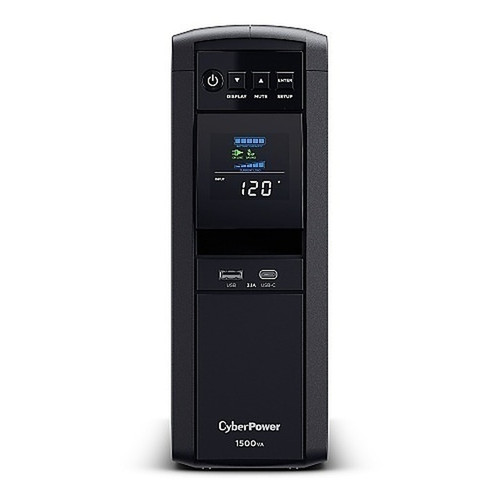
Both products are 3000VA uninterruptible power supplies from CyberPower targeting small-to-medium IT and security infrastructure loads. The PR3000RTXL2UC is a 2U rack-mount, line-interactive sine wave UPS rated at 3000VA/3000W with a unity power factor and cloud monitoring capability, while the PR3000LCD is a tower-form AVR (Automatic Voltage Regulation) line-interactive unit also rated at 3000VA. Buyers in the physical-security and IT space would legitimately cross-shop these at the same VA class when deciding between rackmount and tower deployment, making direct comparison appropriate.
In This Guide
- Which UPS delivers cleaner, more capable power output for sensitive security and IT loads?
- How do form factor, physical footprint, and operating environment differ between these two units?
- Which unit offers stronger input protection, surge handling, and compliance credentials?
- Which should you choose: the PR3000RTXL2UC or the PR3000LCD?
- Side-by-Side Specs
- FAQ
Which UPS delivers cleaner, more capable power output for sensitive security and IT loads?
The PR3000RTXL2UC is specified at 3000VA/3000W with a unity power factor of 1.0 and a pure sine wave output, meaning it can drive the full 3000W of real load without derating — critical for high-efficiency server PSUs and PoE network equipment that demand sine wave input. Its output voltage is specified at 120V with a frequency range of 50/60 Hz.
The PR3000LCD is rated at 3000VA with an output voltage of 120VAC ±5%, but its real-watt output, power factor, and waveform type (sine vs. simulated sine) are not stated in the available specifications. For buyers powering sensitive IP camera systems, NVRs, or access-control servers, the absence of a waveform and wattage figure for the PR3000LCD is a meaningful gap — the PR3000RTXL2UC's documented 3000W/unity-PF/sine-wave spec is a clear, verifiable advantage on this axis.
How do form factor, physical footprint, and operating environment differ between these two units?
The PR3000RTXL2UC is a 2U rackmount unit, designed to slide into a standard 19-inch equipment rack alongside servers, patch panels, and NVR appliances — the natural home for most enterprise physical-security head-end rooms. Its noise level is specified at 57.5 dB and heat dissipation at 192.5 BTU/h. No physical dimensions or weight are provided in the available spec sheet.
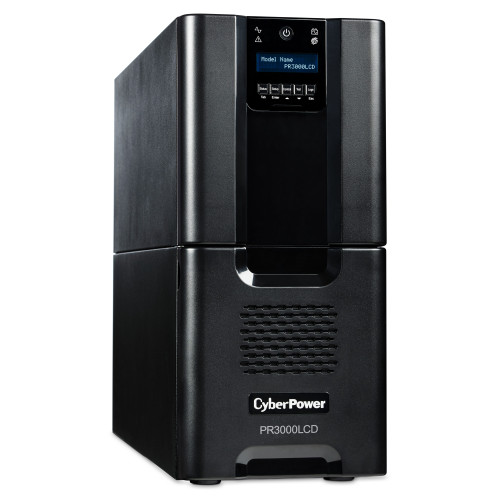
The PR3000LCD is a tower unit measuring 7.7 × 17 × 20.2 inches (W×H×D) and weighing 124 lb, requiring floor or shelf space rather than rack-unit allocation. It uses a sealed lead-acid battery and operates from 32–104°F (0–40°C). No noise or heat dissipation figures are provided for the PR3000LCD. Buyers with existing rack infrastructure will find the PR3000RTXL2UC a cleaner fit; those without a rack, or needing a standalone floor unit, are the PR3000LCD's natural audience.
Which unit offers stronger input protection, surge handling, and compliance credentials?
The PR3000RTXL2UC specifies an input operating voltage window of 75V–149V, input frequency acceptance of 47–63 Hz, a surge energy rating of 2,430 J, EMI/RFI noise filtering, and a transfer response time of 13 ms. The maximum input current is listed at 15A. These figures allow the unit to ride through significant utility sags and swells before switching to battery.
The PR3000LCD is certified to UL1778 and RoHS, which are the baseline UPS safety and environmental standards for North American commercial deployments. However, its input voltage window, surge energy rating, transfer time, and EMI/RFI filtering status are not stated in the available specifications, preventing a direct numeric comparison on those protection parameters. The PR3000LCD's 10 ft cord length and 3-year limited warranty are noted; the PR3000RTXL2UC's warranty term is not stated in the provided specs.
Which should you choose: the PR3000RTXL2UC or the PR3000LCD?
Our take: The PR3000RTXL2UC is the stronger choice when the deployment requires rackmount form factor, fully documented power quality, and robust surge protection. It explicitly delivers 3000W at a unity power factor with pure sine wave output — specs the PR3000LCD does not provide — and backs that up with a 2,430 J surge energy rating, 13 ms transfer time, and a wide 75–149V input window. The PR3000LCD offers UL1778/RoHS certification and a 3-year limited warranty (warranty term not stated for the PR3000RTXL2UC), and at 124 lb in a tower form factor it suits installations without rack infrastructure. Buyers outfitting a rack-based physical-security head-end with NVRs, PoE switches, and access-control servers should select the PR3000RTXL2UC for its documented sine wave output and verified wattage. Buyers needing a standalone tower unit, or where rack space is unavailable, should evaluate the PR3000LCD — while requesting its missing waveform and wattage specs from CyberPower before finalizing the purchase.
Side-by-Side Comparison
Spec-for-spec, from manufacturer data.
| Specification | CyberPower PR3000RTXL2UC | CyberPower PR3000LCD |
|---|---|---|
| UPS Topology | Line-Interactive | Not specified (AVR noted) |
| VA Rating | 3000 VA | 3000 VA |
| Watt Rating | 3000 W | — |
| Power Factor | 1.0 | — |
| Waveform | Pure Sine Wave | — |
| Form Factor | 2U Rackmount | Tower |
| Dimensions (W×H×D) | — | 7.7 × 17 × 20.2 in |
| Weight | — | 124 lb |
| Input Voltage Range | 75–149 V | 120 VAC (nominal only) |
| Input Frequency | 47–63 Hz | — |
| Output Voltage | 120 V | 120 VAC ±5% |
| Surge Energy Rating | 2430 J | — |
| Transfer Time | 13 ms | — |
| EMI/RFI Filtering | Yes | — |
| Noise Level | 57.5 dB | — |
| Certifications | — | UL1778, RoHS |
| Operating Temp | — | 32–104°F (0–40°C) |
| Warranty | — | 3 Year Limited |
Frequently Asked Questions
Which should you choose: the PR3000RTXL2UC or the PR3000LCD?
The PR3000RTXL2UC is the stronger choice when the deployment requires rackmount form factor, fully documented power quality, and robust surge protection. It explicitly delivers 3000W at a unity power factor with pure sine wave output — specs the PR3000LCD does not provide — and backs that up with a 2,430 J surge energy rating, 13 ms transfer time, and a wide 75–149V input window. The PR3000LCD offers UL1778/RoHS certification and a 3-year limited warranty (warranty term not stated for the PR3000RTXL2UC), and at 124 lb in a tower form factor it suits installations without rack infrastructure. Buyers outfitting a rack-based physical-security head-end with NVRs, PoE switches, and access-control servers should select the PR3000RTXL2UC for its documented sine wave output and verified wattage. Buyers needing a standalone tower unit, or where rack space is unavailable, should evaluate the PR3000LCD — while requesting its missing waveform and wattage specs from CyberPower before finalizing the purchase.
Is the PR3000RTXL2UC or PR3000LCD better for a rack-mounted NVR and PoE switch installation?
The PR3000RTXL2UC is the purpose-built choice for that scenario. It is a 2U rackmount unit, outputs pure sine wave power at a documented 3000W with a unity power factor, and provides a 2,430 J surge rating — all specs that matter for sensitive NVR and PoE switch PSUs. The PR3000LCD is a tower unit, and its waveform and real-watt figures are not available in its published spec sheet, making it harder to validate for the same load.
Does the PR3000LCD carry any safety certifications the PR3000RTXL2UC doesn't mention?
Based on the available specifications, the PR3000LCD is explicitly listed as UL1778 and RoHS certified. The PR3000RTXL2UC's spec sheet does not state certification standards in the data provided. Buyers in environments requiring documented UL listing — such as certain government or insurance-mandated installations — should confirm the PR3000RTXL2UC's certification status directly with CyberPower before specifying it.
What is the transfer time when utility power fails, and does it differ between the two models?
The PR3000RTXL2UC specifies a 13 ms transfer time from utility to battery. The PR3000LCD's transfer time is not stated in the available specifications. For most servers and network equipment, 13 ms is within the hold-up tolerance of modern PSUs, but buyers with zero-transfer requirements should note this gap in the PR3000LCD's published data and verify with CyberPower.
More UPS Comparisons
- APC by Schneider Electric SMT3000RMI2U vs Vertiv GXT5-3000LVRT2UXL
- APC by Schneider Electric SMT3000RMI2U vs Panduit U03N11L
- APC by Schneider Electric SMT3000RMI2U vs Panduit U03N12L
- APC by Schneider Electric SMT3000RMI2U vs Panduit U03S12V
- APC by Schneider Electric SMT3000RMI2U vs APC by Schneider Electric SRT3000XLT
- APC by Schneider Electric SMT3000RMI2U vs APC by Schneider Electric SRT3000XLW-IEC
UPS Buying Guides
Get a Second Opinion on Your Camera Choice
Share your site layout, coverage goals, and budget. Our team will validate the camera selection, flag anything we would change, and recommend products that match the use case.