
CyberPower OR500LCDRM1U vs APC by Schneider Electric BE500G3: Specification Comparison
Both the CyberPower OR500LCDRM1U and the APC BE500G3 are 500VA/300W line-interactive UPS units sharing identical VA and wattage ratings, NEMA 5-15P input plugs, and six NEMA 5-15R output receptacles on 120 VAC nominal input. Despite matching on raw power capacity, they target fundamentally different deployment environments: the OR500LCDRM1U is a 1U rackmount unit built for equipment racks and server rooms, while the BE500G3 is a desktop/tower form factor aimed at workstation or small-office use. Buyers cross-shopping within the 500VA class but weighing rack integration against desktop flexibility will find these specs directly relevant.

In This Guide
Which unit fits your physical installation — rack cabinet or desktop?
The OR500LCDRM1U occupies 1U of rack space at 17.05 × 1.75 × 9.25 in (W×H×D) and weighs 18 lb, consistent with a sealed lead-acid battery pack sized for rack density. It is designed exclusively for rackmount deployment and ships with a NEMA 5-15P cord for standard rack PDU or wall feed.
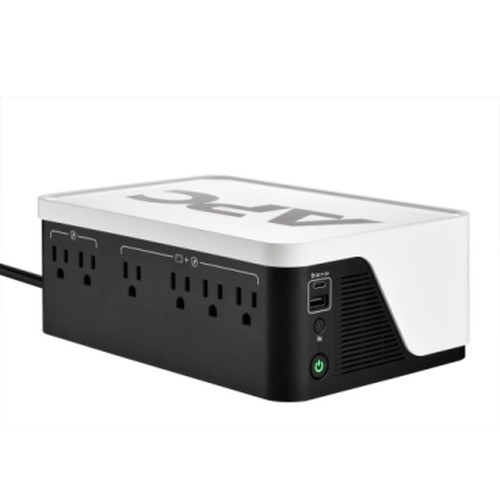
The BE500G3 has a tower/desktop footprint of 9.65 × 3.54 × 6.57 in and weighs approximately 7.185 lb (package weight; unit weight not separately specified). Its compact, upright profile suits under-desk or shelf placement. No rack-mount capability is listed in the provided specifications.
For any installation with a standard 19-inch equipment rack, the OR500LCDRM1U is the only option of the two. For workstations, point-of-sale stations, or spaces without a rack, the BE500G3's smaller footprint and lower weight offer a practical advantage.
How do the outlet layouts and load-protection features compare?
Both units provide six NEMA 5-15R receptacles. The BE500G3 explicitly splits these into four battery-backed-and-surge-protected outlets plus two surge-only outlets, giving users granular control over which loads receive runtime versus surge protection only. Transfer time on the BE500G3 is specified at less than 6 ms.
The OR500LCDRM1U lists six NEMA 5-15R outlets but does not break down the battery-backed versus surge-only split in the provided specifications, nor is a transfer time stated in the supplied data.
The BE500G3 also includes a USB-A charging port (5 VDC, 3 A, 15 W) and USB-B communications I/O for software management. The OR500LCDRM1U specifications do not mention a USB charging port or a communications interface in the supplied data, though the product name references an LCD display (implied by 'LCDRM' in the SKU). Buyers who need known outlet segmentation or USB device charging should note these differences.
What do the battery specs and certifications tell you about runtime and compliance?
The OR500LCDRM1U uses two 6V/7Ah sealed lead-acid batteries (total 12V/7Ah), providing a specified capacity that supports its 300W load rating. Battery chemistry, voltage, and Ah rating are all explicitly stated. Certifications include UL1778, cUL 107.1, FCC DOC Class B, ENERGY STAR, and RoHS compliance.
The BE500G3 lists lead-acid chemistry and a recharge time of 10 hours but does not state battery voltage or Ah rating in the provided specifications. Its certifications are CEC, ENERGY STAR, and FCC. UL listing, cUL, and RoHS are not cited in the supplied data.
The OR500LCDRM1U's UL1778 listing is the primary North American safety standard for UPS equipment and is often required by data-center or commercial facility compliance programs. The BE500G3's certifications do not include UL1778 based on provided specs. The OR500LCDRM1U also carries a 3-year limited warranty; no warranty term is stated for the BE500G3 in the supplied data.
Which should you choose: the OR500LCDRM1U or the BE500G3?
Our take: The OR500LCDRM1U is the stronger choice when the installation target is a 19-inch equipment rack and UL1778 certification is required. It occupies a single rack unit at 17.05 × 1.75 × 9.25 in versus the BE500G3's non-rack desktop footprint of 9.65 × 3.54 × 6.57 in, carries dual 6V/7Ah batteries with explicit capacity data, and holds UL1778/cUL/RoHS certifications not listed for the BE500G3. Conversely, the BE500G3 is the practical pick for desktop or shelf deployments: it weighs roughly 7.2 lb (package) against the OR500LCDRM1U's 18 lb, explicitly segments its six outlets into four battery-backed plus two surge-only, specifies a sub-6 ms transfer time, and adds a 15 W USB-A charging port — none of which are detailed in the OR500LCDRM1U's provided specs. Choose the OR500LCDRM1U for rack rooms requiring compliance credentials; choose the BE500G3 for workstation or small-office environments where desktop form factor and outlet segmentation matter.
Side-by-Side Comparison
Spec-for-spec, from manufacturer data.
| Specification | CyberPower OR500LCDRM1U | APC by Schneider Electric BE500G3 |
|---|---|---|
| VA / Watt Rating | 500 VA / 300 W | 500 VA / 300 W |
| Form Factor | 1U Rackmount | Desktop / Tower |
| Dimensions (W×H×D) | 17.05 × 1.75 × 9.25 in | 9.65 × 3.54 × 6.57 in |
| Weight | 18 lb | 7.185 lb (package) |
| Total Outlets | 6x NEMA 5-15R | 6x NEMA 5-15R |
| Battery-Backed Outlets | — | 4x NEMA 5-15R |
| Surge-Only Outlets | — | 2x NEMA 5-15R |
| Input Plug | NEMA 5-15P | NEMA 5-15P |
| Nominal Input Voltage | 120 VAC (90–140 VAC range) | 120 VAC |
| Input Frequency | — | 50/60 Hz |
| Nominal Output Voltage | 120 VAC ± 10% | 120 VAC |
| Transfer Time | — | < 6 ms |
| Battery Chemistry / Rating | Sealed Lead-Acid, 2× 6V/7Ah | Lead-Acid (Ah not specified) |
| Recharge Time | — | 10 Hours |
| USB Charging Port | — | 1x USB-A 5 VDC / 3 A (15 W) |
| Communications Port | — | USB-B |
| Certifications | UL1778, cUL 107.1, FCC Class B, ENERGY STAR, RoHS | CEC, ENERGY STAR, FCC |
| Warranty | 3 Year Limited | — |
Frequently Asked Questions
Which should you choose: the OR500LCDRM1U or the BE500G3?
The OR500LCDRM1U is the stronger choice when the installation target is a 19-inch equipment rack and UL1778 certification is required. It occupies a single rack unit at 17.05 × 1.75 × 9.25 in versus the BE500G3's non-rack desktop footprint of 9.65 × 3.54 × 6.57 in, carries dual 6V/7Ah batteries with explicit capacity data, and holds UL1778/cUL/RoHS certifications not listed for the BE500G3. Conversely, the BE500G3 is the practical pick for desktop or shelf deployments: it weighs roughly 7.2 lb (package) against the OR500LCDRM1U's 18 lb, explicitly segments its six outlets into four battery-backed plus two surge-only, specifies a sub-6 ms transfer time, and adds a 15 W USB-A charging port — none of which are detailed in the OR500LCDRM1U's provided specs. Choose the OR500LCDRM1U for rack rooms requiring compliance credentials; choose the BE500G3 for workstation or small-office environments where desktop form factor and outlet segmentation matter.
Is the OR500LCDRM1U or BE500G3 better for a server rack in a small data center or telecom closet?
The OR500LCDRM1U is the appropriate choice. It is purpose-built as a 1U rackmount unit (17.05 × 1.75 × 9.25 in) and carries UL1778 and cUL certifications, which are commonly required for commercial and data-center UPS installations. The BE500G3 is a desktop/tower unit with no rack-mount capability listed in its specifications.
Which UPS offers better outlet flexibility for protecting mixed loads like a router, NAS, and a monitor?
The BE500G3 explicitly divides its six NEMA 5-15R outlets into four battery-backed-and-surge-protected and two surge-only outlets, letting you assign non-critical loads (e.g., a monitor) to the surge-only bank to conserve runtime for critical devices. The OR500LCDRM1U's outlet segmentation is not specified in the provided data.
Does either UPS support software-based shutdown or remote monitoring?
The BE500G3 includes a USB-B communications port for connection to a host computer, enabling UPS management software integration. The OR500LCDRM1U's provided specifications do not list a communications interface or management port, though the 'LCD' in its model name suggests a local display. Buyers requiring software-controlled graceful shutdown should verify communications support directly with CyberPower before purchasing the OR500LCDRM1U.
More UPS Comparisons
- Vertiv GXT5-500LVRT2UXL vs APC by Schneider Electric SUA500PDR-H
- Vertiv GXT5-500LVRT2UXL vs APC by Schneider Electric BE500G3
- Vertiv GXT5-500LVRT2UXL vs APC by Schneider Electric SCL500RM1UC
- Vertiv GXT5-500LVRT2UXL vs APC by Schneider Electric SCL500RMI1UC
- APC by Schneider Electric SUA500PDR-H vs Middle Atlantic S500R
- APC by Schneider Electric SUA500PDR-H vs APC by Schneider Electric BE500G3
UPS Buying Guides
Get a Second Opinion on Your Camera Choice
Share your site layout, coverage goals, and budget. Our team will validate the camera selection, flag anything we would change, and recommend products that match the use case.