
CyberPower OL6KRTHW vs APC by Schneider Electric SYH6K6RMT-TF3: Specification Comparison
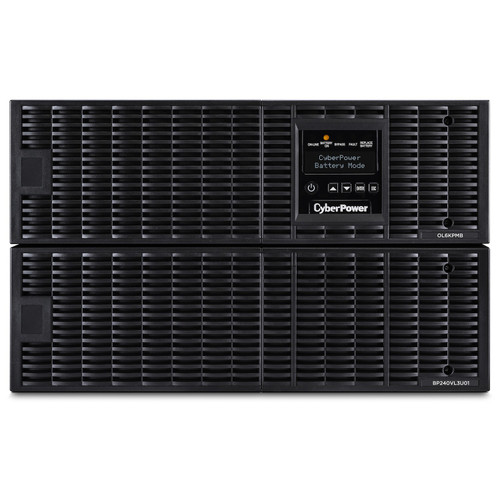
Both the CyberPower OL6KRTHW and the APC Symmetra RM SYH6K6RMT-TF3 are rack-mountable, online double-conversion UPS units rated at 6 kVA, positioning them in the same power-protection class for data centers, server rooms, and critical infrastructure. This comparison examines three decision-relevant dimensions—real power output and efficiency, power conditioning and electrical characteristics, and environmental/interface specifications—using only the provided spec data. Neither product's topology nor kVA rating disqualifies a side-by-side evaluation.
In This Guide
- Which UPS delivers more usable real power and what does the power factor mean for my load?
- How well does each UPS condition incoming power and tolerate input voltage variations?
- What are the operating environment limits, physical footprint, connectivity, and battery characteristics?
- Which should you choose: the OL6KRTHW or the SYH6K6RMT-TF3?
- Side-by-Side Specs
- FAQ
Which UPS delivers more usable real power and what does the power factor mean for my load?
The OL6KRTHW is rated at 6,000 W with a stated output power factor of 1.0, meaning the full 6 kVA translates directly to 6,000 W of real power available to connected loads. The SYH6K6RMT-TF3 is rated at 4,200 W despite sharing the same 6 kVA apparent-power rating, implying an effective output power factor of approximately 0.70. For installations running modern switched-mode power supplies—which typically present near-unity power factors—the OL6KRTHW provides 1,800 W (43%) more real power from the same kVA class. Buyers sizing UPS capacity to watts rather than VA should weigh this gap carefully; the APC unit's 4,200 W ceiling may force an upsize to the next kVA tier for equivalent wattage loads.
How well does each UPS condition incoming power and tolerate input voltage variations?
The OL6KRTHW specifies a wide input voltage operating range of 120 V to 280 V and an input frequency window of 40–70 Hz, with an input power factor of 0.99. It further lists a crest factor of 3:1 and output voltage THD of ≤5%, and a pure sine-wave output—relevant for sensitive equipment. EMI/RFI filtering is explicitly listed as 'No' in the provided spec. The SYH6K6RMT-TF3 spec does not provide input voltage range, input frequency range (only '60 Hz' is listed, suggesting a single-frequency design), input power factor, crest factor, or output THD figures. Buyers in regions with significant input voltage swings or multi-frequency grid environments have quantified tolerance data only for the OL6KRTHW; the APC's input conditioning characteristics cannot be assessed from the provided specs.
The SYH6K6RMT-TF3 lists Emergency Power Off (EPO) functionality—an explicit spec absent from the OL6KRTHW's provided data. EPO is a code requirement in many data center buildouts (NEC 645.11), making this a potentially decisive compliance differentiator where EPO is mandated.
What are the operating environment limits, physical footprint, connectivity, and battery characteristics?
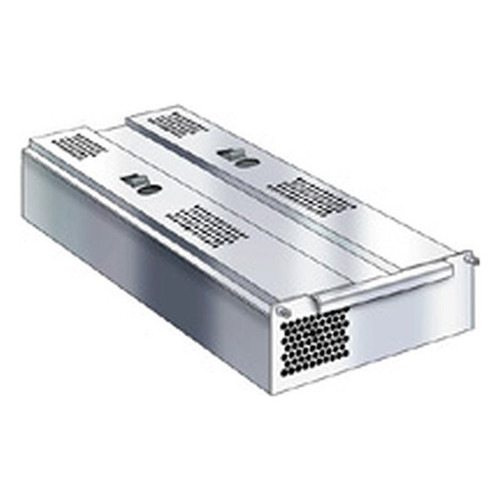
The SYH6K6RMT-TF3 provides a comprehensive environmental envelope: 0–40 °C operating temperature, 0–95% relative humidity (non-condensing assumed), and storage ratings of -15–45 °C / 0–95% RH. Battery technology is specified as Sealed Lead Acid (VRLA) with a 3-hour recharge time and hot-swap capability—allowing battery replacement without a maintenance window. Weight is 176.8 kg, and certifications include UL 1778, CSA, and FCC Part 15 Class A. Output connections are 4× NEMA L5-20R and 2× NEMA L6-20R, and interface ports are DB-9 RS-232 and RJ-45. The OL6KRTHW provides none of these environmental, battery, weight, certification, or output-connector specs in the provided data. It does list an audible noise level of 65 dB and surge protection. Buyers requiring documented operating-environment guarantees or hot-swap battery servicing must rely on the SYH6K6RMT-TF3's specs; equivalent data for the OL6KRTHW is not available from the supplied spec sheet.
Which should you choose: the OL6KRTHW or the SYH6K6RMT-TF3?
Our take: The OL6KRTHW is the stronger choice when maximizing real power output is the primary requirement: its 6,000 W rating versus the SYH6K6RMT-TF3's 4,200 W delivers 1,800 W more usable capacity from the same 6 kVA class, and its 120–280 V / 40–70 Hz input range accommodates wider grid variation than the APC's single-frequency 60 Hz spec. The SYH6K6RMT-TF3 has the advantage where compliance and serviceability matter most: it is the only unit with documented EPO support (a data-center code requirement in many jurisdictions), hot-swap VRLA batteries enabling zero-downtime maintenance, and fully specified operating environment ratings (0–40 °C, 0–95% RH, UL 1778/CSA/FCC Class A). Facilities with strict NEC 645.11 EPO mandates or 24/7 uptime requirements without scheduled maintenance windows should favor the APC. Deployments prioritizing raw watt capacity and broad input tolerance should favor the CyberPower.
Side-by-Side Comparison
Spec-for-spec, from manufacturer data.
| Specification | CyberPower OL6KRTHW | APC by Schneider Electric SYH6K6RMT-TF3 |
|---|---|---|
| UPS Topology | Double-conversion (Online) | — |
| Output Power Capacity | 6 kVA | 6 kVA |
| Real Power Output (Watts) | 6,000 W | 4,200 W |
| Output Power Factor | 1.0 | 0.70 (derived) |
| Input Voltage Range | 120 V – 280 V | — |
| Input Frequency Range | 40 – 70 Hz | 60 Hz |
| Input Power Factor | 0.99 | — |
| Output Waveform | Sine wave | — |
| Output Voltage THD | ≤5% | — |
| Crest Factor | 3:1 | — |
| Emergency Power Off (EPO) | — | Yes |
| Hot-Swap Battery | — | Yes |
| Battery Recharge Time | — | 3 h |
| Battery Technology | — | Sealed Lead Acid (VRLA) |
| Operating Temperature | — | 0 – 40 °C |
| Certifications | — | UL 1778, CSA, FCC Part 15 Class A |
| Interface Ports | — | DB-9 RS-232, RJ-45 |
| Output Connections | — | 4× NEMA L5-20R, 2× NEMA L6-20R |
| Noise Level | 65 dB | — |
| Weight | — | 176.8 kg |
| Surge Protection | Yes | — |
Frequently Asked Questions
Which should you choose: the OL6KRTHW or the SYH6K6RMT-TF3?
The OL6KRTHW is the stronger choice when maximizing real power output is the primary requirement: its 6,000 W rating versus the SYH6K6RMT-TF3's 4,200 W delivers 1,800 W more usable capacity from the same 6 kVA class, and its 120–280 V / 40–70 Hz input range accommodates wider grid variation than the APC's single-frequency 60 Hz spec. The SYH6K6RMT-TF3 has the advantage where compliance and serviceability matter most: it is the only unit with documented EPO support (a data-center code requirement in many jurisdictions), hot-swap VRLA batteries enabling zero-downtime maintenance, and fully specified operating environment ratings (0–40 °C, 0–95% RH, UL 1778/CSA/FCC Class A). Facilities with strict NEC 645.11 EPO mandates or 24/7 uptime requirements without scheduled maintenance windows should favor the APC. Deployments prioritizing raw watt capacity and broad input tolerance should favor the CyberPower.
Is the OL6KRTHW or SYH6K6RMT-TF3 a better fit for a high-density server rack running near full load?
The OL6KRTHW delivers 6,000 W of real power versus the SYH6K6RMT-TF3's 4,200 W. If your rack's actual watt draw approaches or exceeds 4,200 W, the APC unit at this kVA rating will be undersized, and the CyberPower would be the appropriate choice based on the provided specs. If load is comfortably below 4,200 W, either unit covers it.
Does either UPS support hot-swap battery replacement to avoid downtime?
Yes, but only the SYH6K6RMT-TF3 explicitly lists hot-swap battery capability in the provided specs. The OL6KRTHW's battery serviceability is not specified in the supplied data, so that capability cannot be confirmed for it from these specs alone.
Which unit is required if my data center mandates Emergency Power Off (EPO)?
Based on the provided specifications, only the SYH6K6RMT-TF3 lists Emergency Power Off (EPO) as a supported feature. The OL6KRTHW spec does not mention EPO. Installations subject to NEC 645.11 or similar EPO requirements should verify the CyberPower unit's EPO support directly with the manufacturer before selecting it.
More UPS Comparisons
- APC by Schneider Electric SYH6K6RMT vs CyberPower OL6KRTHW
- APC by Schneider Electric SYH6K6RMT vs CyberPower OL6KRTHD
- APC by Schneider Electric SYH6K6RMT vs Vertiv GXT5-6000MVRT4UXLN
- APC by Schneider Electric SYH6K6RMT vs Vertiv GXT5-6KL630RT5UXLN
- APC by Schneider Electric SYH6K6RMT vs APC by Schneider Electric SYH6K6RMI
- APC by Schneider Electric SYH6K6RMT vs APC by Schneider Electric SYH6K6RMT-TF3
UPS Buying Guides
Get a Second Opinion on Your Camera Choice
Share your site layout, coverage goals, and budget. Our team will validate the camera selection, flag anything we would change, and recommend products that match the use case.