
CyberPower OL6KRTHD vs APC by Schneider Electric SYH6K6RMT-TF3: Specification Comparison
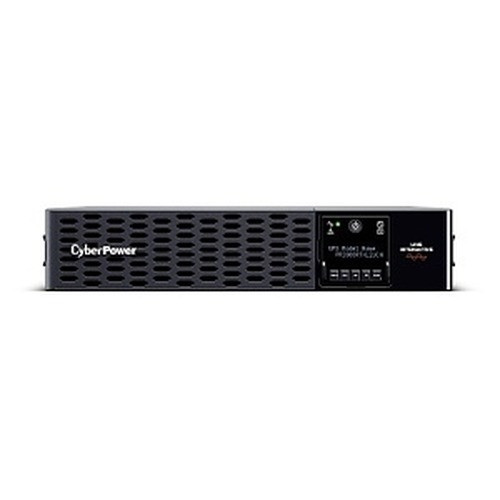
The CyberPower OL6KRTHD and APC Symmetra RM SYH6K6RMT-TF3 are both rack-mount, double-conversion (online) UPS systems rated at 6 kVA, targeting data centers, server rooms, and critical infrastructure installations. The OL6KRTHD is a 2U fixed-capacity unit with a unity power factor design, while the SYH6K6RMT-TF3 is a modular, N+1 redundant Symmetra RM platform with hot-swap battery support. This comparison evaluates real watt output, resilience features, and environmental and interface specifications as provided in the manufacturer data.
In This Guide
- How much real power does each UPS actually deliver, and what is the quality of that output?
- Which UPS offers stronger resilience features for mission-critical uptime?
- How do the two units compare on input voltage tolerance, operating environment, and management connectivity?
- Which should you choose: the OL6KRTHD or the SYH6K6RMT-TF3?
- Side-by-Side Specs
- FAQ
How much real power does each UPS actually deliver, and what is the quality of that output?
The CyberPower OL6KRTHD delivers 6000 W at its full 6 kVA rating, reflecting a true unity output power factor (PF = 1.0). This means the entire kVA capacity translates directly into usable watts for connected equipment — a meaningful advantage for modern server and networking loads that present near-unity power factors themselves.
The APC SYH6K6RMT-TF3 delivers 4200 W at 6 kVA, implying an effective output power factor of approximately 0.70. This 1800 W gap in real power delivery is a critical spec for IT buyers sizing UPS capacity against actual server wattage. A rack pulling 5000 W of IT load, for example, would exceed the SYH6K6RMT-TF3's real-watt ceiling while remaining well within the OL6KRTHD's capacity.
On input power quality, the OL6KRTHD specifies an input power factor of 0.99, a crest factor of 3:1, output voltage THD of ≤5%, and built-in EMI/RFI noise filtering. The SYH6K6RMT-TF3 does not provide input power factor, THD, or crest factor figures in the supplied specifications.
Which UPS offers stronger resilience features for mission-critical uptime?
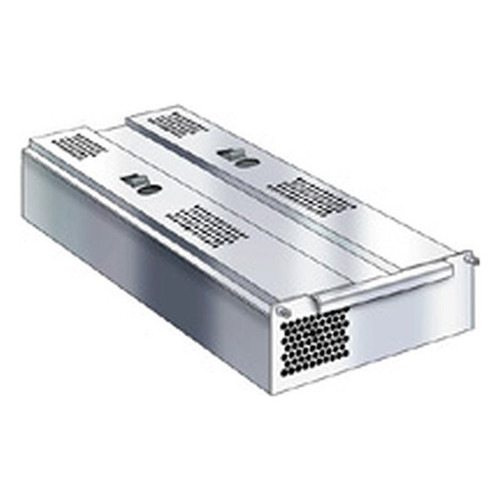
The APC SYH6K6RMT-TF3 is built on the Symmetra RM modular platform with an N+1 power module architecture and hot-swap battery replacement — both of which allow maintenance or component failure without powering down connected loads. It also includes an Emergency Power Off (EPO) function and audible alarms. Battery technology is specified as Sealed Lead Acid (VRLA) with a 3-hour recharge time.
The CyberPower OL6KRTHD specifies surge protection and sine-wave output, confirming true online double-conversion conditioning on all connected equipment at all times. However, the supplied specifications do not include hot-swap battery capability, N+1 redundancy, EPO, battery technology type, or recharge time data for this model.
For environments where zero-downtime battery service or module-level redundancy is a hard requirement, the SYH6K6RMT-TF3's documented hot-swap battery and N+1 design represent a structural advantage — provided the 4200 W real-watt ceiling is sufficient for the actual load.
How do the two units compare on input voltage tolerance, operating environment, and management connectivity?
The CyberPower OL6KRTHD accepts an input voltage range of 120–280 V and an input frequency of 40–70 Hz, providing a wide operating window suited to environments with unstable utility power or international deployments on 50 Hz or 60 Hz grids. Output voltage is selectable between 120 V and 240 V at 50 or 60 Hz. The specified noise level is 65 dB. Management is facilitated via an optional RMCARD remote management card (mentioned in the product title). No interface connector types are specified in the provided data.
The APC SYH6K6RMT-TF3 specifies a fixed 60 Hz input frequency, limiting it to North American grid environments. Operating temperature range is 0–40 °C and storage temperature is −15 to 45 °C; operating and storage relative humidity are both 0–95%. The unit weighs 176.8 kg. Interfaces include DB-9 RS-232 and RJ-45, enabling direct serial and network management connections. Output connections are four NEMA L5-20R and two NEMA L6-20R receptacles. Certifications cover CSA, FCC Part 15 Class A, and UL 1778.
Input voltage range, output voltage selectability, and frequency flexibility are not specified in the SYH6K6RMT-TF3 supplied data beyond the 60 Hz input. The OL6KRTHD's environmental ratings (temperature, humidity, weight) are similarly absent from the provided specifications.
Which should you choose: the OL6KRTHD or the SYH6K6RMT-TF3?
Our take: The OL6KRTHD is the stronger choice when real-watt output capacity and wide input-voltage tolerance are the primary sizing criteria. Its unity power factor delivers 6000 W versus the SYH6K6RMT-TF3's 4200 W — a 1800 W difference that directly affects how much IT load each unit can sustain. Its 120–280 V input range and 40–70 Hz frequency acceptance also make it suitable for mixed 50/60 Hz environments, while the SYH6K6RMT-TF3 is specified only for 60 Hz. Conversely, the SYH6K6RMT-TF3's documented hot-swap battery capability, N+1 module redundancy, and EPO function make it the defensible choice for facilities where servicing under live load is mandatory and the 4200 W real-watt ceiling covers the actual equipment draw. Buyers running dense modern server loads in a North American data center that demand in-service battery replacement should weigh the SYH6K6RMT-TF3's resilience architecture against its lower watt output before selecting.
Side-by-Side Comparison
Spec-for-spec, from manufacturer data.
| Specification | CyberPower OL6KRTHD | APC by Schneider Electric SYH6K6RMT-TF3 |
|---|---|---|
| UPS Topology | Double-conversion (Online) | Double-conversion (Online) |
| Output Power Capacity | 6 kVA | 6 kVA |
| Real Power Output (Watts) | 6000 W | 4200 W |
| Output Power Factor | 1.0 | 0.70 (derived) |
| Input Voltage Range | 120–280 V | — |
| Input Frequency | 40–70 Hz | 60 Hz |
| Output Voltage Range | 120–240 V | — |
| Output Waveform | Sine | — |
| Output Voltage THD | ≤5% | — |
| Input Power Factor | 0.99 | — |
| Hot-Swap Battery | — | Yes |
| N+1 Redundancy | — | Yes (modular) |
| Emergency Power Off (EPO) | — | Yes |
| Battery Technology | — | Sealed Lead Acid (VRLA) |
| Battery Recharge Time | — | 3 hours |
| Management Interfaces | RMCARD slot (optional) | DB-9 RS-232, RJ-45 |
| Output Connections | — | 4x NEMA L5-20R, 2x NEMA L6-20R |
| Certifications | — | CSA, FCC Part 15 Class A, UL 1778 |
| Operating Temperature | — | 0–40°C |
| Noise Level | 65 dB | — |
| Weight | — | 176.8 kg |
| Surge Protection | Yes | — |
| EMI/RFI Filtering | Yes | — |
Frequently Asked Questions
Which should you choose: the OL6KRTHD or the SYH6K6RMT-TF3?
The OL6KRTHD is the stronger choice when real-watt output capacity and wide input-voltage tolerance are the primary sizing criteria. Its unity power factor delivers 6000 W versus the SYH6K6RMT-TF3's 4200 W — a 1800 W difference that directly affects how much IT load each unit can sustain. Its 120–280 V input range and 40–70 Hz frequency acceptance also make it suitable for mixed 50/60 Hz environments, while the SYH6K6RMT-TF3 is specified only for 60 Hz. Conversely, the SYH6K6RMT-TF3's documented hot-swap battery capability, N+1 module redundancy, and EPO function make it the defensible choice for facilities where servicing under live load is mandatory and the 4200 W real-watt ceiling covers the actual equipment draw. Buyers running dense modern server loads in a North American data center that demand in-service battery replacement should weigh the SYH6K6RMT-TF3's resilience architecture against its lower watt output before selecting.
Is the OL6KRTHD or SYH6K6RMT-TF3 better for powering high-density modern servers that draw close to 6 kVA?
The OL6KRTHD is better suited here. Its unity output power factor means the full 6 kVA rating equals 6000 W of usable load capacity. The SYH6K6RMT-TF3 delivers only 4200 W at 6 kVA due to its approximately 0.70 output power factor, so a high-density load approaching 5000–6000 W would exceed its real-watt ceiling even though the kVA ratings appear identical.
Can I replace the batteries on the SYH6K6RMT-TF3 without shutting down my equipment?
Yes — the SYH6K6RMT-TF3 specifies hot-swap battery replacement, meaning batteries can be serviced without powering down connected loads. The OL6KRTHD's provided specifications do not include hot-swap battery capability data, so that feature cannot be confirmed for the CyberPower unit from the available spec sheet.
Which UPS works outside North America or on a 50 Hz utility grid?
The OL6KRTHD is the appropriate choice for non-North American or dual-frequency environments. Its specified input frequency range of 40–70 Hz and input voltage range of 120–280 V accommodate both 50 Hz and 60 Hz grids with wide voltage tolerance. The SYH6K6RMT-TF3's supplied specifications list only a 60 Hz input frequency, indicating it is designed for North American 60 Hz utility environments.
More UPS Comparisons
- APC by Schneider Electric SYH6K6RMT vs CyberPower OL6KRTHW
- APC by Schneider Electric SYH6K6RMT vs CyberPower OL6KRTHD
- APC by Schneider Electric SYH6K6RMT vs Vertiv GXT5-6000MVRT4UXLN
- APC by Schneider Electric SYH6K6RMT vs Vertiv GXT5-6KL630RT5UXLN
- APC by Schneider Electric SYH6K6RMT vs APC by Schneider Electric SYH6K6RMI
- APC by Schneider Electric SYH6K6RMT vs APC by Schneider Electric SYH6K6RMT-TF3
UPS Buying Guides
Get a Second Opinion on Your Camera Choice
Share your site layout, coverage goals, and budget. Our team will validate the camera selection, flag anything we would change, and recommend products that match the use case.