
Comelit UT1090B vs ACTi Q950: Specification Comparison
The Comelit UT1090B and ACTi Q950 are both wall-mounted video door stations designed for access-control entry points — a class where camera resolution, power delivery, audio capability, night-vision performance, and VMS integration are the primary buying criteria. The UT1090B is a 4MP touchscreen entry panel tightly coupled to the Comelit Simplebus 1 ecosystem, while the Q950 is a 6MP outdoor intercom built around open ONVIF standards. This comparison examines imaging and optics, power and environmental suitability, and integration and protocol compatibility.

In This Guide
- Which door station delivers better imaging and optics for facial identification at entry?
- How do the two units differ in power requirements and environmental suitability?
- Which unit offers broader VMS and access-control integration flexibility?
- Which should you choose: the UT1090B or the Q950?
- Side-by-Side Specs
- FAQ
Which door station delivers better imaging and optics for facial identification at entry?
The ACTi Q950 provides 6MP resolution with a 1.65mm wide-angle lens, giving it a meaningful pixel-count advantage over the Comelit UT1090B's 4MP (2560×1440) camera. For forensic facial detail at close entry distances, the Q950's additional resolution headroom can yield more usable stills and video frames. The Q950 also specifies IR night vision combined with WDR (Wide Dynamic Range), enabling 24/7 operation in challenging lighting — backlit doorways, sunrise/sunset transitions, and low-light exterior conditions. The UT1090B's specs do not list IR capability or WDR support; night-vision performance for the UT1090B is not stated in the provided specifications. The Q950's H.264 compression is explicitly documented; the UT1090B's video compression format is not specified in the provided data.
How do the two units differ in power requirements and environmental suitability?
The Comelit UT1090B is powered by PoE+ (802.3at), delivered via the Comelit PSU art. 1595 accessory — meaning it draws from the higher-power 802.3at standard (up to ~30W budget) but requires the proprietary Comelit power supply unit rather than a direct 802.3at switch port. The ACTi Q950 draws power over standard PoE (802.3af), consuming approximately 13W, and is compatible with any 802.3af-compliant switch or injector without an intermediate PSU. For environmental exposure, the Q950 carries an IP66 rating, confirming protection against dust ingress and high-pressure water jets — suitable for exposed outdoor installations. The UT1090B's IP rating is not listed in the provided specifications, and its flush-mount form factor suggests a sheltered or interior-facing installation. Buyers deploying in uncovered exterior locations should note the Q950's documented IP66 rating against the UT1090B's unspecified environmental rating.
Which unit offers broader VMS and access-control integration flexibility?
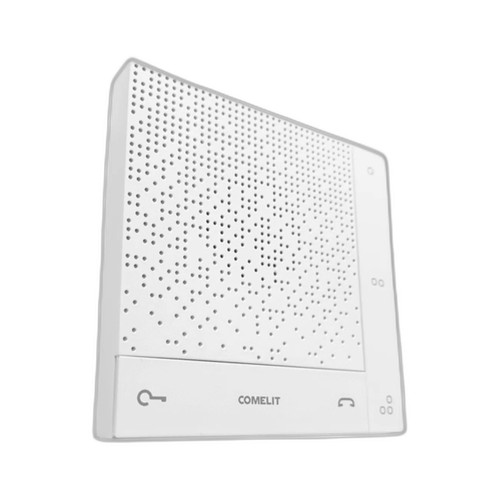
The ACTi Q950 is ONVIF Profile S/T compliant, making it natively interoperable with any VMS, NVR, or access-control platform that supports the ONVIF standard — a widely adopted open protocol across Milestone, Genetec, Hanwha, Axis Camera Station, and hundreds of others. This gives the Q950 strong platform-neutral flexibility. The Comelit UT1090B is documented as compatible with Comelit Simplebus 1 and Comelit IP video management systems. Its ONVIF status is not stated in the provided specifications, meaning integrators outside the Comelit ecosystem cannot confirm third-party VMS compatibility from the available data. The UT1090B's 5-inch capacitive touchscreen is a differentiating UI element not present on the Q950, which may be relevant for deployments where residents or visitors interact directly with the panel. The Q950's ONVIF compliance is the clearest integration advantage for multi-vendor or retrofitted installations.
Which should you choose: the UT1090B or the Q950?
Our take: The Q950 is the stronger choice when the deployment is outdoor-exposed, platform-agnostic, or requires documented night-vision capability. The Q950 leads on three concrete spec dimensions: resolution (6MP vs. 4MP), environmental rating (IP66 vs. not specified for the UT1090B), and integration breadth (ONVIF Profile S/T vs. Comelit Simplebus 1 only). Its 802.3af PoE draw (~13W) also simplifies infrastructure by eliminating the proprietary PSU required by the UT1090B. Conversely, the UT1090B is the correct selection for projects already standardized on Comelit Simplebus 1 or Comelit IP video management, where its 5-inch capacitive touchscreen and native ecosystem integration eliminate interoperability risk. Installers on open or mixed-vendor systems will find the Q950's ONVIF compliance and IP66 rating lower-risk; Comelit-committed integrators gain a purpose-built panel UI with the UT1090B.
Side-by-Side Comparison
Spec-for-spec, from manufacturer data.
| Specification | Comelit UT1090B | ACTi Q950 |
|---|---|---|
| Resolution | 4MP (2560×1440) | 6MP |
| Lens | Wide-angle (focal length not specified) | 1.65mm wide-angle |
| Video Compression | Not specified | H.264 |
| IR Night Vision | Not specified | Yes |
| WDR | Not specified | Yes |
| Power Standard | PoE+ (802.3at) | PoE (802.3af) |
| Power Delivery | Via Comelit PSU art. 1595 (required) | Direct from 802.3af switch/injector |
| Approx. Power Draw | Not specified | ~13W |
| IP Rating | Not specified | IP66 |
| Mount Type | Wall (flush-mounted) | Wall; Post |
| Audio | Omnidirectional digital mic; dual loudspeaker; two-way | Two-way |
| Display | 5-inch capacitive touchscreen | Not specified |
| ONVIF | Not specified | Yes — Profile S/T |
| VMS / Ecosystem Compatibility | Comelit Simplebus 1; Comelit IP VMS | ONVIF Profile S/T (open) |
| Environment Rating | Not specified | Outdoor (IP66) |
| Warranty | 2 years | 3 years |
Frequently Asked Questions
Which should you choose: the UT1090B or the Q950?
The Q950 is the stronger choice when the deployment is outdoor-exposed, platform-agnostic, or requires documented night-vision capability. The Q950 leads on three concrete spec dimensions: resolution (6MP vs. 4MP), environmental rating (IP66 vs. not specified for the UT1090B), and integration breadth (ONVIF Profile S/T vs. Comelit Simplebus 1 only). Its 802.3af PoE draw (~13W) also simplifies infrastructure by eliminating the proprietary PSU required by the UT1090B. Conversely, the UT1090B is the correct selection for projects already standardized on Comelit Simplebus 1 or Comelit IP video management, where its 5-inch capacitive touchscreen and native ecosystem integration eliminate interoperability risk. Installers on open or mixed-vendor systems will find the Q950's ONVIF compliance and IP66 rating lower-risk; Comelit-committed integrators gain a purpose-built panel UI with the UT1090B.
Can either door station work with my existing Milestone or Genetec VMS?
The ACTi Q950 is explicitly documented as ONVIF Profile S/T compliant, which is the standard integration path for Milestone, Genetec, and most enterprise VMS platforms. The Comelit UT1090B's ONVIF support is not stated in the provided specifications; its listed VMS compatibility is Comelit Simplebus 1. Buyers on non-Comelit platforms should verify UT1090B ONVIF support directly with Comelit before specifying it.
Which unit is better for an uncovered outdoor entry point exposed to rain and dust?
The ACTi Q950 carries a documented IP66 rating, confirming resistance to dust ingress and high-pressure water jets — appropriate for exposed exterior doors. The Comelit UT1090B's IP rating is not listed in the provided specifications. For uncovered outdoor installations, the Q950 provides a verifiable environmental protection rating; the UT1090B's suitability for that environment cannot be confirmed from the available data.
Does either unit require a special power supply rather than a standard PoE switch port?
Yes — the Comelit UT1090B requires the Comelit PSU art. 1595 to deliver its PoE+ (802.3at) power, rather than connecting directly to a standard 802.3at switch port. The ACTi Q950 uses standard PoE (802.3af) at approximately 13W and is compatible with any 802.3af-compliant switch or midspan injector without an additional accessory. Installers should account for the Comelit PSU as a separate line item when specifying the UT1090B.
More Intercom Comparisons
- Ubiquiti UA-G3-INTERCOM vs SDC IPDSE
- Ubiquiti UA-G3-INTERCOM vs Comelit TP6842
- Ubiquiti UA-G3-INTERCOM vs ACTi Q950
- Axis 03448-001 vs Axis 02892-001
- Comelit TP6842 vs ACTi Q950
- Comelit TP6842 vs Comelit 3460HEV
Intercom Buying Guides
Get a Second Opinion on Your Camera Choice
Share your site layout, coverage goals, and budget. Our team will validate the camera selection, flag anything we would change, and recommend products that match the use case.