
Comelit TP6842 vs ACTi Q950: Specification Comparison
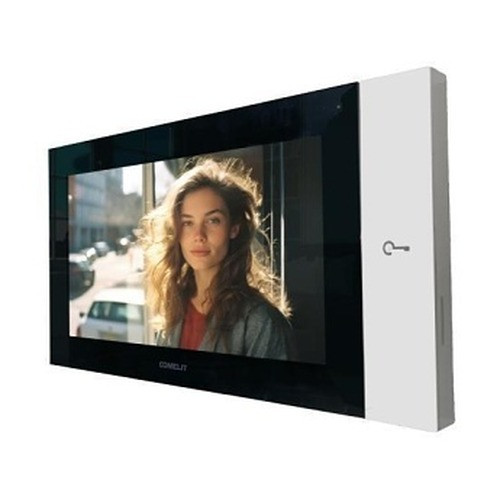
Both the Comelit TP6842 and ACTi Q950 are PoE-powered, ONVIF-compliant door station intercoms designed for building entry applications. The TP6842 is a hands-free VIP door entry system with an integrated monitor form factor, while the Q950 is a dedicated outdoor door station intercom. This comparison evaluates the two on image resolution and compression, environmental protection and installation flexibility, and integration and compatibility—the three dimensions that most directly drive purchase decisions in door station deployments.

In This Guide
- Which unit delivers better image quality and more efficient video storage?
- Which unit is better suited for outdoor or harsh-environment installations?
- Which unit offers broader integration with access control, VMS, and third-party platforms?
- Which should you choose: the TP6842 or the Q950?
- Side-by-Side Specs
- FAQ
Which unit delivers better image quality and more efficient video storage?
The Comelit TP6842 captures video at 4MP (2560×1440) and supports both H.265 and H.264 compression. H.265 encoding can reduce bitrate—and therefore NVR storage consumption—by up to 60% compared to H.264 at equivalent quality. The ACTi Q950 offers a higher native resolution of 6MP and includes a 1.65mm wide-angle lens specified for clear facial detail, but its listed compression is H.264 only; H.265 support is not stated in the provided specifications. For deployments where storage efficiency is a priority, the TP6842's H.265 capability is a meaningful advantage. For deployments where raw resolution and wide-angle field of view matter most—such as capturing facial detail at a busy entry—the Q950's 6MP sensor and 1.65mm lens provide more pixel data per frame.
Which unit is better suited for outdoor or harsh-environment installations?
The ACTi Q950 carries an IP66 ingress protection rating, making it dust-tight and resistant to powerful water jets—appropriate for exposed outdoor door station use. It also includes IR night vision with WDR, enabling 24/7 operation in low-light or high-contrast lighting conditions. Its mount types are listed as Wall and Post, reflecting outdoor deployment flexibility. The Comelit TP6842 is rated IP30, which provides protection only against solid objects larger than 2.5mm and offers no water ingress protection. The TP6842 is listed for Wall and Desktop mounting and is specified as compatible with residential environments. The TP6842's IP30 rating makes it unsuitable for unprotected outdoor installation; it is intended for indoor or sheltered enclosure use. Night vision capability is not stated for the TP6842 in the provided specifications.
Which unit offers broader integration with access control, VMS, and third-party platforms?
Both units are ONVIF-compliant and PoE 802.3af powered, establishing a common baseline for VMS and NVR integration. The Comelit TP6842 is listed as ONVIF Profile S compatible and includes a MicroSD card slot for local storage—useful for edge recording without a dedicated NVR. Its Wi-Fi capability (noted in the product name and tagline) is not elaborated in the provided specs beyond the PoE power type, so Wi-Fi connectivity details cannot be confirmed from the data supplied. The ACTi Q950 is listed as ONVIF Profile S and Profile T compatible; Profile T adds support for HTTPS, TLS, and advanced event handling, which broadens compatibility with modern access control and security management platforms. The Q950's stated compatibility context is 'secure' environments. MicroSD or local storage capability is not stated for the Q950 in the provided specifications. Warranty terms differ: TP6842 carries a 2-year warranty; Q950 carries a 3-year warranty.
Which should you choose: the TP6842 or the Q950?
Our take: The Q950 is the stronger choice when the deployment is outdoors, requires 24/7 operation in variable lighting, or demands a higher-resolution image for facial identification at the door. Its 6MP sensor outresolves the TP6842's 4MP by 50%, its IP66 rating versus the TP6842's IP30 makes it the only option for exposed exterior installation, and its IR plus WDR night vision—absent from the TP6842's stated specs—ensures usable video around the clock. The Q950 also adds ONVIF Profile T alongside Profile S, extending compatibility with security platforms that require encrypted streams or advanced event models. The TP6842 is the better fit for sheltered indoor or residential entry points where H.265 storage savings matter, a local MicroSD buffer is needed, or the installation is part of a Comelit VIP ecosystem. Buyers should note that Wi-Fi connectivity claimed in the TP6842's name is not confirmed by the specs provided.
Side-by-Side Comparison
Spec-for-spec, from manufacturer data.
| Specification | Comelit TP6842 | ACTi Q950 |
|---|---|---|
| Product Type | Hands-free VIP Door Entry System | 6MP Door Station Outdoor Intercom |
| Resolution | 4MP (2560×1440) | 6MP |
| Lens | — | 1.65mm wide-angle |
| Video Compression | H.265; H.264 | H.264 |
| IP Rating | IP30 | IP66 |
| Environment | Indoor / Residential | Outdoor |
| Night Vision | — | IR with WDR |
| Power | PoE 802.3af | PoE 802.3af (approx. 13W) |
| Audio | Full-duplex hands-free | Two-way |
| ONVIF Profile | Profile S | Profile S and Profile T |
| Local Storage | MicroSD card slot | — |
| Mount Type | Wall; Desktop | Wall; Post |
| Housing Color | White | White |
| Warranty | 2-Year | 3-Year |
| Dimensions | 210mm × 120mm × 21mm | — |
| Compatible Environment | Residential | Secure / Outdoor |
Frequently Asked Questions
Which should you choose: the TP6842 or the Q950?
The Q950 is the stronger choice when the deployment is outdoors, requires 24/7 operation in variable lighting, or demands a higher-resolution image for facial identification at the door. Its 6MP sensor outresolves the TP6842's 4MP by 50%, its IP66 rating versus the TP6842's IP30 makes it the only option for exposed exterior installation, and its IR plus WDR night vision—absent from the TP6842's stated specs—ensures usable video around the clock. The Q950 also adds ONVIF Profile T alongside Profile S, extending compatibility with security platforms that require encrypted streams or advanced event models. The TP6842 is the better fit for sheltered indoor or residential entry points where H.265 storage savings matter, a local MicroSD buffer is needed, or the installation is part of a Comelit VIP ecosystem. Buyers should note that Wi-Fi connectivity claimed in the TP6842's name is not confirmed by the specs provided.
Can the ACTi Q950 be installed on an exterior wall exposed to rain?
Yes. The Q950 carries an IP66 rating, which means it is dust-tight and protected against powerful water jets, making it suitable for exposed outdoor wall or post mounting. The Comelit TP6842 is rated IP30 and is not rated for water exposure; it should be installed indoors or in a fully weatherproofed enclosure.
Does either door station support night-time video without additional lighting?
The ACTi Q950 includes IR night vision combined with WDR, enabling operation in low-light and high-contrast conditions without supplemental lighting. Night vision capability is not stated in the provided specifications for the Comelit TP6842.
Which unit is easier to integrate with a modern VMS or access control platform?
Both units are ONVIF-compliant and PoE 802.3af powered. The ACTi Q950 is listed as ONVIF Profile S and Profile T compatible; Profile T adds support for HTTPS/TLS and richer event handling, which broadens compatibility with current-generation VMS and access control systems. The Comelit TP6842 is listed as ONVIF Profile S compatible. The TP6842 also adds a MicroSD card slot for local edge storage, which the Q950's specs do not mention.
More Intercom Comparisons
- Ubiquiti UA-G3-INTERCOM vs SDC IPDSE
- Ubiquiti UA-G3-INTERCOM vs Comelit TP6842
- Ubiquiti UA-G3-INTERCOM vs ACTi Q950
- Axis 03448-001 vs Axis 02892-001
- Comelit TP6842 vs Comelit 3460HEV
- Comelit TP6842 vs Comelit 6205W
Intercom Buying Guides
Get a Second Opinion on Your Camera Choice
Share your site layout, coverage goals, and budget. Our team will validate the camera selection, flag anything we would change, and recommend products that match the use case.