
Comelit TP6842 vs Comelit 6205W: Specification Comparison
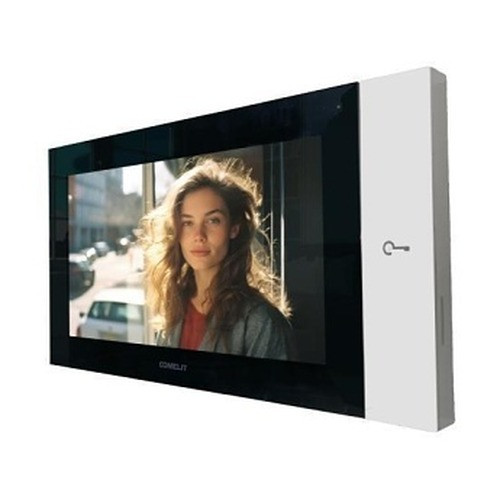
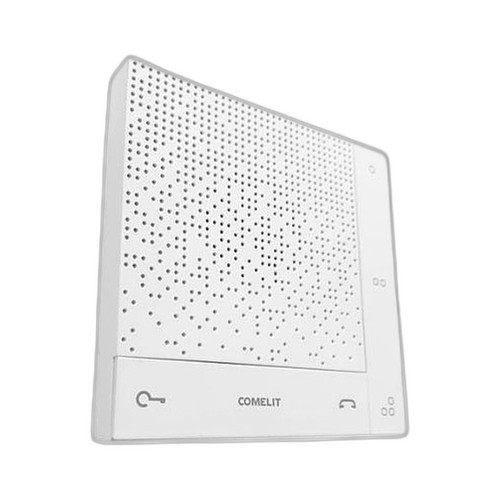
Both the Comelit TP6842 and Comelit 6205W are wall-mount, PoE-powered, hands-free door entry units from the same manufacturer, targeting residential and light-commercial access control. The TP6842 is a video door entry system with a 4MP camera and ONVIF integration, while the 6205W is described as a thermal hands-free door entry phone with occupancy-detection capability. Buyers evaluating either product are choosing between a standard high-resolution video intercom and a thermally augmented audio-primary entry phone within the Comelit ecosystem.
In This Guide
- What imaging and video capabilities does each unit deliver at the door?
- How well does each unit integrate with third-party NVRs, VMS platforms, and access control ecosystems?
- How do the two units compare on physical footprint, power requirements, and environmental rating?
- Which should you choose: the TP6842 or the 6205W?
- Side-by-Side Specs
- FAQ
What imaging and video capabilities does each unit deliver at the door?
The TP6842 provides a conventional IP video stream at 4MP (2560×1440) resolution with dual-codec support for H.265 and H.264. H.265 encoding is specifically cited in the specs as capable of reducing NVR storage bitrate by up to 60% compared to H.264. The unit stores locally via a MicroSD card slot, adding an independent capture layer independent of any NVR.
The 6205W uses a thermal imaging sensor specified at 121×121 resolution. No conventional video resolution, no MPS figure, and no codec beyond H.264 are listed in its spec set. The thermal imager is positioned for occupancy detection in low-light conditions rather than identification-quality video. There is no MicroSD or local storage spec listed for the 6205W.
For deployments where recorded video evidence, remote viewing, or NVR integration are requirements, the TP6842's 4MP sensor and dual-codec output represent a materially higher imaging specification. The 6205W's thermal sensor addresses a different use case — occupancy and presence detection — rather than identification or traditional video surveillance.
How well does each unit integrate with third-party NVRs, VMS platforms, and access control ecosystems?
The TP6842 declares ONVIF Profile S compliance, enabling integration with any ONVIF-compatible NVR or VMS. This is a vendor-neutral, industry-standard interoperability specification. The specs also note general residential compatibility and list VMS compatibility explicitly as 'ONVIF Profile S compatible.'
The 6205W's integration spec reads 'Comelit Door Entry & Access Control Systems,' indicating it is designed to operate within the proprietary Comelit ecosystem. No ONVIF declaration and no third-party VMS compatibility statement appear in the provided specs. H.264 output is listed, but no interoperability standard is cited.
Installers working in mixed-vendor environments or using a third-party VMS will find the TP6842's ONVIF Profile S certification directly actionable. The 6205W appears intended for Comelit-native deployments; its compatibility with non-Comelit systems is not supported by the provided specifications.
How do the two units compare on physical footprint, power requirements, and environmental rating?
The TP6842 measures 210 mm × 120 mm × 21 mm (8.27" × 4.72" × 0.83") and is powered exclusively via PoE 802.3af — a single Ethernet cable carries both data and power. IP rating is IP30. Mount options listed are wall and desktop. Housing is white.
The 6205W measures 121.2 mm × 121 mm × 25 mm (4.76" × 4.76" × 0.98"), making it a nearly square, more compact footprint than the TP6842's rectangular profile. It is also PoE 802.3af powered. IP rating is identically IP30. Mount type is wall only. Housing is white. A power wattage field in the specs lists '6205W,' which appears to be a data entry error (the SKU number, not a wattage value); actual power draw is not separately stated.
Both units share the same PoE standard and IP30 rating, so neither offers an environmental ingress protection advantage over the other. The TP6842 is physically larger; the 6205W's square format may suit tighter door-frame or narrow-mullion installations. Neither unit is rated for outdoor exposure based on the IP30 designation alone — installers should verify suitability for any exposed exterior location.
Which should you choose: the TP6842 or the 6205W?
Our take: The TP6842 is the stronger choice when conventional video intercom capability, third-party NVR integration, or VMS compatibility is required. Its 4MP (2560×1440) sensor delivers identification-quality resolution against the 6205W's 121×121 thermal imager; it supports both H.265 and H.264 versus the 6205W's H.264 only; and its ONVIF Profile S certification enables vendor-neutral integration that the 6205W's Comelit-ecosystem-only spec cannot match. The 6205W addresses a narrower, distinct use case: thermal-based occupancy and presence detection at entry points, particularly in low-light conditions, within a Comelit-native installation. Choose the 6205W only if the deployment already runs on Comelit infrastructure and the specific requirement is contactless occupancy sensing rather than recorded video evidence or cross-platform VMS integration.
Side-by-Side Comparison
Spec-for-spec, from manufacturer data.
| Specification | Comelit TP6842 | Comelit 6205W |
|---|---|---|
| Product Type | Video Door Entry System | Thermal Door Entry Phone |
| Camera Resolution | 4MP (2560×1440) | Thermal 121×121 |
| Video Codec | H.265; H.264 | H.264 |
| Audio | Full-duplex hands-free | Two-way hands-free |
| Power | PoE 802.3af | PoE 802.3af |
| IP Rating | IP30 | IP30 |
| ONVIF | Profile S | — |
| Third-Party VMS | Yes (ONVIF Profile S) | Not specified |
| Ecosystem Integration | Residential / ONVIF | Comelit systems |
| Local Storage | MicroSD card slot | — |
| Mount Type | Wall; Desktop | Wall |
| Dimensions (mm) | 210 × 120 × 21 | 121.2 × 121 × 25 |
| Housing Color | White | White |
| Warranty | 2-Year | 2-Year |
| Form Factor | Door Entry System / Monitor | Door Entry Phone |
Frequently Asked Questions
Which should you choose: the TP6842 or the 6205W?
The TP6842 is the stronger choice when conventional video intercom capability, third-party NVR integration, or VMS compatibility is required. Its 4MP (2560×1440) sensor delivers identification-quality resolution against the 6205W's 121×121 thermal imager; it supports both H.265 and H.264 versus the 6205W's H.264 only; and its ONVIF Profile S certification enables vendor-neutral integration that the 6205W's Comelit-ecosystem-only spec cannot match. The 6205W addresses a narrower, distinct use case: thermal-based occupancy and presence detection at entry points, particularly in low-light conditions, within a Comelit-native installation. Choose the 6205W only if the deployment already runs on Comelit infrastructure and the specific requirement is contactless occupancy sensing rather than recorded video evidence or cross-platform VMS integration.
Can either the TP6842 or 6205W connect to a non-Comelit NVR or VMS?
The TP6842 is specified as ONVIF Profile S compatible, which means it will integrate with any ONVIF-supporting NVR or VMS regardless of brand. The 6205W's provided specs list integration only with 'Comelit Door Entry & Access Control Systems' and cite no ONVIF or other interoperability standard, so third-party NVR or VMS compatibility is not supported by its published specifications.
Which unit is better suited for outdoor door-station installation?
Neither unit is rated above IP30 based on the provided specifications. IP30 indicates protection against solid objects larger than 2.5 mm but provides no rated water or dust ingress protection. Both units should be considered indoor or sheltered-location devices unless the installer can confirm additional environmental housing. Neither spec set references an outdoor-rated enclosure or a higher IP rating.
Does the 6205W offer any video recording or local storage?
No local storage specification — such as a MicroSD card slot or onboard memory — is listed for the 6205W. The TP6842 explicitly includes a MicroSD card slot for local storage. If on-device video capture is a project requirement, the TP6842 is the only unit of the two with a stated local storage capability.
More Intercom Comparisons
- Ubiquiti UA-G3-INTERCOM vs SDC IPDSE
- Ubiquiti UA-G3-INTERCOM vs Comelit TP6842
- Ubiquiti UA-G3-INTERCOM vs ACTi Q950
- Axis 03448-001 vs Axis 02892-001
- Comelit TP6842 vs ACTi Q950
- Comelit TP6842 vs Comelit 3460HEV
Intercom Buying Guides
Get a Second Opinion on Your Camera Choice
Share your site layout, coverage goals, and budget. Our team will validate the camera selection, flag anything we would change, and recommend products that match the use case.