
Ubiquiti UA-G3-INTERCOM vs SDC IPDSE: Specification Comparison
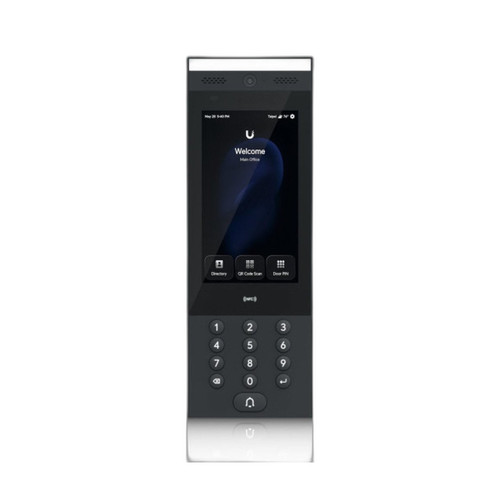
Both the Ubiquiti UA-G3-INTERCOM and the SDC IPDSE occupy the networked door-station category: each is a wall-mounted, IP-connected unit designed to manage physical door entry via credential readers and remote unlock. However, they differ substantially in architecture — the UA-G3-INTERCOM is a self-contained all-in-one video intercom terminal, while the IPDSE is an IP-based access control expansion board housed in an enclosure, scaling to multi-door grids. Buyers evaluating ruggedized entry hardware, credential flexibility, power method, and system scalability will find these specs directly relevant to a purchasing decision.
In This Guide
- Which unit supports a broader range of credential types and entry methods?
- How do these units compare on power input, environmental protection, and operating temperature?
- Which product scales more effectively across multi-door or enterprise deployments?
- Which should you choose: the UA-G3-INTERCOM or the IPDSE?
- Side-by-Side Specs
- FAQ
Which unit supports a broader range of credential types and entry methods?
The UA-G3-INTERCOM supports NFC (Forum tags T1T, T2T, T3T, T4T, and T5T), PIN code entry, and mobile app unlock via the UniFi platform. The spec sheet also lists a microphone (audio intercom capability) and a factory reset button as the only physical button. No Wiegand interface or RS-485 terminal bus is listed for the UA-G3-INTERCOM.
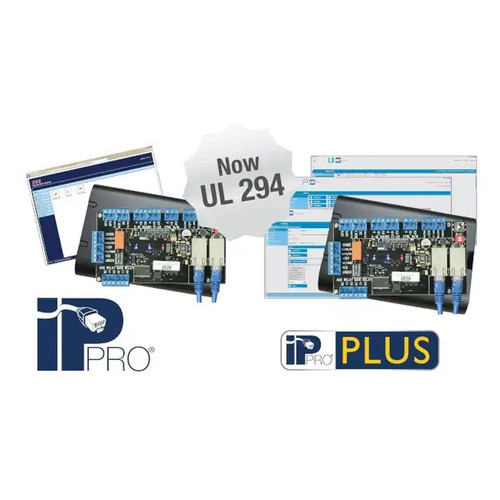
The SDC IPDSE supports proximity cards, keypad entry, NFC/13.56 MHz credentials, and Wiegand 26–37 bit readers, with RS-485 terminal bus and TCP/IP communication. It is explicitly described as compatible with mixed-credential environments. The IPDSE supports up to 60,000 users with up to 2 credentials per user. The UA-G3-INTERCOM does not list a maximum user count in the provided specs.
For installations requiring Wiegand-based legacy readers, RS-485 bus integration, or a large stored-user database, the IPDSE's credential breadth is the stronger match. The UA-G3-INTERCOM's mobile unlock and NFC tag range (T1T–T5T) provide flexibility within the UniFi ecosystem but lack a Wiegand output specification.
How do these units compare on power input, environmental protection, and operating temperature?
The UA-G3-INTERCOM is PoE-powered (802.3af, 48V DC, 13W maximum), requiring a single Gigabit RJ45 run for both data and power. It carries an IP65 rating and an operating temperature range of −30°C to 60°C (device body), with the display rated separately to −25°C to 60°C. The enclosure is aluminum alloy with UV-stabilized polycarbonate and glass, on a powder-coated stainless steel mount. Certifications include UL 294, CE, FCC, IC, and CAN/ULC-60839-11-1.
The IPDSE is powered at 12VDC, 120 mA maximum. Its specs list PoE+ (802.3at) under power type, but no IP weather-resistance rating is provided in the available specifications. No operating temperature range is listed for the IPDSE. The IPDSE weighs 1 lb; no enclosure material or outdoor suitability statement appears in the provided specs.
The UA-G3-INTERCOM has a clearly documented outdoor envelope: IP65, −30°C to 60°C, and UL 294 listing. The IPDSE's environmental ratings are not present in the provided specifications, making a direct outdoor-suitability comparison impossible on available data alone.
Which product scales more effectively across multi-door or enterprise deployments?
The UA-G3-INTERCOM is managed through the UniFi platform and mobile app. The provided specifications do not state a maximum door or user count for the UA-G3-INTERCOM, nor do they describe multi-controller networking or software expansion tiers.
The IPDSE is designed explicitly for scalability: it operates as a standalone single-door controller, expands to a 32-door system via its built-in web server, and reaches up to a 100-door grid when managed by SDC PLUS software. User capacity is stated as 60,000 users. Communication protocols include TCP/IP (DHCP or static), Wiegand, and RS-485, enabling integration with third-party access control software and existing reader infrastructure.
For multi-door deployments — particularly those requiring 32- to 100-door coverage, legacy Wiegand hardware, or a large enrolled-user database — the IPDSE's architecture is purpose-built for that scope. The UA-G3-INTERCOM's scalability ceiling is not defined in the provided specs, limiting a direct numerical comparison on that dimension.
Which should you choose: the UA-G3-INTERCOM or the IPDSE?
Our take: The UA-G3-INTERCOM is the stronger choice when the deployment is outdoors, PoE-cabled, and integrated into a UniFi access-control ecosystem requiring a single-cable all-in-one intercom terminal. Its IP65 rating, −30°C to 60°C operating range, UL 294 certification, and 802.3af PoE (13W, 48V DC) make it a well-documented outdoor unit. The IPDSE is the stronger choice when the project demands multi-door scalability (up to 100 doors), a large user database (60,000 users), or Wiegand 26–37 bit and RS-485 protocol interoperability with existing readers. Key deltas: the UA-G3-INTERCOM has a stated IP65/−30°C outdoor rating while the IPDSE lists no IP or temperature spec; the IPDSE stores up to 60,000 users versus no stated limit for the UA-G3-INTERCOM; and the IPDSE scales to 100 doors versus no multi-door specification for the UA-G3-INTERCOM. Buyers standardized on UniFi should evaluate the UA-G3-INTERCOM; enterprise or legacy-integrated deployments should evaluate the IPDSE.
Side-by-Side Comparison
Spec-for-spec, from manufacturer data.
| Specification | Ubiquiti UA-G3-INTERCOM | SDC IPDSE |
|---|---|---|
| Form Factor | All-in-one intercom terminal | Expansion board with enclosure |
| Power Input | PoE 802.3af, 48V DC, 13W | 12VDC, 120 mA max; PoE+ (802.3at) listed |
| IP Rating | IP65 | — |
| Operating Temp (Device) | −30°C to 60°C | — |
| Enclosure Material | Aluminum alloy, UV-stabilized polycarbonate, glass | — |
| Credential Types | NFC T1T–T5T, PIN, mobile app | Proximity, keypad, NFC 13.56 MHz, Wiegand 26–37 bit |
| Communication Protocols | Gigabit RJ45 (data + PoE) | TCP/IP 100/10 Mbps, Wiegand, RS-485 |
| Max Users | — | 60,000 (up to 2 credentials per user) |
| Door Scalability | — | 1 standalone; up to 32 (web server); up to 100 (PLUS software) |
| Management Platform | UniFi platform, mobile app | Built-in web server; SDC PLUS software |
| Audio | Microphone supported | — |
| Weight | 965 g (device); 445 g (bracket) | 1 lb (0.45 kg) |
| Certifications | CE, FCC, IC, UL 294, CAN/ULC-60839-11-1, NDAA | — |
| NDAA Compliant | Yes | — |
| Lock Relay Output | — | SPDT 5A @ 30VDC (main); 1A @ 30VDC (auxiliary) |
| Warranty | Manufacturer warranty (term not specified) | Lifetime |
Frequently Asked Questions
Which should you choose: the UA-G3-INTERCOM or the IPDSE?
The UA-G3-INTERCOM is the stronger choice when the deployment is outdoors, PoE-cabled, and integrated into a UniFi access-control ecosystem requiring a single-cable all-in-one intercom terminal. Its IP65 rating, −30°C to 60°C operating range, UL 294 certification, and 802.3af PoE (13W, 48V DC) make it a well-documented outdoor unit. The IPDSE is the stronger choice when the project demands multi-door scalability (up to 100 doors), a large user database (60,000 users), or Wiegand 26–37 bit and RS-485 protocol interoperability with existing readers. Key deltas: the UA-G3-INTERCOM has a stated IP65/−30°C outdoor rating while the IPDSE lists no IP or temperature spec; the IPDSE stores up to 60,000 users versus no stated limit for the UA-G3-INTERCOM; and the IPDSE scales to 100 doors versus no multi-door specification for the UA-G3-INTERCOM. Buyers standardized on UniFi should evaluate the UA-G3-INTERCOM; enterprise or legacy-integrated deployments should evaluate the IPDSE.
Is the UA-G3-INTERCOM or the IPDSE better suited for harsh outdoor environments?
Based on available specifications, the UA-G3-INTERCOM is the documented outdoor unit: it carries an IP65 rating and an operating temperature range of −30°C to 60°C (device), with UL 294 and CAN/ULC-60839-11-1 certifications. The IPDSE's provided specifications do not include an IP weather-resistance rating or an operating temperature range, so its outdoor suitability cannot be confirmed from the available data.
Can either unit integrate with an existing Wiegand reader infrastructure?
Yes — the IPDSE supports Wiegand 26–37 bit readers and also communicates via RS-485 terminal bus and TCP/IP, making it compatible with existing proximity and keypad reader installations. The UA-G3-INTERCOM's provided specifications do not list a Wiegand output or RS-485 interface; its credential methods are NFC (T1T–T5T tags), PIN, and UniFi mobile unlock.
Which product is better for a larger multi-door deployment?
The IPDSE is explicitly designed for multi-door scaling: it manages 1 door standalone, up to 32 doors via its built-in web server, and up to 100 doors with SDC PLUS software, supporting 60,000 users. The UA-G3-INTERCOM's maximum door and user capacity are not stated in the provided specifications, so its scalability ceiling for enterprise deployments cannot be confirmed from available data.
More Intercom Comparisons
- Ubiquiti UA-G3-INTERCOM vs Comelit TP6842
- Ubiquiti UA-G3-INTERCOM vs ACTi Q950
- Axis 03448-001 vs Axis 02892-001
- Comelit TP6842 vs ACTi Q950
- Comelit TP6842 vs Comelit 3460HEV
- Comelit TP6842 vs Comelit 6205W
Intercom Buying Guides
Get a Second Opinion on Your Camera Choice
Share your site layout, coverage goals, and budget. Our team will validate the camera selection, flag anything we would change, and recommend products that match the use case.