
Axis Q1971-E vs Pelco SXRE4-VF14-EBT-1: Specification Comparison
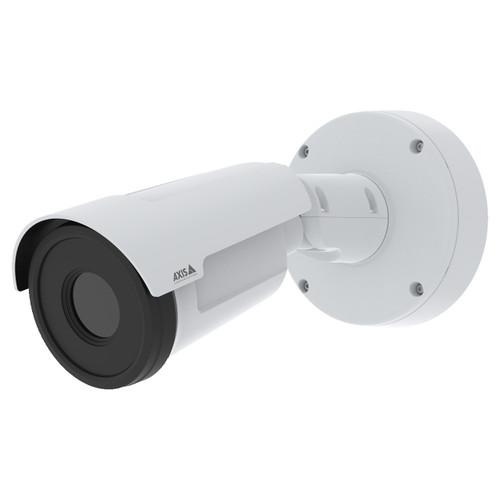
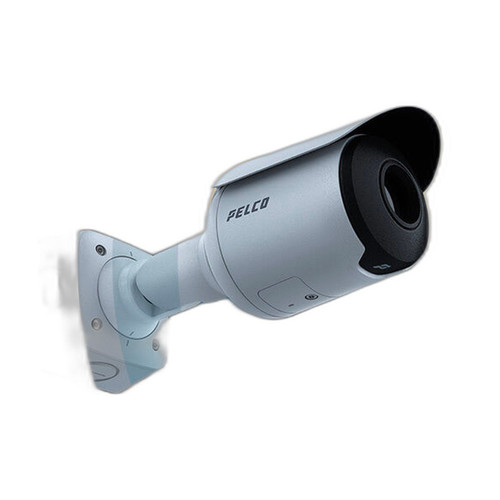
Both the Axis Q1971-E and the Pelco SXRE4-VF14-EBT-1 are fixed-form-factor outdoor thermal bullet cameras intended for perimeter security and 24/7 detection without visible light. The Q1971-E operates at 384×288 (QVGA-class) uncooled microbolometer resolution, while the SXRE4-VF14-EBT-1 delivers VGA (640×480) radiometric thermal imaging — one resolution tier apart but within the cross-shop range for buyers evaluating thermal perimeter solutions in the same price and integration category.
In This Guide
How do the imaging specs compare?
The Axis Q1971-E uses a 384×288 uncooled microbolometer with 17 µm pixel pitch and a fixed athermalized 19mm F1.24 lens, yielding a 19° horizontal / 15° vertical field of view. Thermal sensitivity is specified at <20 mK NETD at 25°C — a tightly specified figure indicating the camera can discriminate very small temperature differentials. Frame rate is 8.3 fps. The sensor operates across the 8–14 µm long-wave infrared spectral range. No visible-light channel is provided; minimum illumination is effectively 0 lux by virtue of the thermal sensor alone.
The Pelco SXRE4-VF14-EBT-1 provides VGA (640×480) radiometric thermal resolution — a higher pixel count that allows more spatial detail at range. The '-VF14' designator indicates a variable focal length lens (14mm nominal per the SKU), and the camera supports radiometric temperature measurement (anomaly detection), which the Q1971-E spec does not explicitly claim. Pelco specifies object detection range up to 300 m (980 ft). NETD or pixel pitch figures are not provided in the supplied specifications for this model. Frame rate is not stated in the provided spec data.
What about installation and environment?
The Axis Q1971-E carries IP66 and IK10 ratings with a NEMA 4X enclosure designation, and its operating temperature range extends from -40°C to +60°C (-40°F to +140°F) — a wide thermal envelope suited to extreme cold climates. It powers over PoE+ (802.3af/at Class 3) and supports wall or ceiling mounting. Housing is white. Physical dimensions and weight are not stated in the provided specifications.
The Pelco SXRE4-VF14-EBT-1 carries IP66/IP67 and IK10 ratings, adding submersion-level ingress protection (IP67) that the Axis Q1971-E does not claim. Operating temperature is specified at -10°C to +70°C (14°F to 158°F) — a narrower cold-side range but a slightly higher upper limit. Power is standard PoE (802.3af), drawing approximately 13W. Mounting options are pole and corner, differing from the Axis wall/ceiling approach. Dimensions are 312mm × 126mm × 104mm including junction box; weight variants are listed between approximately 3.17 lbs and 3.42 lbs depending on configuration.
Which fits your VMS and analytics better?
The Axis Q1971-E is ONVIF-compliant and is explicitly listed as compatible with Axis Camera Station and Milestone XProtect, in addition to generic ONVIF Profile support. On-board analytics include Axis Perimeter Defender and VMD (video motion detection). Edge storage via microSD card is supported. Audio input is specified. Cybersecurity features are detailed: Axis Edge Vault hardware-secured key storage, FIPS 140-2 Level 2 certified key storage, signed firmware, and secure boot. Video compression covers H.265 and H.264 with Axis Zipstream.
The Pelco SXRE4-VF14-EBT-1 supports ONVIF Profile S, T, and M — a broader explicit profile set than stated for the Q1971-E. Analytics include PelcoSmartAnalytics, radiometric anomaly detection, and object detection to 300 m. Audio codecs are Opus and G.711 PCM at 8 kHz. Video compression includes H.265, H.264, and the audio codecs Opus and G.711 PCM. On-board edge storage capability is not stated in the provided specifications. Cybersecurity is described as 'FIPS-compliant encryption'; specific certifications (e.g., FIPS 140-2 Level) are not detailed. Certifications include UL, cUL, CE, UKCA, RoHS, RCM, BIS, and NOM. Warranty is not stated in the provided specifications.
Which should you choose: the Q1971-E or the SXRE4-VF14-EBT-1?
Our take: The Q1971-E is the stronger choice when extreme cold-weather operation, hardened cybersecurity with hardware-attested key storage, and tight VMS ecosystem integration (Axis Camera Station, Milestone XProtect) are priorities. The Pelco SXRE4-VF14-EBT-1 offers a higher thermal resolution (640×480 vs. 384×288), an additional IP67 submersion rating beyond the Axis IP66, and explicit radiometric temperature measurement capability not claimed in the Q1971-E spec. Conversely, the Q1971-E specifies a dramatically wider cold-side operating range (-40°C vs. -10°C) and a documented FIPS 140-2 Level 2 hardware security module, relevant for government or high-assurance deployments. The Pelco's PoE 802.3af power budget (~13W) is lighter than the Axis PoE+ Class 3 requirement, which may simplify switch selection. Choose the Pelco for higher-resolution radiometric analytics and IP67 environments; choose the Axis for sub-zero climates, certified cybersecurity, and named-VMS integration.
Side-by-Side Comparison
Spec-for-spec, from manufacturer data.
| Specification | Axis Q1971-E | Pelco SXRE4-VF14-EBT-1 |
|---|---|---|
| Camera Type | Fixed thermal bullet | Fixed radiometric thermal bullet |
| Thermal Resolution | 384×288 (QVGA) | 640×480 (VGA) |
| Image Sensor | Uncooled microbolometer; 17 µm pixel pitch | Radiometric thermal; pixel pitch not stated |
| Thermal Sensitivity (NETD) | <20 mK at 25°C | Not stated in provided specs |
| Spectral Range | 8–14 µm (LWIR) | Not stated in provided specs |
| Lens / Focal Length | 19mm F1.24 athermalized fixed | Variable focal length, 14mm nominal (per SKU) |
| Field of View | 19° H / 15° V | Not stated in provided specs |
| Max Frame Rate | 8.3 fps | Not stated in provided specs |
| Detection Range | Not stated in provided specs | 300 m (980 ft) object detection |
| Video Compression | H.265; H.264; Zipstream | H.265; H.264 |
| IP Rating | IP66 / NEMA 4X | IP66 / IP67 |
| IK / Impact Rating | IK10 | IK10 |
| Operating Temperature | -40°C to +60°C (-40°F to +140°F) | -10°C to +70°C (14°F to +158°F) |
| Power Input / PoE Class | PoE+ (802.3af/at Class 3) | PoE 802.3af (~13W) |
| Edge Storage | microSD card | Not stated in provided specs |
| Audio | Audio input | Opus; G.711 PCM (8 kHz) |
| ONVIF | Yes (Profile stated; specific profiles not enumerated) | ONVIF Profile S, T, M |
| Edge Analytics | Perimeter Defender; VMD | PelcoSmartAnalytics; radiometric anomaly detection; object detection |
| Cybersecurity | Axis Edge Vault; FIPS 140-2 Level 2; signed firmware; secure boot | FIPS-compliant encryption (specific level not stated) |
| Mount Type | Wall; Ceiling | Pole; Corner |
| Dimensions | Not stated in provided specs | 312mm × 126mm × 104mm (incl. junction box) |
| Weight | Not stated in provided specs | ~3.17–3.42 lbs (configuration-dependent) |
| Warranty | 5 years | Not stated in provided specs |
Frequently Asked Questions
Which should you choose: the Q1971-E or the SXRE4-VF14-EBT-1?
The Q1971-E is the stronger choice when extreme cold-weather operation, hardened cybersecurity with hardware-attested key storage, and tight VMS ecosystem integration (Axis Camera Station, Milestone XProtect) are priorities. The Pelco SXRE4-VF14-EBT-1 offers a higher thermal resolution (640×480 vs. 384×288), an additional IP67 submersion rating beyond the Axis IP66, and explicit radiometric temperature measurement capability not claimed in the Q1971-E spec. Conversely, the Q1971-E specifies a dramatically wider cold-side operating range (-40°C vs. -10°C) and a documented FIPS 140-2 Level 2 hardware security module, relevant for government or high-assurance deployments. The Pelco's PoE 802.3af power budget (~13W) is lighter than the Axis PoE+ Class 3 requirement, which may simplify switch selection. Choose the Pelco for higher-resolution radiometric analytics and IP67 environments; choose the Axis for sub-zero climates, certified cybersecurity, and named-VMS integration.
Is the Axis Q1971-E or the Pelco SXRE4-VF14-EBT-1 better for detecting intruders in complete darkness?
Both cameras are passive thermal sensors and require zero ambient light to operate — neither uses IR illuminators. The Pelco SXRE4-VF14-EBT-1 specifies object detection range up to 300 m (980 ft) and a higher 640×480 pixel count, which provides more spatial detail at distance. The Axis Q1971-E specifies a tighter thermal sensitivity of <20 mK NETD at 25°C, which aids discrimination of subtle heat differences; a comparable NETD figure is not provided for the Pelco in the supplied specifications.
Which camera handles colder climates better, the Q1971-E or the SXRE4-VF14-EBT-1?
The Axis Q1971-E has a specified operating temperature floor of -40°C (-40°F), versus -10°C (14°F) for the Pelco SXRE4-VF14-EBT-1. For installations in cold climates — northern regions, rooftop or exposed outdoor environments subject to hard freeze — the Q1971-E's thermal envelope is substantially wider on the cold side.
Does either camera support on-board video storage without a separate NVR?
The Axis Q1971-E explicitly supports local storage via a microSD card, allowing edge recording without a dedicated NVR. The provided specifications for the Pelco SXRE4-VF14-EBT-1 do not state on-board or SD card storage capability; buyers requiring edge recording on the Pelco unit should confirm this with Pelco's full datasheet before specifying.
Get a Second Opinion on Your Camera Choice
Share your site layout, coverage goals, and budget. Our team will validate the camera selection, flag anything we would change, and recommend products that match the use case.