
Pelco SXRE4-VF14-EBT-1 vs Vivotek TB9332-E: Specification Comparison
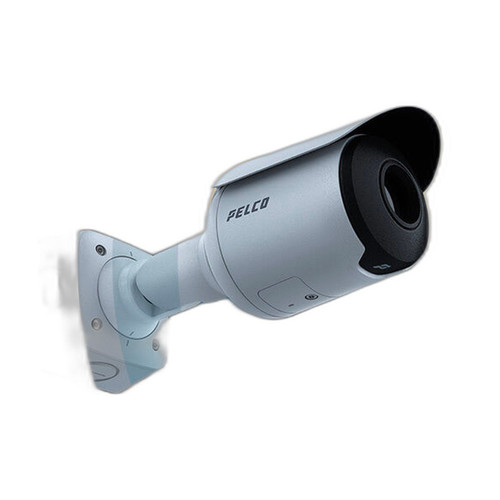
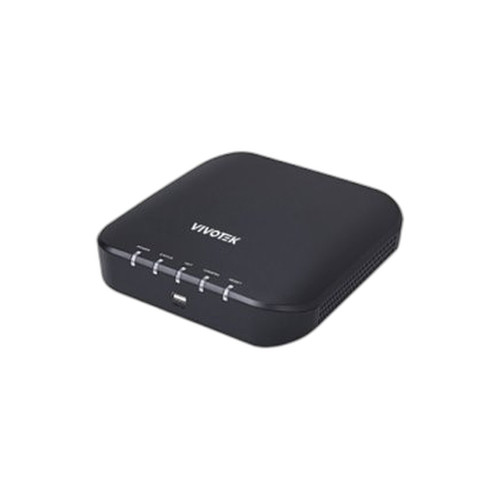
Both the Pelco SXRE4-VF14-EBT-1 and the Vivotek TB9332-E(50MM) are outdoor thermal IP bullet cameras operating in the VGA-class thermal resolution tier and powered by 802.3af PoE. Both are fixed (non-PTZ) units targeting perimeter surveillance and intrusion detection without visible-light illumination. Buyers evaluating a single-vendor thermal bullet for perimeter or critical-infrastructure duty would reasonably cross-shop these two models on sensor resolution, environmental hardening, analytics depth, and VMS integration breadth.
In This Guide
How do the imaging specs compare?
The Vivotek TB9332-E(50MM) carries a 640×512 thermal sensor—327,680 pixels—versus the Pelco SXRE4-VF14-EBT-1's VGA 640×480 sensor at 307,200 pixels. The Vivotek's taller array delivers roughly 6.5% more pixel rows, which can improve vertical scene coverage and target-size classification at distance. The Vivotek also specifies a dedicated 50 mm fixed thermal lens, while the Pelco's lens designation is encoded in the SKU suffix (-VF14-) but is not explicitly stated in the provided specs as a focal-length figure. Both units operate at 0 lux since thermal imaging requires no visible-light illumination.
The Pelco spec lists a detection range of 300 m (980 ft) for its radiometric thermal imager, a concrete distance figure absent from the Vivotek's provided specifications. The Pelco additionally claims radiometric capability—pixel-level temperature measurement—enabling anomaly detection based on absolute or differential temperature thresholds. The Vivotek spec does not list radiometric measurement; it lists fire detection via its deep-learning processor (DLPU), which infers thermal events analytically rather than through calibrated temperature data. Neither model lists WDR, maximum frame rate, or image sensor size in the provided specifications.
What about installation and environment?
The Pelco SXRE4-VF14-EBT-1 is rated IP66/IP67 and IK10, meaning it resists both sustained water immersion and 20-joule impacts—relevant for installations subject to vandalism or mechanical hazard. The Vivotek TB9332-E(50MM) is rated IP66 only; no IK impact rating is listed in the provided specifications. For operating temperature, the Vivotek has the clear advantage: its spec covers −40°C to +60°C, while the Pelco is specified from −10°C to +70°C. Installations in arctic or extreme cold climates favor the Vivotek by a 30°C margin at the low end.
Both cameras are powered by 802.3af PoE; the Vivotek specifies PoE Class 2 (maximum 6.49 W draw) while the Pelco is listed at approximately 13 W—nearly twice the draw—which may require verification against installed switch port budgets. The Pelco's higher power draw likely supports its radiometric processing pipeline. Both units support pole and wall mounting per their respective spec entries. The Pelco adds a corner mount option not listed for the Vivotek. Physical size differs: the Pelco is specified at 312 mm × 126 mm × 104 mm including junction box; no dimensional spec is provided for the Vivotek. The Pelco weight is listed with multiple readings between 3.17 lb and 3.42 lb; the Vivotek is listed at 5.18 (units unspecified in the provided data).
Which fits your VMS and analytics better?
Both cameras support ONVIF; the Pelco covers Profiles S, T, and M, while the Vivotek covers Profiles S, T, and G. Profile G adds on-board recording and edge storage management—consistent with the Vivotek's listed 16 GB onboard storage and microSD capability. The Pelco spec does not list any onboard or removable storage. For installations where continuous local recording or store-and-forward is required without a dedicated NVR, the Vivotek's edge storage is a functional differentiator.
On analytics, the Pelco lists PelcoSmartAnalytics, radiometric anomaly detection, and object detection to 300 m—all reliant on its radiometric temperature data and proprietary processing. The Vivotek lists deep-learning (DLPU) fire detection and video motion detection (VMD), leveraging its onboard multimedia SoC and 1 GB memory. The Vivotek also specifies two-way audio, which is not listed in the Pelco specifications. Audio compression on the Pelco is Opus and G.711 PCM at 8 kHz; no audio codec or sampling rate is listed for the Vivotek beyond 'two-way.' Cybersecurity: the Pelco lists FIPS-compliant encryption; no equivalent cybersecurity certification is listed for the Vivotek in the provided specifications.
Which should you choose: the SXRE4-VF14-EBT-1 or the TB9332-E?
Our take: The SXRE4-VF14-EBT-1 is the stronger choice when radiometric temperature measurement, long-range object detection, and hardened vandal resistance are primary requirements. Its pixel-level radiometric capability and 300 m stated detection range are not matched in the Vivotek's provided specifications, and its IK10 impact rating adds a protection layer the TB9332-E(50MM) does not list. However, the TB9332-E(50MM) holds concrete advantages in three areas: a wider thermal operating range (−40°C vs −10°C lower limit), onboard edge storage (16 GB plus microSD vs none listed for the Pelco), and a lower PoE power budget (Class 2 vs ~13 W) that eases switch planning. Choose the Pelco for radiometric anomaly detection and vandal-hardened critical infrastructure; choose the Vivotek where extreme cold, edge recording independence, or constrained PoE switch capacity drives the design.
Side-by-Side Comparison
Spec-for-spec, from manufacturer data.
| Specification | Pelco SXRE4-VF14-EBT-1 | Vivotek TB9332-E |
|---|---|---|
| Thermal Resolution | 640×480 (VGA) | 640×512 |
| Min. Illumination | 0 lux (thermal) | 0 lux (thermal) |
| Radiometric Capability | Yes (pixel-level temp. measurement) | Not listed in provided specs |
| Detection Range (stated) | 300 m (980 ft) | Not listed in provided specs |
| Lens / Focal Length | Not explicitly stated in provided specs | 50 mm fixed thermal |
| Video Compression | H.265; H.264; Opus; G.711 PCM | H.265; H.264 |
| IP Rating | IP66 / IP67 | IP66 |
| IK / Impact Rating | IK10 | Not listed in provided specs |
| Operating Temperature | −10°C to +70°C | −40°C to +60°C |
| Power / PoE Class | 802.3af (~13 W) | 802.3af Class 2 |
| ONVIF Profiles | S, T, M | S, T, G |
| Edge Storage | Not listed in provided specs | 16 GB onboard; microSD |
| Audio | Opus; G.711 PCM (8 kHz) — type not specified | Two-way (codec not specified) |
| Analytics | PelcoSmartAnalytics; radiometric anomaly detection; object detection | Deep learning (DLPU); fire detection; VMD |
| Cybersecurity | FIPS-compliant encryption | Not listed in provided specs |
| Mounting Options | Pole; Corner | Wall; Pole |
| Dimensions | 312 mm × 126 mm × 104 mm (incl. junction box) | Not listed in provided specs |
| Weight | 3.17–3.42 lb (range of listed values) | 5.18 (units not specified in provided specs) |
Frequently Asked Questions
Which should you choose: the SXRE4-VF14-EBT-1 or the TB9332-E?
The SXRE4-VF14-EBT-1 is the stronger choice when radiometric temperature measurement, long-range object detection, and hardened vandal resistance are primary requirements. Its pixel-level radiometric capability and 300 m stated detection range are not matched in the Vivotek's provided specifications, and its IK10 impact rating adds a protection layer the TB9332-E(50MM) does not list. However, the TB9332-E(50MM) holds concrete advantages in three areas: a wider thermal operating range (−40°C vs −10°C lower limit), onboard edge storage (16 GB plus microSD vs none listed for the Pelco), and a lower PoE power budget (Class 2 vs ~13 W) that eases switch planning. Choose the Pelco for radiometric anomaly detection and vandal-hardened critical infrastructure; choose the Vivotek where extreme cold, edge recording independence, or constrained PoE switch capacity drives the design.
Is the SXRE4-VF14-EBT-1 or TB9332-E better for extreme cold environments?
Based on the provided specifications, the Vivotek TB9332-E(50MM) is rated to −40°C at the low end, compared to −10°C for the Pelco SXRE4-VF14-EBT-1. For arctic or severe-winter installations, the Vivotek offers a 30°C wider cold-side operating margin per spec.
Can either camera record locally without an NVR?
The Vivotek TB9332-E(50MM) specifies 16 GB of onboard storage and microSD capability, plus ONVIF Profile G which supports edge recording management. The Pelco SXRE4-VF14-EBT-1 lists no onboard or removable storage in the provided specifications, making the Vivotek the clear choice for NVR-independent local recording.
Which camera provides actual temperature measurement rather than just motion or fire detection?
The Pelco SXRE4-VF14-EBT-1 is specified as a radiometric thermal camera, meaning it performs pixel-level temperature measurement and supports radiometric anomaly detection based on temperature thresholds. The Vivotek TB9332-E(50MM) lists fire detection via deep-learning analytics but does not list radiometric (calibrated temperature) capability in the provided specifications.
Get a Second Opinion on Your Camera Choice
Share your site layout, coverage goals, and budget. Our team will validate the camera selection, flag anything we would change, and recommend products that match the use case.