
Axis Q1971-E vs Hanwha C3050T: Specification Comparison
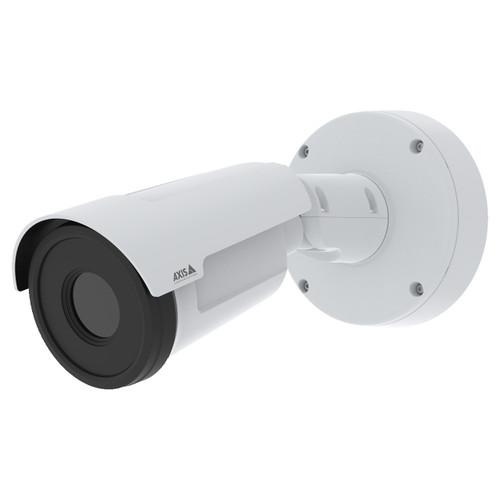
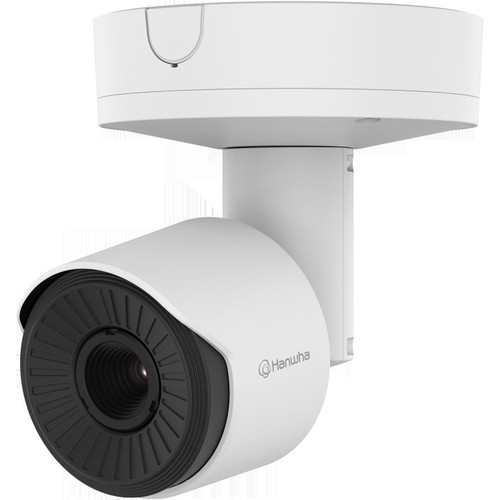
Both the Axis Q1971-E (SKU 02950-001) and the Hanwha TNO-C3050T are uncooled microbolometer thermal bullet cameras designed for 24/7 perimeter and heat-signature detection without visible-light illumination. They occupy the same product class—fixed outdoor thermal network bullets—and share broadly comparable sensor formats (QVGA-class). This comparison evaluates their imaging performance, installation requirements, and VMS/analytics integration to help integrators and IT buyers determine which unit better fits a given deployment.
In This Guide
How do the imaging specs compare?
The Axis Q1971-E specifies a 384×288 uncooled microbolometer with a 17 μm pixel pitch and a thermal sensitivity of less than 20 mK NETD at 25°C. It is paired with a fixed athermalized 19 mm F1.24 lens delivering a 19° horizontal by 15° vertical field of view, and the spectral response is stated as 8–14 μm. Maximum frame rate is 8.3 fps. The Hanwha TNO-C3050T lists its resolution as 'Thermal VGA / QVGA' but does not specify which resolution is active, the pixel pitch, NETD value, lens focal length, field of view, spectral range, or frame rate in the supplied specifications.
Because the Hanwha spec sheet omits pixel pitch, NETD, lens parameters, and frame rate, a direct numerical comparison on imaging performance is not possible. What can be confirmed is that both cameras use uncooled microbolometer sensors. The Axis Q1971-E's <20 mK NETD is a meaningful sensitivity figure for long-range detection in marginal thermal contrast conditions; no equivalent figure is available for the TNO-C3050T.
What about installation and environment?
Both cameras carry an IP66 rating for dust-tight and high-pressure water-jet protection. The Axis Q1971-E additionally holds an IP67 rating is not stated—its certifications are IP66 and NEMA 4X, plus IK10 vandal resistance. The Hanwha TNO-C3050T is rated IP66/IP67 but does not list an IK impact rating. On operating temperature, the Q1971-E is specified for −40°C to +60°C (−40°F to +140°F), while the TNO-C3050T is rated −40°C to +55°C (−40°F to +131°F), a 5°C narrower upper bound.
For power, the Axis Q1971-E requires PoE+ (802.3at, Class 3), meaning the switch or injector must support PoE+. The Hanwha TNO-C3050T accepts standard PoE 802.3af or 12 V DC, offering more flexibility where only 802.3af infrastructure is available or where DC power is preferred. Both are outdoor-rated bullet form factors supporting wall and pole/ceiling mounting, though specific mounting hardware details are not enumerated in either spec set.
Which fits your VMS and analytics better?
The Axis Q1971-E explicitly lists ONVIF Profile compatibility, Axis Camera Station, and Milestone XProtect as validated VMS integrations. On-board analytics include Axis Perimeter Defender and Video Motion Detection (VMD). It also supports audio input, microSD local storage, signed firmware, Secure Boot, and Axis Edge Vault with FIPS 140-2 Level 2 certified key storage—a meaningful differentiator for federal or high-assurance deployments.
The Hanwha TNO-C3050T declares ONVIF Profile S/G/T compliance and native integration with Wisenet WAVE and SSM. Its listed analytics are described broadly as 'Edge Video Analytics' with long-range object detection and fire detection called out specifically; fire detection is not listed for the Axis Q1971-E in the provided specifications. Audio support, on-board storage, and cybersecurity certifications are not specified for the TNO-C3050T in the supplied data.
Which should you choose: the Q1971-E or the C3050T?
Our take: The Axis Q1971-E is the stronger choice when a deployment demands verified thermal sensitivity figures, vandal resistance, high-assurance cybersecurity, or Milestone XProtect integration. Specifically: the Q1971-E publishes a <20 mK NETD sensitivity rating (no equivalent figure exists for the TNO-C3050T), carries IK10 vandal resistance (not listed for the TNO-C3050T), and is rated to a higher upper operating temperature of 60°C versus 55°C. Its FIPS 140-2 Level 2 key storage and signed-firmware/Secure Boot stack are relevant for government and critical-infrastructure projects. The TNO-C3050T holds an advantage in power flexibility—accepting standard 802.3af PoE or 12 V DC versus the Q1971-E's PoE+ requirement—and includes fire detection analytics not listed for the Axis unit. Where existing infrastructure is 802.3af-only or where fire detection is a primary use case and Wisenet WAVE/SSM is the VMS platform, the TNO-C3050T warrants evaluation.
Side-by-Side Comparison
Spec-for-spec, from manufacturer data.
| Specification | Axis Q1971-E | Hanwha C3050T |
|---|---|---|
| Sensor Type | Uncooled microbolometer | Uncooled microbolometer |
| Thermal Resolution | 384×288 | VGA / QVGA (active resolution not specified) |
| Pixel Pitch | 17 μm | — |
| Thermal Sensitivity (NETD) | <20 mK @ 25°C | — |
| Spectral Range | 8–14 μm | — |
| Lens / Focal Length | 19 mm F1.24 athermalized | — |
| Field of View (H×V) | 19° × 15° | — |
| Max Frame Rate | 8.3 fps | — |
| Video Compression | H.265 / H.264 / Zipstream | H.265 / H.264 / WiseStream II |
| IP Rating | IP66 / NEMA 4X | IP66 / IP67 |
| IK (Impact) Rating | IK10 | — |
| Operating Temperature | −40°C to +60°C | −40°C to +55°C |
| Power Input | PoE+ 802.3at (Class 3) | PoE 802.3af or 12 V DC |
| Edge Storage | microSD | — |
| Audio | Audio input | — |
| Analytics | Perimeter Defender; VMD | Edge Video Analytics; Fire Detection; Object Detection |
| VMS Compatibility | ONVIF; Axis Camera Station; Milestone XProtect | ONVIF Profile S/G/T; Wisenet WAVE; SSM |
| Cybersecurity | FIPS 140-2 L2; Signed firmware; Secure Boot; Edge Vault | NDAA Compliant (detail not specified) |
| NDAA Compliant | — | Yes |
| Warranty | 5 years | — |
Frequently Asked Questions
Which should you choose: the Q1971-E or the C3050T?
The Axis Q1971-E is the stronger choice when a deployment demands verified thermal sensitivity figures, vandal resistance, high-assurance cybersecurity, or Milestone XProtect integration. Specifically: the Q1971-E publishes a <20 mK NETD sensitivity rating (no equivalent figure exists for the TNO-C3050T), carries IK10 vandal resistance (not listed for the TNO-C3050T), and is rated to a higher upper operating temperature of 60°C versus 55°C. Its FIPS 140-2 Level 2 key storage and signed-firmware/Secure Boot stack are relevant for government and critical-infrastructure projects. The TNO-C3050T holds an advantage in power flexibility—accepting standard 802.3af PoE or 12 V DC versus the Q1971-E's PoE+ requirement—and includes fire detection analytics not listed for the Axis unit. Where existing infrastructure is 802.3af-only or where fire detection is a primary use case and Wisenet WAVE/SSM is the VMS platform, the TNO-C3050T warrants evaluation.
Is the Axis Q1971-E or the Hanwha TNO-C3050T more sensitive in low thermal-contrast conditions?
The Axis Q1971-E specifies less than 20 mK NETD at 25°C, which is a concrete sensitivity figure. The Hanwha TNO-C3050T does not provide an NETD value in the supplied specifications, so a direct comparison cannot be made on this metric. Buyers requiring a verified sensitivity number will need to obtain a Hanwha datasheet or contact the manufacturer.
Can I power the Hanwha TNO-C3050T from a standard PoE switch that does not support PoE+?
Yes. The TNO-C3050T is specified to accept standard PoE 802.3af or 12 V DC, so a non-PoE+ switch is sufficient. The Axis Q1971-E requires PoE+ (802.3at, Class 3), meaning a PoE+-capable switch or midspan injector is mandatory.
Which camera is better suited for a federal or government installation with cybersecurity requirements?
The Axis Q1971-E is specified with Axis Edge Vault, FIPS 140-2 Level 2 certified key storage, signed firmware, and Secure Boot. The Hanwha TNO-C3050T is listed as NDAA compliant but its supplied specifications do not detail equivalent cybersecurity certifications. For deployments where FIPS 140-2 is a stated requirement, the Q1971-E has documented certification; the TNO-C3050T's cybersecurity posture would need to be verified against Hanwha's full datasheet.
Get a Second Opinion on Your Camera Choice
Share your site layout, coverage goals, and budget. Our team will validate the camera selection, flag anything we would change, and recommend products that match the use case.