
Axis Q1971-E vs Vivotek TB9332-E: Specification Comparison
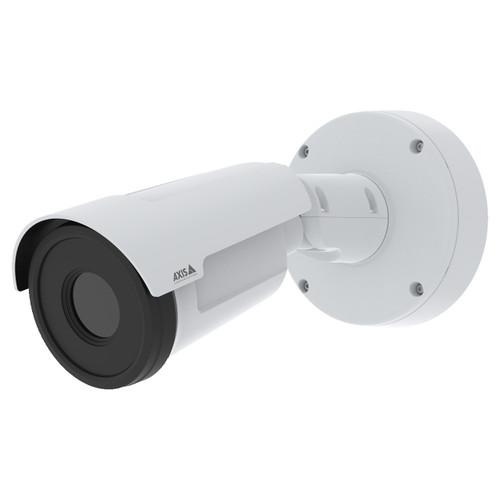
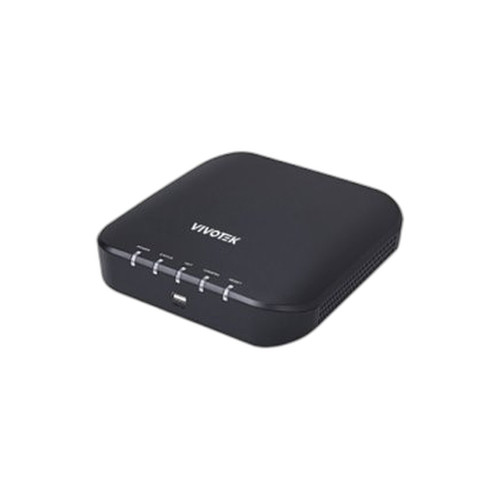
Both the Axis Q1971-E and the Vivotek TB9332-E(50MM) are fixed-lens outdoor thermal bullet cameras designed for 24/7 perimeter surveillance at 0 lux. The Q1971-E operates on a 384×288 uncooled microbolometer while the TB9332-E steps up to a 640×512 thermal sensor, placing these in adjacent but overlapping resolution tiers that installers regularly compare when specifying perimeter detection systems. This comparison evaluates sensor performance, environmental ratings, power requirements, VMS integration, and edge analytics to help integrators choose the right platform for their deployment.
In This Guide
How do the imaging specs compare?
The Axis Q1971-E uses a 384×288 uncooled microbolometer with a 17 µm pixel pitch and a thermal sensitivity of less than 20 mK NETD at 25°C. Its fixed 19mm F1.24 athermalized lens delivers a 19° horizontal by 15° vertical field of view, and the camera records at 8.3 fps. The spectral range is 8–14 µm. Image stabilization is listed in the specs. The Vivotek TB9332-E(50MM) uses a 640×512 thermal sensor with a 50mm fixed lens — roughly 2.8× the pixel count of the Axis — enabling finer thermal detail and longer detection ranges at equivalent scene sizes. The TB9332-E's frame rate and pixel pitch are not stated in the provided specifications.
On low-light performance both are true thermal cameras operating at 0 lux with no IR illuminators required; conventional lux ratings are not applicable. The Axis specifies its thermal sensitivity at <20 mK NETD, which is a meaningful sensitivity figure for distinguishing small temperature differentials. The Vivotek specification does not include an NETD figure in the provided data. Neither unit is specified with WDR, as WDR is not a relevant metric for uncooled microbolometer thermal imaging.
What about installation and environment?
Both cameras share an IP66 ingress-protection rating for outdoor deployment and an operating temperature range of -40°C to 60°C (-40°F to 140°F). The Axis Q1971-E adds an IK10 vandal-resistance rating and NEMA 4X certification, providing impact resistance that the Vivotek TB9332-E's provided specifications do not address. The Axis also lists a housing color of white, while housing color is not specified for the Vivotek.
On power, the Axis Q1971-E requires PoE+ (802.3at, Class 3), meaning the supplying switch port must deliver up to 30W. The Vivotek TB9332-E(50MM) operates on standard PoE (802.3af, Class 2), drawing no more than 7W and compatible with a wider range of existing PoE switches without requiring 802.3at upgrades. Mount types differ: the Axis supports wall and ceiling mounting; the Vivotek supports wall and pole mounting. The Axis unit weighs approximately 5.18 kg per the Vivotek spec entry — note this weight figure appears in the Vivotek record; the Axis weight is not separately stated in the provided Axis specifications.
Which fits your VMS and analytics better?
The Axis Q1971-E is listed as compatible with ONVIF Profile, Axis Camera Station, and Milestone XProtect by name, and includes on-board analytics: Perimeter Defender and VMD. Axis Edge Vault with FIPS 140-2 Level 2 certified key storage and signed firmware plus secure boot are explicitly called out as cybersecurity features. The Vivotek TB9332-E supports ONVIF Profile S/T/G and includes deep-learning (DLPU) analytics, fire detection, and VMD. Named VMS compatibility beyond ONVIF is not provided in the Vivotek specifications.
For audio, the Axis Q1971-E supports audio input only. The Vivotek TB9332-E provides two-way audio. On local storage, the Axis supports microSD; the Vivotek specifies 16GB onboard storage plus microSD capability. The Vivotek also lists 1GB of RAM and a multimedia SoC processor, whereas equivalent compute details are not stated in the Axis specifications. Warranty is 5 years for the Axis Q1971-E; the Vivotek warranty is not stated in the provided specifications.
Which should you choose: the Q1971-E or the TB9332-E?
Our take: The Q1971-E is the stronger choice when cybersecurity compliance, VMS-named interoperability, and vandal resistance are primary requirements; the TB9332-E(50MM) is the stronger choice when higher thermal resolution and lower switch-infrastructure cost are the priorities. Concretely: the TB9332-E's 640×512 sensor provides approximately 2.8× the pixel count of the Q1971-E's 384×288, enabling finer target discrimination at longer ranges. Conversely, the Q1971-E specifies <20 mK NETD thermal sensitivity — a figure absent from the Vivotek data — and adds IK10 impact resistance plus FIPS 140-2 Level 2 key storage, which are mandatory for many government and critical-infrastructure sites. On power, the TB9332-E's 802.3af Class 2 requirement is less demanding than the Q1971-E's PoE+ Class 3, reducing switch upgrade costs. Specify the Q1971-E for hardened, compliance-sensitive perimeters on Axis or Milestone VMS; specify the TB9332-E where higher sensor resolution and standard PoE budget matter more than rated impact resistance.
Side-by-Side Comparison
Spec-for-spec, from manufacturer data.
| Specification | Axis Q1971-E | Vivotek TB9332-E |
|---|---|---|
| Thermal Resolution | 384×288 | 640×512 |
| Image Sensor | Uncooled microbolometer, 17 µm pixel pitch | Thermal sensor (pixel pitch not specified) |
| Lens / Focal Length | 19mm F1.24 athermalized fixed | 50mm fixed thermal |
| Field of View (H×V) | 19° × 15° | Not specified |
| Thermal Sensitivity (NETD) | <20 mK @ 25°C | Not specified |
| Spectral Range | 8–14 µm | Not specified |
| Min Illumination | 0 lux (thermal) | 0 lux (thermal) |
| Max Frame Rate | 8.3 fps | Not specified |
| Video Compression | H.265, H.264, Zipstream | H.265, H.264 |
| IP Rating | IP66 / NEMA 4X | IP66 |
| IK / Impact Rating | IK10 | Not specified |
| Operating Temperature | -40°C to 60°C | -40°C to 60°C |
| Power Input / PoE Class | PoE+ 802.3at, Class 3 | PoE 802.3af, Class 2 |
| Edge Storage | microSD | 16GB onboard + microSD |
| Audio | Input only | Two-way |
| Analytics | Perimeter Defender; VMD | Deep learning (DLPU); Fire detection; VMD |
| ONVIF | Yes (Profile listed) | Yes (Profile S/T/G) |
| Named VMS Compatibility | Axis Camera Station; Milestone XProtect | Not specified beyond ONVIF |
| Cybersecurity | FIPS 140-2 L2; Signed firmware; Secure boot; Edge Vault | Not specified |
| Mount Types | Wall; Ceiling | Wall; Pole |
| Warranty | 5 years | Not specified |
Frequently Asked Questions
Which should you choose: the Q1971-E or the TB9332-E?
The Q1971-E is the stronger choice when cybersecurity compliance, VMS-named interoperability, and vandal resistance are primary requirements; the TB9332-E(50MM) is the stronger choice when higher thermal resolution and lower switch-infrastructure cost are the priorities. Concretely: the TB9332-E's 640×512 sensor provides approximately 2.8× the pixel count of the Q1971-E's 384×288, enabling finer target discrimination at longer ranges. Conversely, the Q1971-E specifies <20 mK NETD thermal sensitivity — a figure absent from the Vivotek data — and adds IK10 impact resistance plus FIPS 140-2 Level 2 key storage, which are mandatory for many government and critical-infrastructure sites. On power, the TB9332-E's 802.3af Class 2 requirement is less demanding than the Q1971-E's PoE+ Class 3, reducing switch upgrade costs. Specify the Q1971-E for hardened, compliance-sensitive perimeters on Axis or Milestone VMS; specify the TB9332-E where higher sensor resolution and standard PoE budget matter more than rated impact resistance.
Is the Q1971-E or TB9332-E better for detecting targets at longer distances?
Based on provided specifications, the Vivotek TB9332-E(50MM) has a 640×512 thermal sensor — roughly 2.8× the pixel count of the Axis Q1971-E's 384×288 — and a longer 50mm focal length versus the Q1971-E's 19mm. More pixels and a longer focal length generally support detection at greater range, though neither manufacturer states a specific detection distance in the provided specs.
Does either camera work with my existing 802.3af PoE switches?
The Vivotek TB9332-E(50MM) runs on standard PoE (802.3af, Class 2) and is compatible with existing 802.3af switch ports. The Axis Q1971-E requires PoE+ (802.3at, Class 3); if your switches only support 802.3af, you would need a midspan injector or switch upgrade for the Axis unit.
Which camera is better suited for a site with cybersecurity or government compliance requirements?
The Axis Q1971-E explicitly lists FIPS 140-2 Level 2 certified key storage via Axis Edge Vault, signed firmware, and secure boot. These features directly address NDAA, FIPS, and similar compliance requirements. The Vivotek TB9332-E's provided specifications do not mention equivalent cybersecurity certifications, so the Q1971-E has a documented advantage for compliance-sensitive deployments.
Get a Second Opinion on Your Camera Choice
Share your site layout, coverage goals, and budget. Our team will validate the camera selection, flag anything we would change, and recommend products that match the use case.