
Axis Q1972-E vs Pelco SXRE4-VF14-EBT-1: Specification Comparison
Both the Axis Q1972-E and the Pelco SXRE4-VF14-EBT-1 are fixed-mount, VGA-resolution (640×480) thermal bullet cameras designed for outdoor perimeter security. They occupy the same resolution tier and form factor, making them genuine cross-shop candidates for installers evaluating uncooled thermal imaging at the entry-to-mid level. This comparison examines their imaging specifications, physical installation characteristics, and VMS/analytics integration capabilities strictly against the provided specification data.
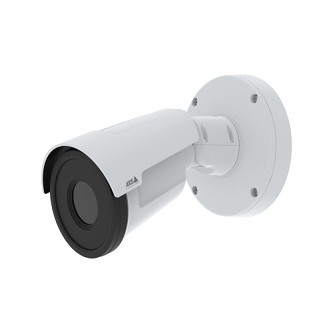
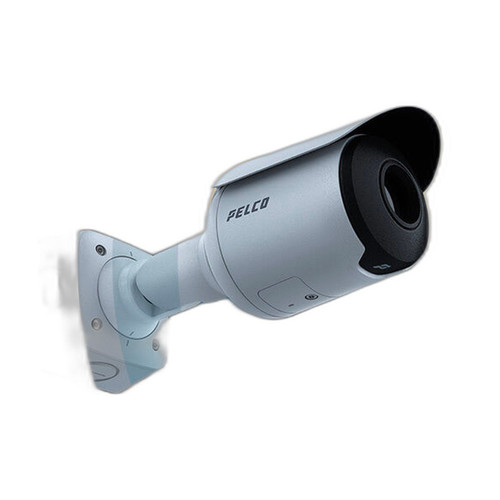
In This Guide
How do the imaging specs compare?
Both cameras deliver 640×480 VGA thermal resolution. The Axis Q1972-E specifies an uncooled microbolometer operating in the 8–14 μm spectral band with a thermal sensitivity of less than 20 mK at 25°C, paired with a fixed 19 mm F/1.0 athermalized lens producing a 31° horizontal by 24° vertical field of view. Frame rate is listed at 30 fps in one mode and 8.3 fps in a secondary mode. The Q1972-E also integrates a 2.8 m IR illuminator and carries Day/Night classification. The Pelco SXRE4-VF14-EBT-1 is described as a radiometric thermal camera with an object detection range specified at 300 m or greater. Pelco's specs do not disclose sensor sensitivity (NETD), spectral band, or frame rate in the provided data.
The Q1972-E's athermalized lens design compensates for thermal drift of the optic across temperature, which is relevant in wide-swing outdoor environments. The SXRE4-VF14-EBT-1 adds radiometric capability—pixel-level temperature measurement enabling anomaly detection—which the Q1972-E specs do not claim. Pelco also does not specify focal length or field of view in the provided data, so direct lens comparison is not possible. The 300 m detection range stated for the Pelco is a system-level claim not directly comparable to the Axis 2.8 m IR range, which appears to be an integrated visible-band illuminator rather than a thermal detection distance.
What about installation and environment?
The Q1972-E carries an IP66 rating and IK10 impact resistance, is designated Outdoor Ready, and supports wall, ceiling, and pendant mounting. It is powered via PoE+ (802.3af+ / Class 3). No operating temperature range is stated in the provided specifications. Physical dimensions and weight are not provided in the spec data. The SXRE4-VF14-EBT-1 is rated IP66/IP67—adding submersion protection—and also carries IK10. Its operating temperature is specified as −10°C to +70°C (14°F to 158°F). It is powered by standard PoE (802.3af, approximately 13 W) and supports pole and corner mounting. Physical dimensions are listed as 312 mm × 126 mm × 104 mm including junction box.
A key installation distinction is power: the Q1972-E requires PoE+ (higher wattage budget), while the SXRE4-VF14-EBT-1 runs on standard 802.3af PoE, giving it broader compatibility with existing switches without uplink upgrades. The Pelco's IP67 rating provides an additional margin of ingress protection over the Q1972-E's IP66. Mount style options differ—Axis covers wall/ceiling/pendant while Pelco targets pole and corner deployments. Operating temperature is only specified for the Pelco; the Q1972-E's thermal range is absent from the provided data.
Which fits your VMS and analytics better?
Both cameras are ONVIF-compliant. The Pelco SXRE4-VF14-EBT-1 explicitly states ONVIF Profile S, T, and M support and third-party NVR/VMS integration, plus FIPS-compliant encryption for cybersecurity. Its analytics include PelcoSmartAnalytics, radiometric anomaly detection, and object detection at 300 m or greater. Bandwidth management is handled via Pelco Smart Compression technology and an idle-scene mode. Audio support covers Opus and G.711 PCM at 8 kHz. On-board storage is not specified in the provided Pelco data.
The Axis Q1972-E supports H.265, H.264, and MJPEG compression with up to 20 simultaneous streams, edge analytics via VMD and Axis Perimeter Defender, microSD local storage, signed firmware, secure boot, and HTTPS encryption. Audio input is present. ONVIF is confirmed. The Q1972-E's cybersecurity posture is documented through signed firmware and secure boot; the Pelco relies on FIPS-compliant encryption. Axis does not disclose ONVIF profile tiers (S/T/M) in the provided data.
Which should you choose: the Q1972-E or the SXRE4-VF14-EBT-1?
Our take: The Q1972-E is the stronger choice when deep Axis VMS integration, multi-stream H.265 efficiency (up to 20 streams), and edge-based Perimeter Defender analytics are the priority—paired with on-board microSD storage and a documented cybersecurity chain (signed firmware, secure boot, HTTPS). The SXRE4-VF14-EBT-1 is the stronger choice when radiometric temperature measurement, a 300 m object detection claim, standard 802.3af PoE (avoiding switch upgrades), or IP67 submersion protection are required. Three concrete spec deltas: (1) power—Q1972-E requires PoE+ vs. Pelco's 802.3af ~13 W; (2) ingress—Pelco adds IP67 vs. Axis IP66 only; (3) radiometry—Pelco specifies pixel-level temperature measurement; Axis does not claim this. Axis supplies thermal sensitivity (<20 mK) and lens data (19 mm, 31°×24° FOV); Pelco omits both. Evaluate against your switch infrastructure, VMS platform, and whether radiometric anomaly detection is operationally required.
Side-by-Side Comparison
Spec-for-spec, from manufacturer data.
| Specification | Axis Q1972-E | Pelco SXRE4-VF14-EBT-1 |
|---|---|---|
| Resolution | 640×480 (VGA) | 640×480 (VGA) |
| Sensor Type | Uncooled microbolometer, 8–14 μm | Radiometric thermal (spectral band not specified) |
| Thermal Sensitivity (NETD) | <20 mK @ 25°C | — |
| Lens / Focal Length | 19 mm F/1.0, fixed, athermalized | Not specified in provided data |
| Field of View | 31° H × 24° V | — |
| Max Frame Rate | 30 fps / 8.3 fps (dual modes) | — |
| Detection Range | — | 300 m+ (object detection, per spec) |
| IR / Illuminator | 2.8 m integrated IR illuminator | — |
| Video Compression | H.265, H.264, MJPEG (up to 20 streams) | H.265, H.264 |
| IP Rating | IP66 | IP66 / IP67 |
| IK / Impact Rating | IK10 | IK10 |
| Power Input | PoE+ (802.3af+, Class 3) | PoE 802.3af (~13 W) |
| Operating Temperature | — | −10°C to +70°C (14°F to 158°F) |
| Mount Types | Wall; Ceiling; Pendant | Pole; Corner |
| Edge Storage | microSD | — |
| Audio | Audio input | Opus; G.711 PCM (8 kHz) |
| Analytics | VMD; Perimeter Defender | PelcoSmartAnalytics; Radiometric anomaly detection; Object detection 300 m+ |
| ONVIF | Yes | Profile S, T, M |
| Cybersecurity | Signed firmware; Secure boot; HTTPS | FIPS-compliant encryption |
| Certifications | — | UL; cUL; CE; UKCA; RoHS; RCM; BIS; NOM |
| Dimensions | — | 312 mm × 126 mm × 104 mm (incl. junction box) |
| Warranty | 5 years | — |
Frequently Asked Questions
Which should you choose: the Q1972-E or the SXRE4-VF14-EBT-1?
The Q1972-E is the stronger choice when deep Axis VMS integration, multi-stream H.265 efficiency (up to 20 streams), and edge-based Perimeter Defender analytics are the priority—paired with on-board microSD storage and a documented cybersecurity chain (signed firmware, secure boot, HTTPS). The SXRE4-VF14-EBT-1 is the stronger choice when radiometric temperature measurement, a 300 m object detection claim, standard 802.3af PoE (avoiding switch upgrades), or IP67 submersion protection are required. Three concrete spec deltas: (1) power—Q1972-E requires PoE+ vs. Pelco's 802.3af ~13 W; (2) ingress—Pelco adds IP67 vs. Axis IP66 only; (3) radiometry—Pelco specifies pixel-level temperature measurement; Axis does not claim this. Axis supplies thermal sensitivity (<20 mK) and lens data (19 mm, 31°×24° FOV); Pelco omits both. Evaluate against your switch infrastructure, VMS platform, and whether radiometric anomaly detection is operationally required.
Is the Q1972-E or SXRE4-VF14-EBT-1 better for detecting heat anomalies like overheating equipment or fire precursors?
The SXRE4-VF14-EBT-1 is the specified choice for heat-anomaly detection: it is explicitly described as a radiometric camera with radiometric anomaly detection analytics, meaning it can measure and alarm on absolute pixel-level temperatures. The Q1972-E's provided specs do not claim radiometric capability; it is a thermal imager for detection and classification, not temperature measurement.
Will either camera work with my existing 802.3af PoE switch without an injector or switch upgrade?
The Pelco SXRE4-VF14-EBT-1 is specified for standard 802.3af PoE (approximately 13 W) and will power from a standard PoE port. The Axis Q1972-E requires PoE+ (802.3af+), which delivers higher wattage than standard 802.3af. If your switch ports are 802.3af-only, the Q1972-E will require a PoE+ injector or a switch upgrade; the Pelco will not.
Which camera offers better cybersecurity hardening for a government or compliance-sensitive deployment?
Both cameras address cybersecurity, but through different documented mechanisms. The Axis Q1972-E specifies signed firmware, secure boot, and HTTPS encryption in the provided data. The Pelco SXRE4-VF14-EBT-1 specifies FIPS-compliant encryption. FIPS compliance is a specific federal standard requirement; if your deployment mandates FIPS, the Pelco's spec supports that claim. Axis does not state FIPS compliance in the provided specifications.
Get a Second Opinion on Your Camera Choice
Share your site layout, coverage goals, and budget. Our team will validate the camera selection, flag anything we would change, and recommend products that match the use case.