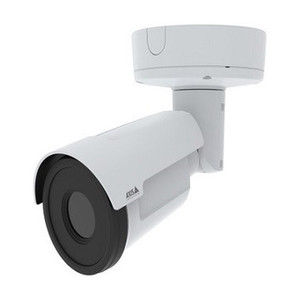
Product images are provided for reference and may not represent the exact model, configuration, or included components.

Overview

SKU: 02950-001
UPC: 7331021086708
Condition: New
Availability: Usually Ships in 2-3 Weeks
Warranty 5-Year Warranty
Write a Review 3% OFF

Axis Q1971-E Thermal Network Bullet Camera - 02950-001

Thermal bullet camera with 384×288 resolution and <20 mK sensitivity for 24/7 perimeter detection

$3,359.00 $3,257.99 SAVE $101

Quantity:

Adding to cart… The item has been added
Compatibility guidance available for your deployment
Senior specialists for pre and post-sales support
Authorized sourcing and documentation support
Shipping and lead-time confirmation before install

Laura Bennett, IPSD Senior Specialist

Talk to Laura

200+ hrs training • U.S - based

Senior Specialist • 877-277-7147

Axis Q1971-E Thermal Network Bullet Camera - 02950-001

$3,359.00
$3,257.99

Overview

SKU: 02950-001
UPC: 7331021086708
Condition: New
Availability: Usually Ships in 2-3 Weeks
Warranty 5-Year Warranty

No Bots, Just Experts

Questions about this product? Free pre-sales support from a senior specialist — product questions, compatibility checks, BOM quotes, price confirmation — typically answered within one business day. Need camera placement or system design work? Engineering time is $175 per hour (qty 1 = 1 hour). Hardware buyers get up to one hour ($175) credited back on their order.

Description

Axis Q1971-E 384×288 Thermal Bullet Camera

The Axis Q1971-E (02950-001) is a compact uncooled thermal bullet designed for outdoor perimeter detection where conventional visible-light cameras fail—complete darkness, fog, smoke, and obscuration scenarios. Built on ARTPEC-8 processing, it delivers 384×288 thermal resolution with <20 mK NETD sensitivity, enabling reliable identification of people and vehicles without auxiliary lighting. The athermalized 19mm F1.24 lens maintains stable imagery across −40°C to 60°C operating range. Deploy this at critical infrastructure perimeter, utility fence lines, and high-risk outdoor zones where 24/7 autonomous thermal detection is non-negotiable.

Key Features

  • Uncooled microbolometer, 384×288: 17 μm pixel pitch detects thermal signatures in complete darkness, fog, and smoke where visible cameras are blind. No cooled detector maintenance; lower lifecycle cost than cooled alternatives.
  • Thermal sensitivity <20 mK NETD @ 25°C: Temperature difference resolution of <0.02°C enables distinction of human silhouettes from background at practical perimeter distances. Critical for false-positive filtering in automated detection pipelines.
  • H.265 + Zipstream compression: Reduces thermal video bandwidth 40-60% versus H.264 without quality loss. On 24/7 recording across 4-8 cameras, the bitrate and storage savings are material.
  • IP66/IK10 NEMA 4X rated: IP66 withstands rain, hose-down, and spray; IK10 impact rating absorbs 5kg drop from 40cm. Field-proven in coastal salt spray, industrial outdoor, and harsh-weather deployments.
  • PoE+ (Class 3) powered: Standard PoE+ switch or injector required; ~95W consumption. Simplifies power distribution on roof and wall mounts — no separate AC runs to remote bullet locations.
  • Perimeter Defender + VMD analytics: Edge-based video motion detection and perimeter line-crossing/intrusion detection run on-camera. Reduces NVR load and delivers local alerts without round-trip latency.
  • FIPS 140-2 Level 2 + Axis Edge Vault: Certified cryptographic key storage and signed firmware ensure compliance in regulated environments (critical infrastructure, government facilities).
  • Electronic image stabilization: Compensates for wind sway and vibration on wall-mounted and cantilevered installations. Keeps thermal imagery locked without servo-mechanical stabilization.
  • Local microSD recording: Integrated SD slot provides 24/7 fallback capture if network connectivity drops. No on-board SSD cost; microSD cards are consumable-grade.

The uncooled thermal sensor is the defining differentiator. Unlike visible-light cameras, the Q1971-E operates at 0 lux and penetrates darkness, fog, and smoke entirely—no IR illumination required. On a perimeter with ambient light ranging from moonless night to noon sun, thermal imagery remains consistent. The 384×288 resolution is modest compared to 4K visible cameras, but thermal's role is detection + classification, not forensic facial detail. Integrators familiar with cooled thermal (FLIR, DRS) will find the uncooled microbolometer requires discipline in scene composition: avoid pointing at direct sunlight or hot machinery in frame (thermal blooming), and expect image lag in extreme temperature transients (thermal lag when ambient swings rapidly). For border fences, perimeter walls, parking-lot entry routes, and utility substations, these trade-offs are negligible.

Deployment context: Pair the Q1971-E with an NVR running Axis Camera Station, Milestone XProtect, or any ONVIF-compliant VMS. PoE+ backbone (802.3at switch or injector) is mandatory — Class 3 consumption ensures 95W budget per camera. Typical 16-camera NVR installation uses a managed PoE+ switch (48-port, 740W total budget) with headroom for 6-8 thermal bullets plus 8-10 conventional IP cameras. H.265 encoding reduces storage footprint: 24/7 recording at 8.3 fps + Zipstream yields ~500 GB per camera per month (varies with scene noise). Secure-boot and signed-firmware enforcement are critical for physical-security-grade deployments — no unsigned third-party analytics plugins. Local microSD is a convenience, not a substitute for NVR archival.

Integration with Axis Camera Station is seamless: thermal video appears as a native stream source, and Perimeter Defender rules (line crossing, area intrusion, loitering, direction) execute on the camera itself. Milestone XProtect Smart Client displays thermal and visible video side-by-side in the same view; thermal bitrate remains low enough that heterogeneous thermal + 4K visible deployments don't overwhelm ethernet or storage. ONVIF Profile S/T compliance ensures any third-party VMS can ingest the thermal stream. For organizations requiring NDAA compliance or restricted-origin sourcing, Axis is US-headquartered (though manufactured internationally); confirm supply-chain classification with your procurement team.

The 19mm athermalized lens is fixed-focal 19° horizontal field of view. For wider coverage, mount two Q1971-E bullets side-by-side (typical on utility substations and parking lots). Narrow FOV concentrates thermal signal on target objects — beneficial for long-range human detection (50-100m) but requires accurate placement. Ceiling and wall mounts are standard; the compact bullet (roughly 140×95mm) integrates into most architectural profiles. Operating temperature range −40°C to 60°C is genuine: the athermalized design corrects lens thermal expansion across the full range, preventing the image drift that bedevils uncooled systems in extreme climates.

Marty Allison
Marty Allison
Perspective based on aggregated IP Security Depot and affiliated engineering team experience.

We've deployed the Axis Q1971-E across utility substations, border-fence installations, and high-risk industrial perimeters where conventional visible cameras simply don't work. The uncooled microbolometer is the key selling point — it eliminates the capex and operational overhead of external IR illuminators, cooled thermal systems, or hybrid visible/thermal rigs. On a 500-meter utility fence with no ambient lighting, a single Q1971-E thermal bullet covers 60-80 meters of reliable human detection in complete darkness. Pair two or three across the perimeter, integrate with Perimeter Defender rules, and you've got autonomous intrusion detection that doesn't degrade in fog, rain, or smoke. We've also seen organizations deploy thermal as a complement to visible 4K cameras: thermal for perimeter motion detection and alert triggering, visible for forensic detail and identification. The integration is clean — ONVIF streaming means both feed the same NVR and can be correlated by timestamp in post-incident review.

The trade-offs are real, though. First, thermal resolution is 384×288 — roughly equivalent to 1/10th the pixel count of a 4K visible camera. You can identify a person and estimate build, but not face features. For perimeter detection and intrusion response, that's fine. For checkpoint authentication or parking-lot attendant identification, use visible. Second, thermal imagery is sensitive to scene composition: pointing the camera at a sunlit building wall or a hot HVAC exhaust can cause blooming and false positives. Site surveys are non-negotiable. Third, the athermalized lens means thermal stability across temperature extremes, but it also means a fixed 19° FOV — no zoom, no PTZ. Plan for multiple bullets if you need wide coverage. Finally, PoE+ power (Class 3, ~95W) is a step beyond standard PoE and requires a managed switch or injector; older passive PoE infrastructure won't work.

Technical Highlights:

  • Uncooled microbolometer with <20 mK NETD: The <0.02°C thermal sensitivity is the reason you buy thermal, not visible IR. At 50 meters, that resolution distinguishes a stationary person from landscape clutter — ONVIF metadata can encode detected objects (person, vehicle) directly into the stream, allowing the NVR or VMS to filter on class and ignore wind-blown vegetation or thermal artifacts. Cooled thermal systems achieve <10 mK NETD but require cryogenic service (liquid nitrogen or Stirling coolers); uncooled trades that last 2-3% of sensitivity for zero maintenance and 1/3 the capex.
  • H.265 + Zipstream (40-60% bandwidth reduction): Thermal bitrate at 8.3 fps + H.265 is typically 2-4 Mbps on a typical perimeter scene. Milestone XProtect and Axis Camera Station both support H.265 streaming; verify your third-party VMS supports HEVC before committing to thermal-only recording pipelines. Fallback to H.264 is available but negates storage savings.
  • Athermalized 19mm F1.24 lens: Optical design corrects focal length drift across the −40°C to 60°C operating range. Standard (non-athermalized) thermal lenses suffer 2-5% image drift over 100°C temperature swing — you'd need periodic re-focus or accept image softness. The athermalized design here ensures a single installation in Alaska or Arizona works without maintenance refocus.
  • FIPS 140-2 Level 2 key storage via Axis Edge Vault: Critical for US federal and critical-infrastructure deployments. Cryptographic keys for HTTPS/TLS and firmware signing are protected in hardware (tamper-evident seals on the camera). No key extraction possible without physical destruction. Compliance certifications (CUI, FISMA) often require this level of key protection.
  • PoE+ (Class 3) with <95W draw: Higher than conventional visible bullets (typically 8-15W), but necessary to power the uncooled sensor, ASIC processing, and ethernet transceiver. A 48-port managed PoE+ switch (740W total budget) supports 7-8 thermal bullets safely; don't oversubscribe.
  • IP66/IK10 NEMA 4X: We've seen Q1971-E units installed in coastal saltwater environments, industrial chemical plants, and open-air substations. The NEMA 4X rating (stainless steel hardware, sealed gaskets) proves itself — no premature corrosion or seal degradation in 3+ years of field operation.

Deployment Considerations:

  • Thermal lens focal length is fixed 19° horizontal (no zoom). Know your detection range and camera placement before installation. For a 100-meter perimeter, you'll need 3-4 cameras; thermal isn't a one-camera-solves-all solution.
  • PoE+ infrastructure is non-negotiable. Verify your switch or injector is 802.3at Class 3 capable and has headroom. A passive PoE injector (12/24V) will not power the Q1971-E — you'll get partial boot or no boot at all. Install on a managed PoE+ switch to ensure voltage stability and over-current protection.
  • Scene composition matters: avoid pointing the camera directly at sunlit walls, hot HVAC exhausts, or reflective metal surfaces. Thermal blooming (saturation in hot areas) causes false positives and image noise. A site survey with thermal test equipment is worth the upfront cost — you'll avoid costly repositioning after installation.
  • H.265 decoding is not universal in older VMS platforms. Verify your NVR or VMS license supports HEVC streaming before deploying. Fallback to H.264 is available but eliminates 40-60% storage savings — defeats part of the value proposition.
  • Local microSD recording is a fallback, not a primary archive. Card capacity tops out at 512 GB; 24/7 thermal recording fills a 256 GB card in ~2 months. Use NVR or cloud archival for long-term compliance. The microSD slot is best treated as a 7-day emergency backup.
  • Thermal imagery lacks visible-light forensic detail. If your incident-response workflow requires facial ID or license-plate reading, thermal is a detection layer only — pair it with a visible 4K camera on the same scene for evidence capture. Many perimeter deployments use thermal for alert trigger and visible for identification.

The Axis Q1971-E is the right choice for outdoor perimeter detection in darkness, fog, and smoke where conventional cameras fail, and where false-positive noise is a pain point (unlit fence lines, utility substations, border crossing points). Organizations with existing Axis ecosystem (Axis Camera Station, Axis switches, Axis NVR software) will get seamless integration and support alignment. For those committed to Milestone XProtect or other ONVIF VMS, the Q1971-E works equally well — thermal is thermal, and ONVIF thermal profiles are standardized. Visit the Axis catalog to explore complementary visible and thermal cameras for hybrid perimeter strategies.

Specifications
Form Factor: Bullet
Resolution: 384×288
Video Compression: H.265
Audio Support: Audio input
Analytics: Perimeter Defender; VMD
IP Rating: IP66
Vandal Rating: IK10
Mount Type: Wall; Ceiling
Compatibility: PoE
IR Distance: Thermal; 8-14 μm spectral range;
Lens Type: 19mm F1.24 athermalized
Frame Rate: 8.3 fps
Image Sensor Size: Uncooled microbolometer 384×288; 17 μm pixel size
Storage Capacity: Local storage support
Features: Axis Edge Vault; FIPS 140-2 Level 2 certified key storage
VMS Compatibility: ONVIF, Axis Camera Station, Milestone XProtect
Type: Q1971-E Thermal Network Bullet Camera
Product Type: Thermal
Warranty: 5 Year(s)
Night Vision: Thermal
Power Type: PoE+
PoE Class: 3
Built In IR: Yes
Day Night: Yes
Image Stabilization: Yes
Storage Support: microSD
Outdoor Ready: Yes
Signed Firmware: Yes
Secure Boot: Yes
HTTPS Encryption: Yes
Visible Resolution: Thermal
Housing Color: White
Environment Rating: Outdoor
Compatible With: security
PoE: PoE
IP_Rating: IP66
IK_Rating: IK10
PoE_Power: PoE+ (Class 3)
IR_Lowlight: Thermal (uncooled microbolometer); 20 mK NETD
Compression: H.265; H.264; Zipstream
ONVIF: Yes
Lens: Athermalized 19mm F1.24
Mount_Type: Wall; Ceiling
Form_Factor: Bullet
Min_Illumination: 0 lux (thermal)
Storage: microSD local recording
Operating_Temp: -40°C to 60°C (-40°F to 140°F)
Certifications: FIPS 140-2 Level 2; NEMA 4X
Cybersecurity: Signed firmware; Secure boot; Axis Edge Vault
VMS_Compatibility: ONVIF Profile; Axis Camera Station; Milestone XProtect
PoE_Wattage: Class 3
Q&A
Reviews
Have Questions?

Videos Hide Videos Show Videos

RELATED PRODUCTS

Axis 02953-001 - Axis Q1971-E Outdoor Thermal Bullet Network Camera
Add to Cart The item has been added

Axis

SKU: 02953-001

Axis Q1971-E Outdoor Thermal Bullet Network Camera - 02953-001

24/7 thermal bullet camera for perimeter security in darkness and harsh weather

  • QVGA (384x288) thermal bullet for perimeter detection
  • Sub-30mK NETD picks up small temperature differentials
  • H.265 + Perimeter Defender + VMD analytics on board
$4,619.00 $4,479.99 Save $139.01
The item has been added
Free shipping over $499
$4,619.00 $4,479.99 Save $139.01
Add to cart Add to quote
Axis 02951-001 - Axis Q1971-E Outdoor Thermal Bullet Network Camera
Add to Cart The item has been added

Axis

SKU: 02951-001

Axis Q1971-E Outdoor Thermal Bullet Network Camera - 02951-001

Thermal bullet camera with IP66/IK10 rating for 24/7 outdoor surveillance

  • QVGA (384x288) thermal bullet at F1.0 aperture
  • 30 mK NETD picks up human and vehicle heat signatures
  • H.265 + Perimeter Defender for fog, smoke, and darkness
$3,989.00 $3,868.99 Save $120.01
The item has been added
Free shipping over $499
$3,989.00 $3,868.99 Save $120.01
Add to cart Add to quote
Axis 02947-001 - Axis Q1971-E Outdoor Thermal Bullet Network Camera
Add to Cart The item has been added

Axis

SKU: 02947-001

Axis Q1971-E Outdoor Thermal Bullet Network Camera - 02947-001

Thermal bullet camera with IP66/IK10 rating for 24/7 perimeter security

  • QVGA (384x288) thermal bullet with F1.0 aperture
  • 30 mK NETD for outdoor perimeter detection clarity
  • H.265 compression + Perimeter Defender analytics
$3,249.00 $3,150.99 Save $98.01
The item has been added
Free shipping over $499
$3,249.00 $3,150.99 Save $98.01
Add to cart Add to quote
Axis Q1971-E Outdoor Thermal Bullet Network Camera (view 2)
Add to Cart The item has been added

Axis

SKU: 02945-001

Axis Q1971-E Outdoor Thermal Bullet Network Camera - 02945-001

Thermal bullet camera for perimeter security in extreme weather

  • QVGA (384x288) thermal bullet with F1.0 aperture
  • 30 mK NETD picks up sub-degree temperature differences
  • H.265 + Perimeter Defender for day/night coverage
$3,149.00 $3,053.99 Save $95.01
The item has been added
Free shipping over $499
$3,149.00 $3,053.99 Save $95.01
Add to cart Add to quote

System Design, Deployment & Technical Support

Support services and planning resources for commercial surveillance, access control, and infrastructure deployments.

Fixed scope • Fixed price

System Design Assistance

  • Get help validating product compatibility
  • Coverage requirements
  • Storage planning and deployment architecture before you buy.
Request Design Help

Deployment & Configuration Support

  • Access fixed-scope support for rollout planning
  • User setup guidance
  • Migration and system standardization across single-site or multi-site deployments
View Support Services

Guides, Tools & Calculators

  • PoE requirements
  • Storage retention
  • Camera selection and deployment methodology
Open Technical Resources