
APC by Schneider Electric SRT3000XLT vs Panduit U03S12V: Specification Comparison
Both the APC SRT3000XLT and the Panduit U03S12V are rack-mount, double-conversion-class 3000 VA / 2700 W uninterruptible power supplies targeting data center, edge, and enterprise environments. However, they serve fundamentally different electrical environments: the SRT3000XLT is designed for 208 V / 240 V circuits common in dedicated server rooms, while the U03S12V operates on 120 V AC circuits typical of general IT closets and edge deployments. A buyer would cross-shop these only if evaluating which voltage infrastructure to commit to alongside the UPS purchase.
In This Guide
- What are the input/output voltage, waveform, and power delivery differences between the two units?
- How do the two UPS units compare on battery specifications, runtime extensibility, and recharge characteristics?
- Which unit offers more advanced monitoring, management interfaces, and environmental operating flexibility?
- Which should you choose: the SRT3000XLT or the U03S12V?
- Side-by-Side Specs
- FAQ
What are the input/output voltage, waveform, and power delivery differences between the two units?
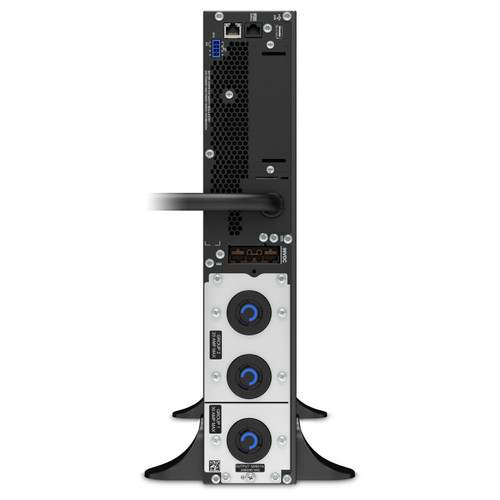
The APC SRT3000XLT operates on a 208 V primary input (NEMA L6-20P) with an alternate 240 V option, and its output is correspondingly 208 V or 240 V selectable. It delivers 2700 W / 3000 VA via a true sine wave using Double Conversion Online topology, which means zero transfer time during a utility failure — the load is always running from the inverter. Output receptacles are (2) NEMA L6-20R and (1) NEMA L6-30R, suited to PDUs and high-draw server hardware.
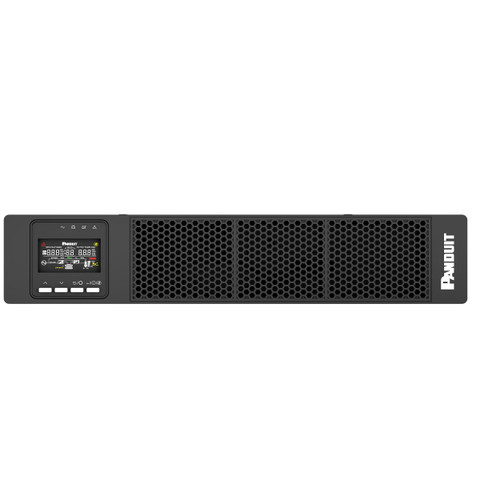
The Panduit U03S12V operates on 120 V AC input with 50/60 Hz auto-sensing and outputs 120 V AC true sine wave at the same 3000 VA / 2700 W capacity. Its topology is not specified as double-conversion; a 4 ms typical transfer time is stated, which is characteristic of line-interactive operation. Outputs are 8× NEMA 5-15R (6 battery-backed + surge, 2 surge-only), making it more compatible with standard North American plug loads. The SRT3000XLT's zero-transfer double-conversion design provides superior power conditioning; the U03S12V's 4 ms transfer time is acceptable for most IT gear with internal PSU hold-up but is a meaningful difference for sensitive loads.
How do the two UPS units compare on battery specifications, runtime extensibility, and recharge characteristics?
The APC SRT3000XLT ships with one internal battery module providing 497 VAh of runtime capacity at a 96 V battery bus, with a typical recharge time of 3 hours. Critically, the SRT3000XLT supports external battery packs (SRT96BP) that extend capacity in steps from 1,491 VAh (1 pack) up to 10,437 VAh (10 packs), enabling very long runtime for mission-critical applications. The replacement battery is the APCRBC152 / SRT96RMBPUS. APC rates battery life at 3–5 years.
The Panduit U03S12V uses a sealed lead-acid battery described as hot-swappable — meaning the battery can be replaced without powering down connected equipment, a significant operational advantage in live environments. However, no runtime figures (VAh), recharge time, battery life rating, or external battery extension options are specified in the provided data. Buyers requiring quantified runtime or extensibility cannot confirm those figures from the available U03S12V spec sheet and should consult Panduit's full datasheet. The SRT3000XLT wins decisively on documented runtime extensibility; the U03S12V's hot-swap capability is a real operational advantage not matched in the SRT3000XLT's listed specs.
Which unit offers more advanced monitoring, management interfaces, and environmental operating flexibility?
The Panduit U03S12V explicitly lists USB, 10/100 Ethernet, and SNMP management interfaces, enabling native network-based monitoring, SNMP traps to NMS platforms, and remote management without an add-on card. This is a notable built-in advantage for data center and enterprise MTDC deployments where out-of-band management is expected.
The APC SRT3000XLT's provided specifications do not list specific management interfaces (no USB, Ethernet, or SNMP port is enumerated in the supplied data). APC's SmartConnect and network management card ecosystem are well-known in the industry, but those claims cannot be made from the spec data provided here. Buyers should verify interface options separately. On environmental tolerance, the SRT3000XLT specifies an operating altitude of 0–10,000 ft, relative humidity 0–95% non-condensing, acoustic output of 55 dBA, heat dissipation of 773 Btu/h, and IP20 ingress protection. The U03S12V provides none of these environmental ratings in the supplied spec data, leaving site engineers without key data for thermal and altitude planning. The SRT3000XLT's documented environmental envelope is a clear advantage for formal site qualification.
Which should you choose: the SRT3000XLT or the U03S12V?
Our take: The SRT3000XLT is the stronger choice when the installation runs 208 V / 240 V infrastructure and requires zero-transfer, double-conversion power protection with documented runtime extensibility. Key spec deltas: the SRT3000XLT uses Double Conversion Online topology (0 ms transfer) versus the U03S12V's stated 4 ms transfer time; the SRT3000XLT supports up to 10,437 VAh of extended battery capacity via external packs while no extension option is listed for the U03S12V; and the SRT3000XLT documents an operating altitude ceiling of 10,000 ft and 55 dBA acoustics while the U03S12V provides neither figure. Conversely, the U03S12V is the practical choice for 120 V North American circuits with its 8× NEMA 5-15R outputs, built-in SNMP / Ethernet management, and hot-swappable battery — advantages for edge and enterprise IT closets where downtime for battery service is unacceptable. Voltage infrastructure is the primary selection criterion: these units are not interchangeable.
Side-by-Side Comparison
Spec-for-spec, from manufacturer data.
| Specification | APC by Schneider Electric SRT3000XLT | Panduit U03S12V |
|---|---|---|
| UPS Capacity (VA) | 3000 VA | 3000 VA |
| UPS Capacity (W) | 2700 W | 2700 W |
| Input Voltage | 208 V (alt 240 V) | 120 V AC |
| Output Voltage | 208 V (alt 240 V) | 120 V AC |
| Input Connection | NEMA L6-20P | — |
| Output Receptacles | (2) NEMA L6-20R, (1) NEMA L6-30R | 8× NEMA 5-15R (6 batt+surge, 2 surge-only) |
| UPS Topology | Double Conversion Online | Not specified (4 ms transfer time stated) |
| Transfer Time | 0 ms (double conversion) | 4 ms typical |
| Output Waveform | Sine wave | True Sine Wave |
| Battery Type | Lead-Acid, 96 V bus | Sealed Lead-Acid, hot-swappable |
| Included Battery Runtime | 497 VAh | — |
| External Battery Extension | Up to 10,437 VAh (10× SRT96BP) | — |
| Typical Recharge Time | 3 hours | — |
| Battery Life Rating | 3–5 years | — |
| Management Interfaces | — | USB, 10/100 Ethernet, SNMP |
| Form Factor | Rack-mounted with kit (2U-class) | 2U Rack-Mount |
| Acoustic Level | 55 dBA | — |
| Heat Dissipation | 773 Btu/h | — |
| Operating Altitude | 0–10,000 ft | — |
| Operating Humidity | 0–95% non-condensing | — |
| IP Rating | IP20 | — |
| Harmonic Distortion | Less than 2% | — |
| Weight | 69.00 lb (31.3 kg) | — |
| Dimensions (Width) | 17.01 in (43.2 cm) | 17.3 in (440 mm) |
| Height | — | 3.4 in (86.5 mm) |
Frequently Asked Questions
Which should you choose: the SRT3000XLT or the U03S12V?
The SRT3000XLT is the stronger choice when the installation runs 208 V / 240 V infrastructure and requires zero-transfer, double-conversion power protection with documented runtime extensibility. Key spec deltas: the SRT3000XLT uses Double Conversion Online topology (0 ms transfer) versus the U03S12V's stated 4 ms transfer time; the SRT3000XLT supports up to 10,437 VAh of extended battery capacity via external packs while no extension option is listed for the U03S12V; and the SRT3000XLT documents an operating altitude ceiling of 10,000 ft and 55 dBA acoustics while the U03S12V provides neither figure. Conversely, the U03S12V is the practical choice for 120 V North American circuits with its 8× NEMA 5-15R outputs, built-in SNMP / Ethernet management, and hot-swappable battery — advantages for edge and enterprise IT closets where downtime for battery service is unacceptable. Voltage infrastructure is the primary selection criterion: these units are not interchangeable.
Can I use the SRT3000XLT or the U03S12V on a standard 120 V wall outlet?
No for the SRT3000XLT — it requires a 208 V or 240 V circuit (NEMA L6-20P input) and is not compatible with standard 120 V North American outlets. The Panduit U03S12V is designed specifically for 120 V AC input and uses standard NEMA 5-15R output receptacles, making it the correct choice for 120 V environments.
Which UPS has better built-in network management for remote monitoring?
Based on the provided specifications, the Panduit U03S12V explicitly includes USB, 10/100 Ethernet, and SNMP interfaces out of the box. The APC SRT3000XLT's supplied spec data does not enumerate management interfaces; buyers should verify APC's network management card options directly with APC or the distributor before assuming equivalent capability.
Is the SRT3000XLT or the U03S12V better suited for a deployment requiring very long battery runtime?
The SRT3000XLT is the documented choice for extended runtime. Its spec sheet lists external battery pack options (SRT96BP) scaling from 1,491 VAh to 10,437 VAh across up to 10 packs, with a 3-hour recharge time stated. The U03S12V spec data provides no runtime VAh figure, no recharge time, and no external battery extension option, so extended-runtime capability cannot be confirmed from the available data.
More UPS Comparisons
- APC by Schneider Electric SMT3000RMI2U vs Vertiv GXT5-3000LVRT2UXL
- APC by Schneider Electric SMT3000RMI2U vs Panduit U03N11L
- APC by Schneider Electric SMT3000RMI2U vs Panduit U03N12L
- APC by Schneider Electric SMT3000RMI2U vs Panduit U03S12V
- APC by Schneider Electric SMT3000RMI2U vs APC by Schneider Electric SRT3000XLT
- APC by Schneider Electric SMT3000RMI2U vs APC by Schneider Electric SRT3000XLW-IEC
UPS Buying Guides
Get a Second Opinion on Your Camera Choice
Share your site layout, coverage goals, and budget. Our team will validate the camera selection, flag anything we would change, and recommend products that match the use case.