
APC by Schneider Electric SMT3000RM2UCUS vs APC by Schneider Electric SMT3000RMI2U: Specification Comparison
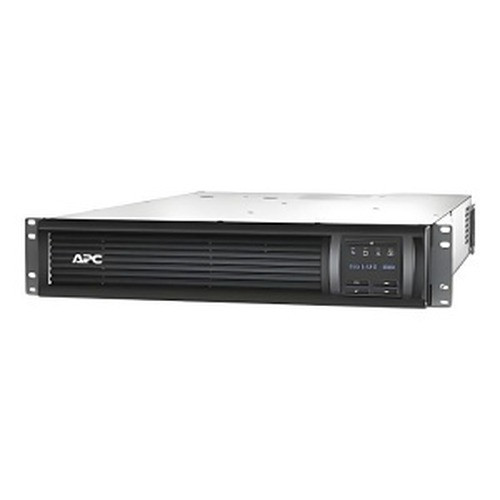
Both the SMT3000RM2UCUS and SMT3000RMI2U are APC Smart-UPS 3000VA rack-mount Line Interactive UPS units in a 2U form factor, sharing the same 2700 W / sine-wave topology. The key differentiator is regional market: the SMT3000RM2UCUS targets North American 120 V infrastructure with NEMA connectors and TAA compliance, while the SMT3000RMI2U targets international 230 V markets with IEC outlets and EU/international certifications. Buyers choosing between them are typically deciding which unit fits their power environment, outlet ecosystem, and compliance requirements.
In This Guide
- Which model matches your facility's voltage, outlet standard, and load capacity?
- How do surge protection, transfer speed, and battery performance compare?
- Which model satisfies your regulatory, certification, and connectivity requirements?
- Which should you choose: the SMT3000RM2UCUS or the SMT3000RMI2U?
- Side-by-Side Specs
- FAQ
Which model matches your facility's voltage, outlet standard, and load capacity?
The SMT3000RM2UCUS is designed exclusively for 120 V AC single-phase North American infrastructure. Its input uses a NEMA L5-30P twist-lock plug and delivers power through 6 NEMA 5-15R receptacles. Rated at 2880 VA / 2700 W, it is the correct choice for any site wired to standard US/Canada branch circuits.
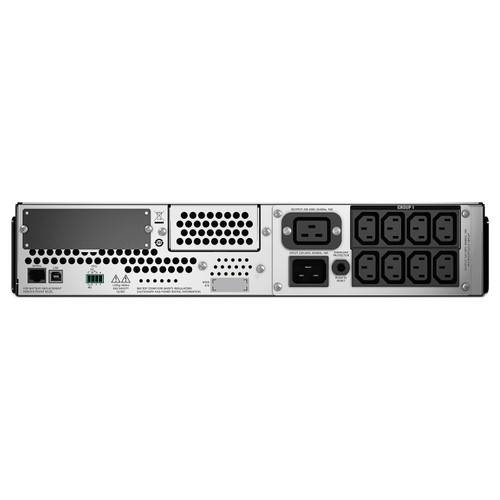
The SMT3000RMI2U operates on 230 V AC (adjustable 220/230/240 V) with international input options: BS1363A British, IEC 320 C20, and Schuko CEE 7. Output is provided via 8 IEC 320 C13 receptacles, 3 IEC jumper outlets, and 1 IEC 320 C19, giving it a higher receptacle count (12 total vs 6) and rated at 3000 VA / 2700 W. The SMT3000RM2UCUS specifies max configurable power at 2880 VA, while the SMT3000RMI2U specifies 3000 VA, a 120 VA difference.
Watt-for-watt both units deliver 2700 W, so real load capacity is identical. The outlet count and plug standard are entirely non-negotiable: deploying the 230 V model on a 120 V North American circuit—or vice versa—is not a viable option.
How do surge protection, transfer speed, and battery performance compare?
Surge energy absorption differs: the SMT3000RM2UCUS is rated at 459 J versus the SMT3000RMI2U at 320 J—a 44% advantage for the US model. Higher joule ratings indicate greater capacity to absorb transient energy before protective components are consumed.
Transfer time also differs. The SMT3000RM2UCUS specifies 6 ms typical / 10 ms maximum, while the SMT3000RMI2U specifies 4 ms typical / 8 ms maximum. The international model switches to battery 2 ms faster in both typical and worst-case scenarios, which can matter for load-sensitive equipment with tight hold-up requirements.
Both units share the same Lead-Acid battery chemistry, 3–5 year battery life, and 3-hour typical recharge time. Battery charging power is specified as 172 W for the SMT3000RM2UCUS and 182 W for the SMT3000RMI2U—a 10 W difference that may yield marginally faster recharge on the international model under identical conditions. Replacement battery for the SMT3000RMI2U is identified as RBC43; no replacement battery SKU is listed in the SMT3000RM2UCUS spec data provided.
Which model satisfies your regulatory, certification, and connectivity requirements?
The SMT3000RM2UCUS carries cULus (North American safety) and ENERGY STAR V2.0 (USA) certifications, and is explicitly TAA (Trade Agreements Act) compliant—a mandatory procurement requirement for US federal, state, and many government-adjacent contracts. No EU directives or international standards are listed for this model in the provided specs.
The SMT3000RMI2U is certified to CE, EAC, IRA, MRCM, VDE, and carries the GS Mark. It conforms to EN/IEC 62040-1:2019/A11:2021 and EN/IEC 62040-2 (both 2006 and 2018 editions), meets EU RoHS (by exemption), and carries WEEE labeling obligations. TAA compliance is not listed.
Connectivity specs are more detailed for the SMT3000RMI2U: Serial port, USB port, and an available expansion slot are explicitly listed, along with included accessories (USB cable, RS-232 cable, rack rails, temperature probe). The SMT3000RM2UCUS lists 1 free slot; specific included connectivity accessories are not enumerated in the provided spec data. Both units share the same acoustic level (55 dBA), heat dissipation (348 Btu/h), and operating altitude (0–10,000 ft).
Which should you choose: the SMT3000RM2UCUS or the SMT3000RMI2U?
Our take: The SMT3000RM2UCUS is the stronger choice when the installation is on North American 120 V infrastructure and TAA compliance is a procurement requirement. It delivers a higher surge energy rating (459 J vs 320 J), making it more resilient to transient events, and its NEMA L5-30P / NEMA 5-15R outlet ecosystem is the correct fit for US/Canada facilities. Conversely, the SMT3000RMI2U is the correct choice for 230 V international deployments: it transfers to battery faster (4 ms vs 6 ms typical), provides a higher outlet count (12 IEC outlets vs 6 NEMA), and carries the CE, VDE, GS, and IEC 62040 certifications required for EU and international regulatory compliance. Both units share identical watt capacity (2700 W), topology (Line Interactive), waveform (sine wave), battery life (3–5 years), and recharge time (3 hours). Voltage and compliance region are the decisive, non-negotiable selection criteria.
Side-by-Side Comparison
Spec-for-spec, from manufacturer data.
| Specification | APC by Schneider Electric SMT3000RM2UCUS | APC by Schneider Electric SMT3000RMI2U |
|---|---|---|
| Input Voltage | 120 V AC | 230 V AC (220/240 V adjustable) |
| Input Connection | NEMA L5-30P | BS1363A / IEC 320 C20 / Schuko CEE 7 |
| Output Connection | 6 × NEMA 5-15R | 8 × IEC C13 + 3 × IEC Jumpers + 1 × IEC C19 |
| Rated Power (W) | 2700 W | 2700 W |
| Rated Power (VA) | 2880 VA | 3000 VA |
| Max Configurable Power (VA) | 2880 VA | 3000 VA |
| Surge Energy Rating | 459 J | 320 J |
| Transfer Time | 6 ms typical / 10 ms max | 4 ms typical / 8 ms max |
| Topology | Line Interactive | Line Interactive |
| Waveform | Sine wave | Sine wave |
| Battery Type | Lead-Acid | Lead-Acid |
| Battery Charge Power | 172 W rated | 182 W rated |
| Typical Recharge Time | 3 h | 3 h |
| Battery Life | 3–5 years | 3–5 years |
| Acoustic Level | 55 dBA | 55 dBA |
| Certifications / Compliance | cULus, ENERGY STAR V2.0, TAA | CE, EAC, IRA, MRCM, VDE, GS Mark, EU RoHS |
Frequently Asked Questions
Which should you choose: the SMT3000RM2UCUS or the SMT3000RMI2U?
The SMT3000RM2UCUS is the stronger choice when the installation is on North American 120 V infrastructure and TAA compliance is a procurement requirement. It delivers a higher surge energy rating (459 J vs 320 J), making it more resilient to transient events, and its NEMA L5-30P / NEMA 5-15R outlet ecosystem is the correct fit for US/Canada facilities. Conversely, the SMT3000RMI2U is the correct choice for 230 V international deployments: it transfers to battery faster (4 ms vs 6 ms typical), provides a higher outlet count (12 IEC outlets vs 6 NEMA), and carries the CE, VDE, GS, and IEC 62040 certifications required for EU and international regulatory compliance. Both units share identical watt capacity (2700 W), topology (Line Interactive), waveform (sine wave), battery life (3–5 years), and recharge time (3 hours). Voltage and compliance region are the decisive, non-negotiable selection criteria.
Can I use the SMT3000RMI2U in the United States?
No. The SMT3000RMI2U is designed for 230 V AC input (220–240 V range) with IEC 320 C20 and Schuko input connectors. Standard US branch circuits run at 120 V with NEMA outlets. The SMT3000RM2UCUS is the correct model for North American 120 V installations.
Which model is required for US federal or government procurement?
The SMT3000RM2UCUS specifies TAA (Trade Agreements Act) compliance, which is a standard requirement for US federal agency purchases and many state and municipal contracts. TAA compliance is not listed for the SMT3000RMI2U in the provided specifications.
Does either model protect better against power surges?
Yes, they differ. The SMT3000RM2UCUS is rated at 459 J of surge energy absorption versus 320 J for the SMT3000RMI2U—a 44% higher rating. However, the SMT3000RMI2U transfers to battery faster (4 ms typical vs 6 ms typical), which may benefit loads sensitive to brief input voltage excursions rather than transient spikes.
More UPS Comparisons
- APC by Schneider Electric SMT3000RMI2U vs Vertiv GXT5-3000LVRT2UXL
- APC by Schneider Electric SMT3000RMI2U vs Panduit U03N11L
- APC by Schneider Electric SMT3000RMI2U vs Panduit U03N12L
- APC by Schneider Electric SMT3000RMI2U vs Panduit U03S12V
- APC by Schneider Electric SMT3000RMI2U vs APC by Schneider Electric SRT3000XLT
- APC by Schneider Electric SMT3000RMI2U vs APC by Schneider Electric SRT3000XLW-IEC
UPS Buying Guides
Get a Second Opinion on Your Camera Choice
Share your site layout, coverage goals, and budget. Our team will validate the camera selection, flag anything we would change, and recommend products that match the use case.