
APC by Schneider Electric SMT3000I vs Vertiv GXT5-3000LVRT2UXL: Specification Comparison
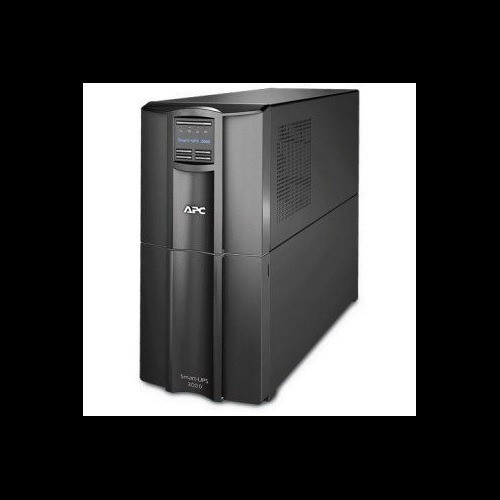
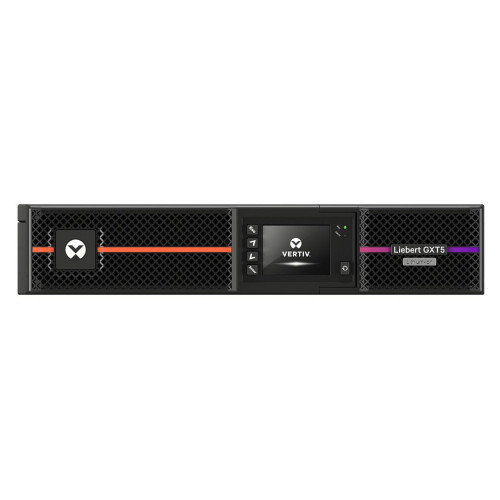
Both the APC Smart-UPS SMT3000I and the Vertiv Liebert GXT5-3000LVRT2UXL are 3000VA / 2700W rack-mount uninterruptible power supplies targeting IT infrastructure, network closets, and server room deployments. They share identical VA and watt ratings, VRLA battery chemistry, roughly equivalent physical depth, and a 3-year warranty, making them genuine cross-shop candidates. The comparison turns on topology (line-interactive vs. online double-conversion), voltage tier (230V vs. 120V), outlet ecosystem, transfer time, and management depth.
In This Guide
- Which UPS topology and battery architecture better protects critical loads?
- How do input voltage range, outlet ecosystem, and physical environment specs compare?
- Which unit offers deeper monitoring, management, and integration capabilities?
- Which should you choose: the SMT3000I or the GXT5-3000LVRT2UXL?
- Side-by-Side Specs
- FAQ
Which UPS topology and battery architecture better protects critical loads?
The SMT3000I uses a line-interactive topology with sine-wave output, meaning it conditions voltage and switches to battery only when input falls outside its 160–286 V range. Transfer to battery is not instantaneous; APC does not publish a transfer time in the provided specs. The GXT5-3000LVRT2UXL uses online double-conversion topology, meaning the load is always powered from the inverter — transfer time is zero milliseconds because there is no transfer event. For loads sensitive to even sub-millisecond disturbances (medical, industrial control, high-density virtualization), double-conversion eliminates that risk entirely.
Battery architecture also differs in one practical respect: the GXT5-3000LVRT2UXL specifies hot-swappable VRLA batteries and native scalability via external battery cabinets (EBCs), allowing runtime extension without powering down. The SMT3000I lists maintenance-free sealed lead-acid with suspended electrolyte and a 3-hour typical recharge time; hot-swap capability and EBC support are not stated in the provided specs. The GXT5 also publishes end-of-life battery detection and temperature-compensated charging; equivalent battery monitoring detail is not provided for the SMT3000I.
The GXT5-3000LVRT2UXL further specifies an MTBF of greater than 200,000 hours and an efficiency of up to 94% in double-conversion mode and 98%+ in ECO mode. No MTBF or efficiency figure is provided for the SMT3000I in the supplied specs.
How do input voltage range, outlet ecosystem, and physical environment specs compare?
The two units target entirely different voltage tiers. The SMT3000I is a 230V unit accepting 160–286 V input (adjustable 151–302 V) via a IEC-320 C20 inlet, with British BS1363A and Schuko CEE 7 input connector options. Its 11 output connections are all IEC — one C19 and eight C13 battery-backed circuits plus two IEC jumpers. This makes it suited to international and European deployments where 230V single-phase is standard.
The GXT5-3000LVRT2UXL is a 120V North American unit with a NEMA L5-30P input plug, accepting 60–150 V AC input. Its seven outlets consist of one NEMA L5-30R twist-lock and six NEMA 5-20R receptacles, all described as programmable outlet groups with independent load segmentation — a feature not mentioned in the SMT3000I specs. The GXT5 also specifies an Emergency Power Off (EPO) input and an internal automatic bypass plus external maintenance bypass capability; the SMT3000I does not list bypass or EPO in the provided specs.
Physical environment ratings are broadly comparable: both operate 0–40°C and 0–95% relative humidity. The SMT3000I is rated to 3,000 m operating altitude; the GXT5 lists up to 3,048 m (10,000 ft) with derating noted. Storage temperature differs: the SMT3000I specifies –15 to 45°C, while the GXT5 specifies –20 to 50°C, giving it a slightly wider storage envelope. The SMT3000I publishes a storage elevation of 0–15,000 m; the GXT5 does not state a storage altitude in the provided specs.
Which unit offers deeper monitoring, management, and integration capabilities?
The SMT3000I provides a USB port and one SmartSlot expansion slot for optional interface cards (card types not enumerated in the provided specs). Its front panel is described as a multi-function LCD status and control console. Surge energy rating is explicitly stated at 365 Joules with full-time multi-pole noise filtering. Audible noise is specified at 53 dB. No network management card is included; SmartSlot accommodates optional add-ins.
The GXT5-3000LVRT2UXL ships with both USB and RS-232 serial connectivity and accepts optional Intellislot network management cards supporting SNMP, Modbus, and BACnet — three distinct protocols enumerated in the specs. It is compatible with Vertiv Environet management software and Network UPS Tools (NUT) open-source monitoring. It specifies generator compatibility and load segmentation with programmable outlet groups — capabilities not stated for the SMT3000I. Audible noise is rated at less than 45 dBA at 1 meter, compared to the SMT3000I's 53 dB, a difference of more than 8 dB. The GXT5 also carries Energy Star 2.0 and UL 1778 certifications and is TAA compliant; the SMT3000I lists CE, CSA, EAC, EN/IEC 62040-1, EN/IEC 62040-2, RCM, and VDE. Neither certification set is a strict superset of the other; applicability depends on the deployment region and procurement requirements.
Which should you choose: the SMT3000I or the GXT5-3000LVRT2UXL?
Our take: The SMT3000I is the stronger choice when the deployment site runs 230V power and requires compatibility with IEC C13/C19 outlet infrastructure common in international data centers and European server rooms. That said, for North American 120V environments, the GXT5-3000LVRT2UXL holds meaningful advantages on every decision axis examined: its online double-conversion topology delivers zero-millisecond transfer time versus an unspecified transfer time on the line-interactive SMT3000I; its audible noise is less than 45 dBA versus the SMT3000I's 53 dB — an 8+ dB reduction relevant in shared or office-adjacent spaces; and it specifies hot-swappable batteries with EBC runtime scalability, EPO input, programmable load segmentation, and three network management protocols (SNMP, Modbus, BACnet) against the SMT3000I's single SmartSlot with unspecified card options. Buyers constrained to TAA-compliant procurement will find only the GXT5 satisfies that requirement. The SMT3000I remains the appropriate selection for 230V regions where IEC outlet compatibility, VDE/RCM approvals, or an established APC SmartSlot card ecosystem is required.
Side-by-Side Comparison
Spec-for-spec, from manufacturer data.
| Specification | APC by Schneider Electric SMT3000I | Vertiv GXT5-3000LVRT2UXL |
|---|---|---|
| UPS Topology | Line-Interactive | Online Double-Conversion |
| Capacity | 3000VA / 2700W | 3000VA / 2700W |
| Power Factor | — | 0.9 |
| Nominal Input Voltage | 230V | 120V AC |
| Input Voltage Range | 160–286V (adj. 151–302V) | 60–150V AC |
| Input Connection | IEC-320 C20 / BS1363A / Schuko CEE 7 | NEMA L5-30P |
| Output Voltage | 230V nominal, <5% distortion at full load | 110/115/120/125VAC user-configurable, ±3% |
| Transfer Time | Not stated in provided specs | Zero (online topology) |
| Output Connections | 1× C19, 8× C13, 2× IEC Jumpers (all battery-backed) | 1× NEMA L5-30R, 6× NEMA 5-20R (programmable) |
| Battery Type | Maintenance-free sealed Lead-Acid, suspended electrolyte | VRLA, hot-swappable |
| Battery Recharge Time | 3 hours (typical) | ~3 hours to 90% |
| Runtime Scalability | Not stated in provided specs | Yes, via External Battery Cabinets (EBCs) |
| Connectivity | USB, SmartSlot (1 slot) | USB, RS-232; optional Intellislot (SNMP, Modbus, BACnet) |
| Audible Noise | 53 dB | <45 dBA at 1 meter |
| Certifications | CE, CSA, EAC, EN/IEC 62040-1, EN/IEC 62040-2, RCM, VDE | TAA, Energy Star 2.0, UL 1778, FCC Part 15 Class A, CE |
| Warranty | 3 years (unit) / 2 years (battery) | 3-year advanced replacement |
Frequently Asked Questions
Which should you choose: the SMT3000I or the GXT5-3000LVRT2UXL?
The SMT3000I is the stronger choice when the deployment site runs 230V power and requires compatibility with IEC C13/C19 outlet infrastructure common in international data centers and European server rooms. That said, for North American 120V environments, the GXT5-3000LVRT2UXL holds meaningful advantages on every decision axis examined: its online double-conversion topology delivers zero-millisecond transfer time versus an unspecified transfer time on the line-interactive SMT3000I; its audible noise is less than 45 dBA versus the SMT3000I's 53 dB — an 8+ dB reduction relevant in shared or office-adjacent spaces; and it specifies hot-swappable batteries with EBC runtime scalability, EPO input, programmable load segmentation, and three network management protocols (SNMP, Modbus, BACnet) against the SMT3000I's single SmartSlot with unspecified card options. Buyers constrained to TAA-compliant procurement will find only the GXT5 satisfies that requirement. The SMT3000I remains the appropriate selection for 230V regions where IEC outlet compatibility, VDE/RCM approvals, or an established APC SmartSlot card ecosystem is required.
Which unit is better suited for a North American server room running 120V circuits?
The GXT5-3000LVRT2UXL is designed exclusively for 120V AC input (range 60–150V) with a NEMA L5-30P plug and NEMA outlet receptacles, making it the appropriate choice for North American deployments. The SMT3000I is a 230V unit with IEC and Schuko input connectors; it is not intended for standard North American 120V infrastructure.
Does either UPS support zero-transfer-time protection for sensitive server or virtualization loads?
Yes — the GXT5-3000LVRT2UXL uses online double-conversion topology, which means the load is continuously powered by the inverter and transfer time is zero milliseconds; there is no switchover event. The SMT3000I uses line-interactive topology and switches to battery when input voltage goes out of range; APC does not publish a transfer time in the provided specifications.
Can runtime be extended on either unit without replacing the internal batteries?
The GXT5-3000LVRT2UXL explicitly supports runtime scalability via external battery cabinets (EBCs) and specifies hot-swappable internal batteries, allowing expansion and replacement without powering down. The SMT3000I specifications provided do not state EBC support or hot-swap capability; buyers requiring confirmed expandable runtime should verify with APC before purchasing.
More UPS Comparisons
- APC by Schneider Electric SMT3000RMI2U vs Vertiv GXT5-3000LVRT2UXL
- APC by Schneider Electric SMT3000RMI2U vs Panduit U03N11L
- APC by Schneider Electric SMT3000RMI2U vs Panduit U03N12L
- APC by Schneider Electric SMT3000RMI2U vs Panduit U03S12V
- APC by Schneider Electric SMT3000RMI2U vs APC by Schneider Electric SRT3000XLT
- APC by Schneider Electric SMT3000RMI2U vs APC by Schneider Electric SRT3000XLW-IEC
UPS Buying Guides
Get a Second Opinion on Your Camera Choice
Share your site layout, coverage goals, and budget. Our team will validate the camera selection, flag anything we would change, and recommend products that match the use case.