
APC by Schneider Electric SMT3000I vs Panduit U03S12V: Specification Comparison
Both the APC Smart-UPS SMT3000I and the Panduit SteadySine U03S12V are 3000 VA / 2700 W rack-format uninterruptible power supplies aimed at data-center, edge, and enterprise infrastructure deployments. The comparison covers power capacity, physical integration, and management capability — the three axes most relevant to specifying a UPS at this class. Buyers should note upfront that the SMT3000I is rated for 230 V mains while the U03S12V operates on 120 V, making voltage infrastructure the primary regional qualifier.
In This Guide
- How do the two units compare on power protection quality, voltage range, and output specifications?
- How do the physical form factors, output receptacles, and deployment environments differ between the two units?
- Which unit offers broader management and monitoring integration for IT and data-center operations teams?
- Which should you choose: the SMT3000I or the U03S12V?
- Side-by-Side Specs
- FAQ
How do the two units compare on power protection quality, voltage range, and output specifications?
Both units deliver 3000 VA / 2700 W with a true sine wave output, meeting the baseline requirement for protecting sensitive electronics and servers that demand clean waveforms.
The SMT3000I specifies a broad input voltage tolerance of 160–286 V (adjustable 151–302 V) on a 230 V nominal mains, with output voltage distortion held to less than 5% at full load and output frequency regulated at 47–53 Hz (50 Hz nominal) or 57–63 Hz (60 Hz nominal). It also carries a 365-joule surge energy rating and full-time multi-pole noise filtering.
The U03S12V operates on 120 V AC nominal with 50/60 Hz auto-sensing and includes Automatic Voltage Regulation (AVR) with a stated 4 ms typical transfer time. Its surge energy rating and input voltage tolerance band are not provided in the supplied specifications. The SMT3000I's explicitly documented input range, surge joule rating, and noise filtering give it a measurable edge in specifiable protection depth; however, the U03S12V's 4 ms transfer time is a concrete data point the SMT3000I spec sheet does not supply.
How do the physical form factors, output receptacles, and deployment environments differ between the two units?
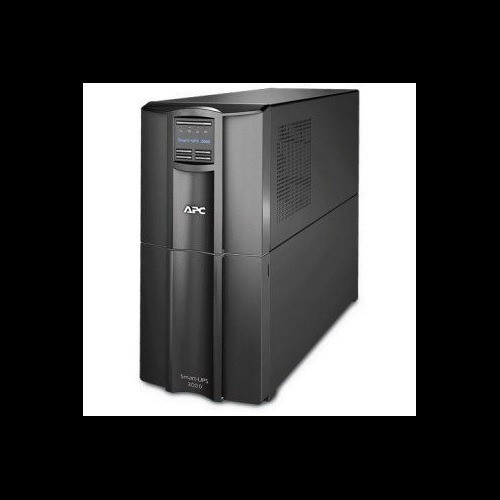
The SMT3000I ships in a tower/rack-convertible chassis measuring 435 mm H × 197 mm W × 544 mm D and weighing 52.5 kg net (63.7 kg shipping). Its output connections are IEC-standard: one IEC 320 C19, two IEC jumper outlets, and eight IEC 320 C13 receptacles — all battery-backed. Input connections support British BS1363A, IEC-320 C20, and Schuko CEE 7 plugs, reflecting its 230 V European/international positioning.
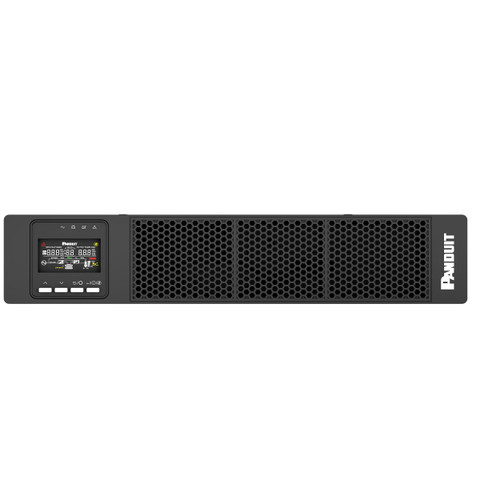
The U03S12V is a dedicated 2U rack-mount unit at 86.5 mm H × 440 mm W, with depth and weight not stated in the provided specifications. Its eight output receptacles are NEMA 5-15R (six battery-backed with surge, two surge-only), consistent with its 120 V North American targeting. It also specifies hot-swappable batteries and cold-start capability — neither of which is explicitly stated for the SMT3000I in the supplied data.
The SMT3000I provides detailed environmental ratings: 0–40 °C operating, 0–95% RH, 0–3000 m elevation, and audible noise of 53 dB at 375 BTU/hr thermal dissipation. None of these environmental parameters are provided for the U03S12V in the available specifications, which limits head-to-head comparison for site-qualification purposes.
Which unit offers broader management and monitoring integration for IT and data-center operations teams?
The U03S12V explicitly lists USB, 10/100 Ethernet, and SNMP management interfaces, enabling out-of-band network monitoring and integration into standard NMS/DCIM toolchains without an add-on card. This is a significant operational advantage for data-center and enterprise MTDC environments where remote power monitoring is standard practice.
The SMT3000I provides a USB port and one SmartSlot expansion slot. SmartSlot accepts optional network management cards (such as APC's AP9630/AP9631 series) to add Ethernet and SNMP capability, but that card is not included and represents an additional procurement step and cost. The multi-function LCD control panel is documented for the SMT3000I; no equivalent local display is specified for the U03S12V.
For teams that require network management at deployment without additional accessories, the U03S12V's built-in Ethernet/SNMP is a concrete differentiator. For teams already standardized on APC's SmartSlot ecosystem — or who need a local LCD panel for on-site status — the SMT3000I's expandability and confirmed display may be preferable. Neither product lists compatible software platforms in the provided specifications.
Which should you choose: the SMT3000I or the U03S12V?
Our take: The SMT3000I is the stronger choice when deploying on 230 V infrastructure in EMEA or Asia-Pacific regions, or when detailed environmental qualification data is required for site acceptance. It documents a 160–286 V input tolerance range, a 365-joule surge rating, and full operating/storage environmental specs (0–40 °C, 0–95% RH, 53 dB noise, 375 BTU/hr) that the U03S12V does not supply in the available data. Conversely, the U03S12V has a concrete edge for North American 120 V rack deployments: built-in 10/100 Ethernet and SNMP eliminate the need for a separate SmartSlot card, hot-swappable batteries are explicitly confirmed, and a 4 ms transfer time is stated — a spec the SMT3000I does not provide. Buyers on 120 V networks prioritizing zero-downtime battery service and native remote management should favor the U03S12V; buyers on 230 V infrastructure needing documented environmental compliance and surge protection depth should specify the SMT3000I.
Side-by-Side Comparison
Spec-for-spec, from manufacturer data.
| Specification | APC by Schneider Electric SMT3000I | Panduit U03S12V |
|---|---|---|
| Capacity (VA / W) | 3000 VA / 2700 W | 3000 VA / 2700 W |
| Output Waveform | Sine wave | True Sine Wave |
| Nominal Input Voltage | 230 V | 120 V AC |
| Input Voltage Range | 160–286 V (adj. 151–302 V) | — |
| Input Frequency | 50/60 Hz ±3 Hz auto-sensing | 50/60 Hz auto-sensing |
| Nominal Output Voltage | 230 V | 120 V AC |
| Output Voltage Distortion | < 5% at full load | — |
| Surge Energy Rating | 365 Joules | — |
| Transfer Time | — | 4 ms typical |
| Automatic Voltage Regulation | — | Yes |
| Output Receptacles | (1) IEC C19, (2) IEC Jumpers, (8) IEC C13 — all battery-backed | 8× NEMA 5-15R (6 battery+surge, 2 surge-only) |
| Management Interfaces | USB, SmartSlot (1 slot — NIC card sold separately) | USB, 10/100 Ethernet, SNMP (built-in) |
| Local Display | Multi-function LCD | — |
| Battery Type | Sealed Lead-Acid, maintenance-free, leakproof | Sealed Lead-Acid, hot-swappable |
| Battery Recharge Time | 3 hours typical | — |
| Cold Start | — | Yes |
| Form Factor | Tower / rack-convertible — 435 mm H × 197 mm W × 544 mm D | 2U Rack-Mount — 86.5 mm H × 440 mm W |
| Net Weight | 52.5 kg | — |
| Operating Temperature | 0–40 °C | — |
| Operating Humidity | 0–95% | — |
| Audible Noise | 53 dB | — |
| Thermal Dissipation | 375 BTU/hr | — |
| Certifications | CE, CSA, EAC, EN/IEC 62040-1, EN/IEC 62040-2, RCM, VDE, RoHS | — |
| Warranty | 3 yr repair/replace (excl. battery); 2 yr battery | — |
Frequently Asked Questions
Which should you choose: the SMT3000I or the U03S12V?
The SMT3000I is the stronger choice when deploying on 230 V infrastructure in EMEA or Asia-Pacific regions, or when detailed environmental qualification data is required for site acceptance. It documents a 160–286 V input tolerance range, a 365-joule surge rating, and full operating/storage environmental specs (0–40 °C, 0–95% RH, 53 dB noise, 375 BTU/hr) that the U03S12V does not supply in the available data. Conversely, the U03S12V has a concrete edge for North American 120 V rack deployments: built-in 10/100 Ethernet and SNMP eliminate the need for a separate SmartSlot card, hot-swappable batteries are explicitly confirmed, and a 4 ms transfer time is stated — a spec the SMT3000I does not provide. Buyers on 120 V networks prioritizing zero-downtime battery service and native remote management should favor the U03S12V; buyers on 230 V infrastructure needing documented environmental compliance and surge protection depth should specify the SMT3000I.
Can I use the SMT3000I or U03S12V on standard North American 120 V outlets?
No — not interchangeably. The SMT3000I is rated for 230 V nominal input (160–286 V range) and is designed for EMEA/international markets; plugging it into a 120 V North American circuit would require a step-up transformer, which is not recommended and voids typical compliance certifications. The U03S12V is specifically rated for 120 V AC and uses NEMA 5-15R outlets, making it the correct choice for North American deployments.
Do I need to buy a separate card to get network monitoring on either UPS?
For the U03S12V, no — USB, 10/100 Ethernet, and SNMP are built in per the supplied specifications. For the SMT3000I, yes — it includes USB and one SmartSlot expansion slot, but Ethernet/SNMP capability requires a separately purchased APC network management card. If budget or procurement complexity is a concern, the U03S12V's included network management is a practical advantage.
Which UPS is easier to service in a live rack environment?
The U03S12V explicitly specifies hot-swappable batteries, meaning batteries can be replaced without powering down the connected load — a meaningful advantage in environments requiring continuous uptime. The SMT3000I's specifications do not state hot-swap capability in the data provided. Additionally, the SMT3000I carries a 3-year warranty (parts/repair) with a separate 2-year battery warranty, while the U03S12V's warranty terms are not stated in the available specifications.
More UPS Comparisons
- APC by Schneider Electric SMT3000RMI2U vs Vertiv GXT5-3000LVRT2UXL
- APC by Schneider Electric SMT3000RMI2U vs Panduit U03N11L
- APC by Schneider Electric SMT3000RMI2U vs Panduit U03N12L
- APC by Schneider Electric SMT3000RMI2U vs Panduit U03S12V
- APC by Schneider Electric SMT3000RMI2U vs APC by Schneider Electric SRT3000XLT
- APC by Schneider Electric SMT3000RMI2U vs APC by Schneider Electric SRT3000XLW-IEC
UPS Buying Guides
Get a Second Opinion on Your Camera Choice
Share your site layout, coverage goals, and budget. Our team will validate the camera selection, flag anything we would change, and recommend products that match the use case.