
APC by Schneider Electric SCL500RMI1UC vs Middle Atlantic S500R: Specification Comparison
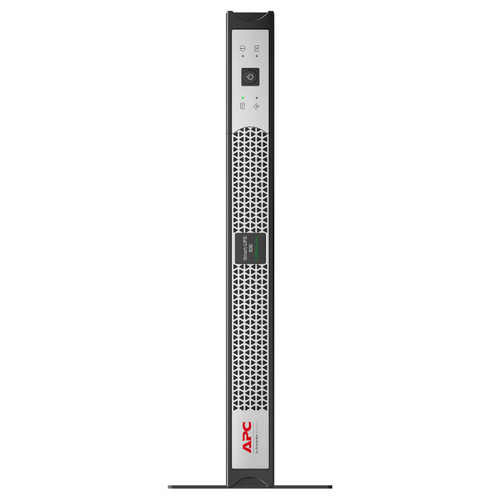
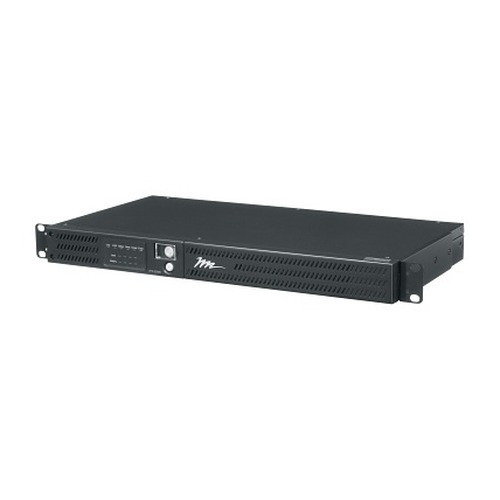
Both the APC SCL500RMI1UC and the Middle Atlantic UPS-S500R are 1U rackmount, 500VA uninterruptible power supplies aimed at the same physical-security and AV-rack market. A buyer choosing between them is weighing APC's established UPS feature set—lithium-ion battery, pure sine wave output, and cloud connectivity—against Middle Atlantic's rack-integration focus, which emphasizes physical fit and outlet count within a shallow-depth 1RU footprint. Neither ships power capacity beyond 500VA, so the decision turns on topology, battery chemistry, outlets, and integration features.
In This Guide
- Which UPS delivers cleaner, more reliable power output for sensitive equipment?
- How do battery technology and protected outlet count compare between the two units?
- Which unit offers better rack integration, remote management, and physical fit for a typical security rack?
- Which should you choose: the SCL500RMI1UC or the S500R?
- Side-by-Side Specs
- FAQ
Which UPS delivers cleaner, more reliable power output for sensitive equipment?
The SCL500RMI1UC is specified as Line-Interactive topology with a pure sine wave output. This means it actively conditions incoming voltage before a full battery transfer is needed, and when the battery does engage, it delivers a clean sine waveform identical to utility power. This matters for active power-factor-corrected (PFC) switching supplies found in modern servers, NVRs, and IP camera PoE switches, which can behave erratically or shut down on simulated/stepped waveforms.
The UPS-S500R lists a '500VA' rating and 'Basic' surge protection type, but its output waveform is not specified in the provided data. Its UPS topology is also not stated. For a buyer powering PFC-equipped devices, the absence of waveform and topology data for the S500R is a meaningful gap—it cannot be confirmed as pure sine wave or line-interactive from the available specs.
How do battery technology and protected outlet count compare between the two units?
The SCL500RMI1UC uses Lithium-Ion (Li-Ion) battery chemistry. Li-Ion batteries offer a significantly longer service life, faster recharge times, lighter weight, and better performance across a wider temperature range compared to traditional valve-regulated lead-acid (VRLA) batteries. The unit provides 4 IEC C13 outlets—a standard rackmount count for 500VA class, appropriate for protecting 4 discrete devices.
The UPS-S500R provides 6 outlets (outlet type not specified in the provided specs) and includes a 10 ft (3.1 m) power cord. Six outlets offer more connection points, which can benefit installations with multiple smaller loads. However, battery chemistry for the S500R is not stated in the provided specifications, so a direct battery-technology comparison cannot be made.
Which unit offers better rack integration, remote management, and physical fit for a typical security rack?
The SCL500RMI1UC includes a SmartConnect port (cloud management/monitoring) and is specified as a 1U form factor with both rackmount and tower orientation options. It does not include a SmartSlot (for optional network management card expansion). Input voltage range is specified at 208–253 V (230 V nominal), with frequency tolerance of 47–63 Hz, and surge energy absorption rated at 510 J.
The UPS-S500R provides detailed physical fit data: 19 in (48.3 cm) wide, 1.73 in (4.4 cm) tall (1 RU), 9.06 in (23 cm) deep, with a maximum mounting depth of 32 in (81.3 cm) and a minimum of 19 in—designed explicitly for shallow rack environments. It is TAA Non-Compliant and UL Listed. Remote management capabilities are not specified. The S500R's shallow 9.06 in depth is particularly relevant for wall-mount or shallow-depth enclosures common in physical-security installations. Input voltage range, frequency tolerance, and surge joule rating are not provided for the S500R.
Which should you choose: the SCL500RMI1UC or the S500R?
Our take: The SCL500RMI1UC is the stronger choice when output power quality, battery longevity, and remote monitoring are the primary requirements. Its pure sine wave output protects PFC-equipped NVRs and managed PoE switches that a simulated-waveform UPS can damage or trip; this topology and waveform data is confirmed in spec, while the S500R's waveform is unspecified. Its Lithium-Ion battery chemistry offers a longer service life and faster recharge versus conventional lead-acid technology, though the S500R's battery type is not disclosed for direct comparison. The SCL500RMI1UC's SmartConnect port enables cloud-based monitoring—critical for remote-site physical-security deployments. However, the UPS-S500R's 9.06 in chassis depth and 6 outlets make it the more practical fit for shallow wall-mount enclosures or installations needing more connection points. Buyers with deeper racks and PFC-sensitive loads should favor the SCL500RMI1UC; buyers prioritizing shallow-rack fit and outlet density should evaluate the S500R once waveform and topology are confirmed with the manufacturer.
Side-by-Side Comparison
Spec-for-spec, from manufacturer data.
| Specification | APC by Schneider Electric SCL500RMI1UC | Middle Atlantic S500R |
|---|---|---|
| VA Rating | 500 VA | 500 VA |
| Output Power (Watts) | 400 W | — |
| UPS Topology | Line-Interactive | — |
| Output Waveform | Pure Sine Wave | — |
| Battery Technology | Lithium-Ion (Li-Ion) | — |
| AC Outlets | 4 × IEC C13 | 6 (type not specified) |
| Surge Protection | 510 J | Basic (J rating not specified) |
| Input Voltage Range | 208–253 V | — |
| Input Frequency | 47–63 Hz | — |
| Form Factor | 1U Rackmount / Tower | 1 RU Rackmount |
| Chassis Depth | — | 9.06 in (23 cm) |
| Unit Width | — | 19 in (48.3 cm) |
| Shipping Weight | — | 20.4 lbs (9.3 kg) |
| Power Cord Length | — | 10 ft (3.1 m) |
| Remote Management | SmartConnect (cloud) | — |
| TAA Compliance | — | No |
Frequently Asked Questions
Which should you choose: the SCL500RMI1UC or the S500R?
The SCL500RMI1UC is the stronger choice when output power quality, battery longevity, and remote monitoring are the primary requirements. Its pure sine wave output protects PFC-equipped NVRs and managed PoE switches that a simulated-waveform UPS can damage or trip; this topology and waveform data is confirmed in spec, while the S500R's waveform is unspecified. Its Lithium-Ion battery chemistry offers a longer service life and faster recharge versus conventional lead-acid technology, though the S500R's battery type is not disclosed for direct comparison. The SCL500RMI1UC's SmartConnect port enables cloud-based monitoring—critical for remote-site physical-security deployments. However, the UPS-S500R's 9.06 in chassis depth and 6 outlets make it the more practical fit for shallow wall-mount enclosures or installations needing more connection points. Buyers with deeper racks and PFC-sensitive loads should favor the SCL500RMI1UC; buyers prioritizing shallow-rack fit and outlet density should evaluate the S500R once waveform and topology are confirmed with the manufacturer.
Does the SCL500RMI1UC or the UPS-S500R support more outlets for protecting multiple devices?
The UPS-S500R provides 6 outlets versus 4 IEC C13 outlets on the SCL500RMI1UC. If outlet count is the deciding factor, the S500R has the advantage, though the outlet type for the S500R is not specified in the available data.
Will either of these UPS units fit in a shallow-depth security rack or wall-mount enclosure?
The UPS-S500R is specified at 9.06 in (23 cm) deep, with a minimum mounting depth of 19 in, making it explicitly suited for shallow enclosures. The SCL500RMI1UC's chassis depth is not provided in the available specifications, so its suitability for shallow racks cannot be confirmed from spec alone.
Which unit is better for protecting NVRs and PoE switches with active power factor correction?
The SCL500RMI1UC is specified as Line-Interactive with pure sine wave output, which is required for safe operation of devices with active PFC power supplies—including most modern NVRs and managed PoE switches. The UPS-S500R's waveform type is not specified in the available data, so its compatibility with PFC loads cannot be confirmed from the provided specs.
More UPS Comparisons
- Vertiv GXT5-500LVRT2UXL vs APC by Schneider Electric SUA500PDR-H
- Vertiv GXT5-500LVRT2UXL vs APC by Schneider Electric BE500G3
- Vertiv GXT5-500LVRT2UXL vs APC by Schneider Electric SCL500RM1UC
- Vertiv GXT5-500LVRT2UXL vs APC by Schneider Electric SCL500RMI1UC
- APC by Schneider Electric SUA500PDR-H vs Middle Atlantic S500R
- APC by Schneider Electric SUA500PDR-H vs APC by Schneider Electric BE500G3
UPS Buying Guides
Get a Second Opinion on Your Camera Choice
Share your site layout, coverage goals, and budget. Our team will validate the camera selection, flag anything we would change, and recommend products that match the use case.