
Allied Telesis AT-x530L-18GHXm-10 vs Allied Telesis IE340-20GP-980: Specification Comparison
Both the AT-x530L-18GHXm-10 and the IE340-20GP-980 are Allied Telesis 16-port PoE-enabled managed switches with SFP uplinks — a class commonly evaluated for IP camera and IoT deployments. However, they target fundamentally different installation environments: the x530L is a high-density multi-gigabit rack-mount unit built for wiring closets and enterprise edge, while the IE340 is a compact, fanless, DIN-rail industrial switch designed for harsh or space-constrained field locations. Buyers cross-shopping these are typically weighing throughput and PoE headroom against environmental ruggedness and deployment flexibility.
In This Guide
- Which switch delivers more PoE power and higher per-port speeds?
- Which switch is better suited to harsh or non-standard installation environments?
- Which switch offers better uplink flexibility and network scalability?
- Which should you choose: the AT-x530L-18GHXm-10 or the IE340-20GP-980?
- Side-by-Side Specs
- FAQ
Which switch delivers more PoE power and higher per-port speeds?
The AT-x530L-18GHXm-10 leads decisively on both PoE budget and port speed. Its 16 copper ports are multi-gigabit (100M/1/2.5/5G), and its total PoE budget is 720W — three times the IE340-20GP-980's 240W maximum. Per-port allocation on the x530L scales from 7.5W up to 90W (on 8 ports) or 60W (on 12 ports), providing the flexibility to power high-wattage PTZ cameras, wireless access points, or 802.3bt Class 6 devices simultaneously.
The IE340-20GP-980 supports 16 standard Gigabit (10/100/1000T) copper PoE ports with a maximum per-port delivery of 30W (PoE+, on 8 ports) and 15W on all 16. Its 240W budget is sufficient for a full array of standard PoE+ cameras but cannot support 60W or 90W devices. The x530L's switching fabric of 200Gbps and forwarding rate of 148.8Mpps dwarfs the IE340's 40Gbps fabric and 29.7Mpps — a 5× and ~5× delta respectively.
Which switch is better suited to harsh or non-standard installation environments?
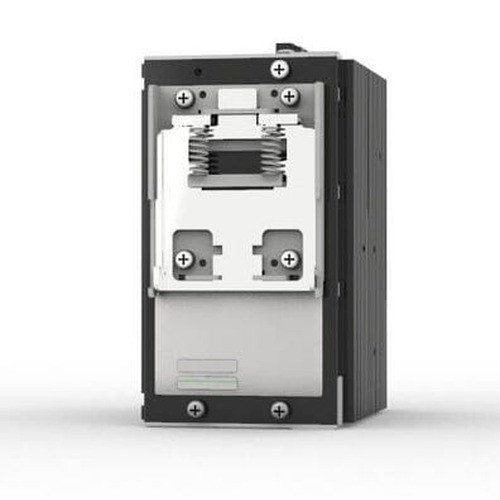
The IE340-20GP-980 is purpose-built for demanding physical environments. It uses a fanless aluminum/sheet-metal enclosure rated IP30, draws power from a wide-range DC input of 18–57V (accommodating solar, battery, or industrial DC bus supplies), and generates only 105.8 BTU/hr of heat. Its DIN-rail mounting and compact 91×139×153mm footprint (2.23–2.34 kg) make it suitable for control panels, outdoor enclosures, and space-constrained field cabinets.
The AT-x530L-18GHXm-10 is a 1U rack-mount appliance (441×256×44mm, 4.3 kg) with an active cooling fan that produces 42 dBA of noise. Its maximum power consumption is 970W — nearly 3.6× the IE340 — and it dissipates 3,317 BTU/hr, requiring adequate rack ventilation and AC power infrastructure. No IP rating or DC input specification is provided for the x530L. For wiring closets and data rooms with standard AC power and climate control, the x530L is appropriate; for edge or outdoor enclosures, it is not.
Which switch offers better uplink flexibility and network scalability?
The AT-x530L-18GHXm-10 provides two 1/10G SFP+ uplink ports and two dedicated stacking ports, enabling daisy-chain clustering for unified multi-switch management. The 10G SFP+ uplinks allow high-speed aggregation to a core switch or NVR infrastructure — particularly valuable when aggregating traffic from 16 multi-gigabit PoE ports simultaneously.
The IE340-20GP-980 offers four combo 100/1000X SFP uplink ports (no 10G capability specified). No stacking ports or stacking capability are listed in the provided specifications. The four SFP ports do provide greater uplink redundancy count than the x530L's two, but at lower per-port bandwidth (1G vs 10G). Buyers requiring scalable stacking or 10G uplink aggregation will find the x530L better specified; those needing multiple 1G fiber uplinks in a compact form factor may prefer the IE340's four-port uplink arrangement.
Which should you choose: the AT-x530L-18GHXm-10 or the IE340-20GP-980?
Our take: The AT-x530L-18GHXm-10 is the stronger choice when maximizing PoE power delivery and switching throughput in a controlled indoor environment. Its 720W PoE budget versus the IE340's 240W — a 3× delta — means it can simultaneously power high-wattage PTZ cameras, 802.3bt devices, or PoE-fed APs that the IE340 cannot support. Its 200Gbps fabric and 148.8Mpps forwarding rate versus the IE340's 40Gbps and 29.7Mpps provide substantially more headroom for high-density video traffic. The IE340-20GP-980 is the correct selection when the installation demands a fanless, DC-powered, DIN-rail switch in a compact or environmentally challenging location — its 18–57V DC input, IP30-rated aluminum enclosure, and 105.8 BTU/hr heat output are specifications the x530L does not match. Platform qualifier: spec the x530L for wiring closets and enterprise edge; spec the IE340 for field cabinets, outdoor enclosures, or industrial control panels.
Side-by-Side Comparison
Spec-for-spec, from manufacturer data.
| Specification | Allied Telesis AT-x530L-18GHXm-10 | Allied Telesis IE340-20GP-980 |
|---|---|---|
| Copper PoE Ports | 16 (100M/1/2.5/5G multi-gigabit) | 16 (10/100/1000T Gigabit) |
| SFP Uplink Ports | 2 × 1/10G SFP+ | 4 × 100/1000X SFP |
| Stacking Ports | 2 | — |
| Total Ports | 18 | 20 |
| Switching Fabric | 200 Gbps | 40 Gbps |
| Forwarding Rate | 148.8 Mpps | 29.7 Mpps |
| Total PoE Budget | 720 W | 240 W |
| Max PoE Per Port | 90 W (8 ports) / 60 W (12 ports) | 30 W (8 ports) / 15 W (16 ports) |
| Max Power Consumption | 970 W | 271 W |
| Heat Dissipation | 3,317 BTU/hr | 105.8 BTU/hr |
| Power Input | — | 18–57 V DC |
| Cooling | Active fan, 42 dBA | Fanless |
| Enclosure / IP Rating | — | Aluminum/Sheet Metal, IP30 |
| Mount Type | 1U Rack-mount | DIN Rail |
| Dimensions (mm) | 441 × 256 × 44 | 91 × 139 × 153 |
| Unpackaged Weight | 4.3 kg (9.48 lbs) | 2.23–2.34 kg (4.91–5.16 lbs) |
Frequently Asked Questions
Which should you choose: the AT-x530L-18GHXm-10 or the IE340-20GP-980?
The AT-x530L-18GHXm-10 is the stronger choice when maximizing PoE power delivery and switching throughput in a controlled indoor environment. Its 720W PoE budget versus the IE340's 240W — a 3× delta — means it can simultaneously power high-wattage PTZ cameras, 802.3bt devices, or PoE-fed APs that the IE340 cannot support. Its 200Gbps fabric and 148.8Mpps forwarding rate versus the IE340's 40Gbps and 29.7Mpps provide substantially more headroom for high-density video traffic. The IE340-20GP-980 is the correct selection when the installation demands a fanless, DC-powered, DIN-rail switch in a compact or environmentally challenging location — its 18–57V DC input, IP30-rated aluminum enclosure, and 105.8 BTU/hr heat output are specifications the x530L does not match. Platform qualifier: spec the x530L for wiring closets and enterprise edge; spec the IE340 for field cabinets, outdoor enclosures, or industrial control panels.
Is the AT-x530L-18GHXm-10 or IE340-20GP-980 better for powering high-wattage PTZ cameras?
The AT-x530L-18GHXm-10. It supports up to 90W per port on 8 ports and up to 60W on 12 ports, with a total PoE budget of 720W. The IE340-20GP-980 tops out at 30W per port (PoE+) on 8 ports and has a 240W total budget — insufficient for 60W or 90W PTZ or multi-radio AP devices.
Can the IE340-20GP-980 be powered from a battery or solar DC supply?
Yes, per its specifications. The IE340-20GP-980 accepts a wide-range DC input of 18–57V, making it compatible with battery banks, solar charge controllers, and industrial DC bus systems. The AT-x530L-18GHXm-10 does not list a DC input option in the provided specifications.
Which switch is quieter and more suitable for an office or open-area installation?
The IE340-20GP-980 is fanless and lists no audible noise figure. The AT-x530L-18GHXm-10 has active cooling and is specified at 42 dBA. For noise-sensitive environments, the IE340 is the quieter option — though its compact industrial form factor and DIN-rail mounting are less suited to open-office aesthetics than a rack-mount unit.
More Network Switch Comparisons
- Vivotek GEL-205A-260 vs TP-Link SL1218MP
- Vivotek GEL-205A-260 vs Allied Telesis AT-x530L-18GHXm-10
- Vivotek GEL-205A-260 vs Ubiquiti USW-LITE-16-POE
- Vivotek GEL-205A-260 vs Ubiquiti USW-16-POE
- TP-Link SL1218MP vs Allied Telesis AT-x530L-18GHXm-10
- TP-Link SL1218MP vs Ubiquiti USW-LITE-16-POE
Network Switch Buying Guides
Get a Second Opinion on Your Camera Choice
Share your site layout, coverage goals, and budget. Our team will validate the camera selection, flag anything we would change, and recommend products that match the use case.