
Aiphone NI-JA vs Ubiquiti UA-G3-INTERCOM: Specification Comparison
Both the Aiphone NI-JA and the Ubiquiti UA-G3-INTERCOM are door-station intercoms designed for entry-point audio communication in commercial and residential security installations. The NI-JA is a wired audio-only station targeting Aiphone NIM-series systems, while the UA-G3-INTERCOM is a PoE-powered IP intercom integrating with the UniFi access-control platform. This comparison evaluates how each unit performs across installation and wiring, environmental and physical durability, and system integration and credential management — the three axes that most influence a purchasing decision in this product class.
In This Guide
- How do the NI-JA and UA-G3-INTERCOM differ in installation wiring and power requirements?
- Which unit offers stronger environmental and physical durability for outdoor deployment?
- How do the two intercoms compare on system integration, access credentials, and management?
- Which should you choose: the NI-JA or the UA-G3-INTERCOM?
- Side-by-Side Specs
- FAQ
How do the NI-JA and UA-G3-INTERCOM differ in installation wiring and power requirements?
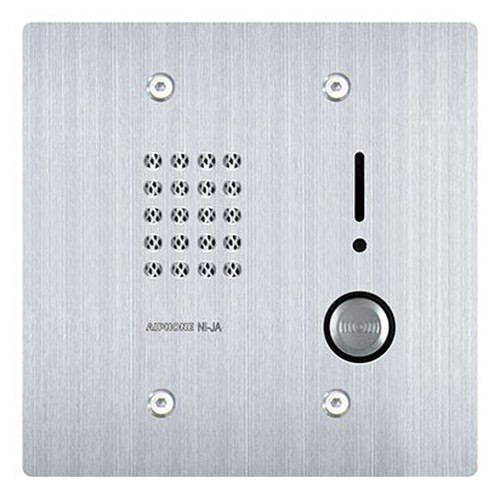
The Aiphone NI-JA requires a dedicated 3-conductor 18 AWG shielded cable (Aiphone #821803) run from the door station back to the master station. The spec states a maximum communication distance of 650 feet over this cable. No network infrastructure or PoE switch is needed, making it straightforward for retrofit or low-voltage wiring environments where structured cabling is absent. The station is flush-mounted in a standard 2-gang box or surface-mounted using the optional SBX-2G/A bracket.
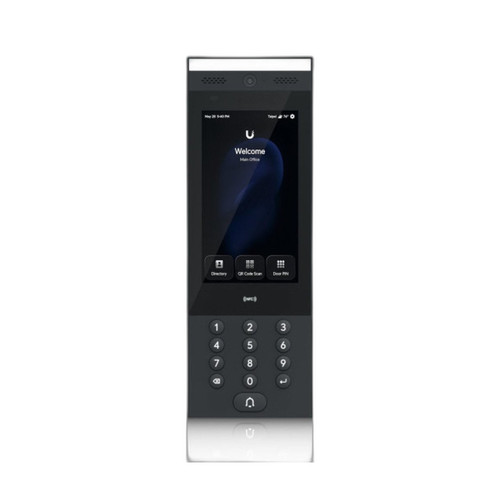
The Ubiquiti UA-G3-INTERCOM powers and communicates over a single Gigabit RJ45 connection using PoE at 48 V DC and 13 W (802.3af). This eliminates a separate power run but requires a PoE-capable switch or injector on the same network segment. The device ships with a wall-mount bracket; a gooseneck pedestal adapter is included. No maximum cable-run distance is stated in the provided specs beyond standard Ethernet limits. Dimensions are 324.8 × 113.7 × 28.3 mm and total device weight is 965 g.
Which unit offers stronger environmental and physical durability for outdoor deployment?
The Aiphone NI-JA is constructed from stainless steel described in the specs as weather and vandal-resistant, with a 300-series stainless body suited for salt-spray and humidity exposure. No IP rating is stated in the provided specifications. The unit carries a UL listing. Warranty is explicitly stated as 2 years.
The Ubiquiti UA-G3-INTERCOM is rated IP65, providing a defined dust-tight and water-jet-resistant enclosure per that standard. The enclosure combines aluminum alloy, UV-stabilized polycarbonate, and glass, with a powder-coated stainless steel mount. Operating temperature is specified as −30°C to 60°C (−22°F to 140°F) for the device; the display is rated −25°C to 60°C. Certifications include CE, FCC, IC, UL 294, CAN/ULC-60839-11-1, and NDAA compliance. No numeric warranty duration is stated in the provided specs beyond 'Manufacturer Warranty.'
How do the two intercoms compare on system integration, access credentials, and management?
The Aiphone NI-JA integrates exclusively with Aiphone NIM-series master stations (NIM-20B, NIM-40B per spec). Communication is hands-free two-way audio only. No network management interface, mobile application, PIN code entry, or credential-based access control is described in the provided specifications. The unit functions as a pure audio door station within the Aiphone NIM system.
The Ubiquiti UA-G3-INTERCOM is managed through the UniFi platform and mobile application. Supported credential types listed in the specs include mobile unlock, PIN code, and NFC (Forum tags T1T, T2T, T3T, T4T, T5T). UL 294 certification indicates evaluation as an access-control unit. The device requires a UniFi controller environment; no standalone or third-party integration path is described in the provided specifications.
Which should you choose: the NI-JA or the UA-G3-INTERCOM?
Our take: The NI-JA is the stronger choice when the installation site already runs Aiphone NIM-series master stations, structured low-voltage wiring is preferred over Ethernet, and a simple audio-only door station is all that is required. The UA-G3-INTERCOM is the stronger choice when the deployment is built on or migrating to the UniFi access-control platform and multi-credential entry — NFC, PIN, and mobile unlock — is a requirement. Three concrete spec deltas: the UA-G3-INTERCOM carries a documented IP65 rating while no IP rating is provided for the NI-JA; the UA-G3-INTERCOM operates to −30°C versus no low-temperature limit stated for the NI-JA; and the NI-JA supports audio communication to 650 feet over shielded cable while the UA-G3-INTERCOM's range is bounded by standard Ethernet topology. Platform lock-in is decisive: neither unit is cross-compatible with the other's ecosystem.
Side-by-Side Comparison
Spec-for-spec, from manufacturer data.
| Specification | Aiphone NI-JA | Ubiquiti UA-G3-INTERCOM |
|---|---|---|
| Product Class | Audio Door Station | IP Intercom / Door Station |
| Form Factor | Flush / Surface Mount (2-gang) | Wall Mount (324.8 × 113.7 × 28.3 mm) |
| Primary Enclosure Material | Stainless steel | Aluminum alloy, polycarbonate, glass |
| IP Rating | — | IP65 |
| Operating Temperature | — | −30°C to 60°C (device); −25°C to 60°C (display) |
| Environment Rating | Outdoor | Outdoor |
| Power Method | 3-conductor shielded cable | PoE 48V DC, 802.3af |
| Power Consumption | — | 13W |
| Network Connectivity | None (analog) | Gigabit RJ45 (data + power) |
| Max Communication Distance | 650 feet (shielded cable) | — |
| Audio | Two-way hands-free | Microphone supported (two-way not explicitly confirmed in specs) |
| Credential / Access Types | Audio only | Mobile unlock, PIN, NFC (T1T–T5T) |
| Management Platform | Aiphone NIM-20B / NIM-40B | UniFi platform, mobile app |
| Certifications | UL | CE, FCC, IC, UL 294, CAN/ULC-60839-11-1 |
| NDAA Compliant | — | Yes |
| Warranty | 2 years | Manufacturer Warranty (duration not specified in provided specs) |
Frequently Asked Questions
Which should you choose: the NI-JA or the UA-G3-INTERCOM?
The NI-JA is the stronger choice when the installation site already runs Aiphone NIM-series master stations, structured low-voltage wiring is preferred over Ethernet, and a simple audio-only door station is all that is required. The UA-G3-INTERCOM is the stronger choice when the deployment is built on or migrating to the UniFi access-control platform and multi-credential entry — NFC, PIN, and mobile unlock — is a requirement. Three concrete spec deltas: the UA-G3-INTERCOM carries a documented IP65 rating while no IP rating is provided for the NI-JA; the UA-G3-INTERCOM operates to −30°C versus no low-temperature limit stated for the NI-JA; and the NI-JA supports audio communication to 650 feet over shielded cable while the UA-G3-INTERCOM's range is bounded by standard Ethernet topology. Platform lock-in is decisive: neither unit is cross-compatible with the other's ecosystem.
Can I use the NI-JA or the UA-G3-INTERCOM with my existing access-control system from another brand?
Based on the provided specs, the NI-JA is specified only for compatibility with Aiphone NIM-20B and NIM-40B master stations. The UA-G3-INTERCOM is specified for the UniFi platform. Neither unit's specs describe integration with third-party access-control systems. You should verify compatibility with your specific platform directly with the respective manufacturer before purchasing.
Which intercom is better suited for harsh outdoor environments with extreme temperatures?
The UA-G3-INTERCOM has a documented IP65 rating and a stated operating range of −30°C to 60°C. The NI-JA is described as weather and vandal-resistant stainless steel construction but no IP rating or low-temperature operating limit is provided in the available specifications. For environments requiring a certified ingress-protection rating or confirmed sub-zero operation, the UA-G3-INTERCOM's specs provide that assurance while the NI-JA's do not.
Do I need a network switch to install the UA-G3-INTERCOM, and does the NI-JA need one too?
Yes — the UA-G3-INTERCOM requires a PoE-capable network switch or injector (48 V DC, 13 W, 802.3af) and a UniFi controller on the network. The NI-JA does not require any network switch; it connects directly to an Aiphone NIM master station via 3-conductor 18 AWG shielded cable up to 650 feet.
More Intercom Comparisons
- Ubiquiti UA-G3-INTERCOM vs SDC IPDSE
- Ubiquiti UA-G3-INTERCOM vs Comelit TP6842
- Ubiquiti UA-G3-INTERCOM vs ACTi Q950
- Axis 03448-001 vs Axis 02892-001
- Comelit TP6842 vs ACTi Q950
- Comelit TP6842 vs Comelit 3460HEV
Intercom Buying Guides
Get a Second Opinion on Your Camera Choice
Share your site layout, coverage goals, and budget. Our team will validate the camera selection, flag anything we would change, and recommend products that match the use case.