
Aiphone IX-SOFT vs Axis I5304: Specification Comparison
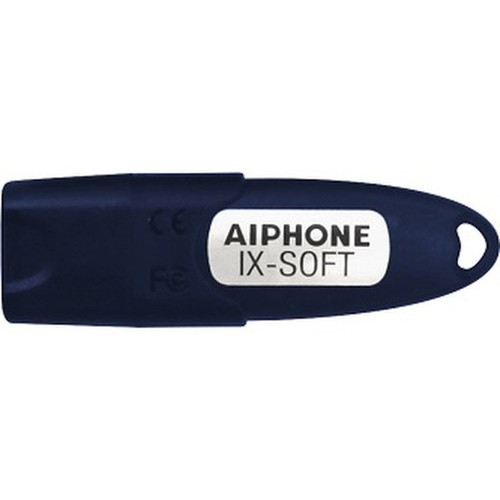
Both the Aiphone IX-SOFT and the Axis I5304 occupy the intercom master/answer-station role — the operator-side endpoint where staff receive, view, and respond to visitor calls. However, one is a software application installed on a Windows PC while the other is a dedicated 7-inch touch-screen hardware appliance powered over Ethernet. Buyers evaluating a reception or guard station for an IP intercom deployment will encounter both as candidate solutions, making a direct spec comparison meaningful for procurement decisions.
In This Guide
- How many stations and users can each solution support, and how far can it scale?
- What protocols, platform compatibility, and third-party integrations does each unit support?
- What are the physical, power, and environmental requirements for installation?
- Which should you choose: the IX-SOFT or the I5304?
- Side-by-Side Specs
- FAQ
How many stations and users can each solution support, and how far can it scale?
The Aiphone IX-SOFT is explicitly rated for 499 stations in its base configuration, with expansion to 9,998 stations supported via call transfer. It also provides 50 programmable speed-dial buttons, giving operators direct one-touch access to a large directory of sub-stations. These figures are drawn directly from the product specifications.
The Axis I5304 specifications do not state a maximum supported station count or expansion ceiling. No speed-dial or directory-size figures are provided in the available spec data. Buyers with large or growing deployments will need to consult Axis documentation or support channels to determine the I5304's scalability limits before committing to a design.
What protocols, platform compatibility, and third-party integrations does each unit support?
The IX-SOFT carries a broad protocol stack: SIP, TCP, UDP, HTTP, HTTPS, RTSP, and IGMP, with both IPv4 and IPv6 support. It holds ONVIF Profile S compliance and is certified for Cisco Unified Call Manager and Alcatel-Lucent OmniPCx Enterprise, making it viable in enterprise unified-communications environments. Video is delivered in H.264 or Motion-JPEG; audio codecs are G.711 (µ-law and A-law) and G.722. Encryption is TLS 1.2 with CRAM-MD5 authentication.
The Axis I5304 lists SIP and native Axis IP intercom system connectivity. Explicitly named compatible devices include the AXIS TI5201, TI5601, and TI5602. The unit runs on the 2N OS platform. Audio is described as full-duplex two-way with echo cancellation. The specifications do not enumerate encryption standards, supported video codecs, or IP protocol versions (IPv4/IPv6). Third-party PBX or UC-platform certifications are not listed in the provided data.
What are the physical, power, and environmental requirements for installation?
The IX-SOFT has no hardware form factor of its own — it is installed on an existing Windows 7 Professional, Enterprise, or Ultimate PC with a minimum 2 GHz processor (32-bit or 64-bit) and 4 GB of RAM. No dedicated power supply, mounting, or environmental rating applies to the software itself; all physical requirements are inherited from the host PC. The OS requirement of Windows 7 is noteworthy: that platform has been end-of-life since January 2020, which may introduce security and compatibility considerations in modern IT environments.
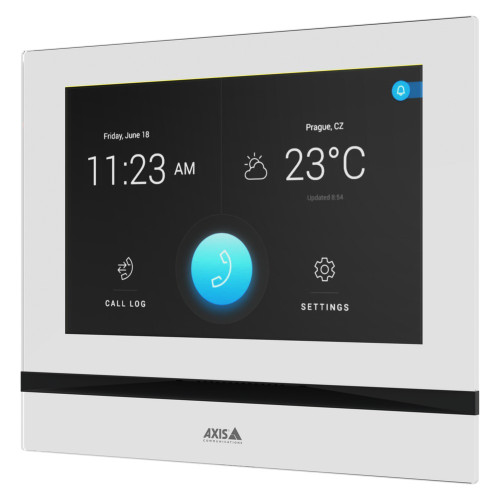
The Axis I5304 is a self-contained 7-inch capacitive touch-screen appliance in a white indoor enclosure. It is powered by IEEE PoE, eliminating the need for a local power supply and simplifying cabling. Mounting options include wall, recessed, and desk configurations. The unit is rated for indoor use. No IP ingress-protection rating or operating temperature range is provided in the available specifications.
Which should you choose: the IX-SOFT or the I5304?
Our take: The IX-SOFT is the stronger choice when deploying a large-scale, multi-vendor enterprise intercom environment that must integrate with an existing SIP PBX or UC platform. It supports up to 499 stations natively (expandable to 9,998 via call transfer) versus no stated limit for the I5304; it carries formal Cisco UCM and Alcatel-Lucent OxE certifications that the I5304 spec does not list; and it specifies TLS 1.2 encryption with CRAM-MD5 authentication where the I5304 provides no encryption detail. Conversely, the I5304 is the stronger choice for a purpose-built, self-contained reception or lobby station in a predominantly Axis or 2N IP intercom environment: it delivers a dedicated 7-inch touch screen, PoE power, flexible mounting, and a 5-year warranty versus the IX-SOFT's 2-year coverage — all without requiring a host PC running an end-of-life OS.
Side-by-Side Comparison
Spec-for-spec, from manufacturer data.
| Specification | Aiphone IX-SOFT | Axis I5304 |
|---|---|---|
| Form Factor | Software (PC-based) | Hardware appliance (indoor station) |
| Display | — | 7-inch capacitive touch screen |
| Power | Host PC (AC) | PoE (IEEE PoE) |
| Mounting Options | — | Wall, recessed, desk |
| Max Stations (native) | 499 | — |
| Max Stations (expanded) | 9,998 (via call transfer) | — |
| Speed-Dial Buttons | 50 programmable | — |
| Audio Codecs | G.711 (µ-law, A-law), G.722 | Full-duplex with echo cancellation (codecs not specified) |
| Video Codecs | H.264, Motion-JPEG | — |
| Protocols | SIP, TCP, UDP, HTTP, HTTPS, RTSP, IGMP | SIP |
| IP Version | IPv4 / IPv6 | — |
| ONVIF | Profile S | — |
| Encryption | TLS 1.2; CRAM-MD5 | — |
| PBX Certifications | Cisco UCM; Alcatel-Lucent OxE / OxO Connect | — |
| Compatible Devices | IX Series intercom stations | AXIS TI5201, TI5601, TI5602; SIP-based VoIP systems |
| Operating System / Platform | Windows 7 Pro / Enterprise / Ultimate | 2N OS |
| Minimum PC Spec | 2 GHz CPU, 4 GB RAM, 32- or 64-bit | — |
| Environment Rating | — | Indoor |
| Color | — | White |
| Warranty | 2-Year | 5-Year |
Frequently Asked Questions
Which should you choose: the IX-SOFT or the I5304?
The IX-SOFT is the stronger choice when deploying a large-scale, multi-vendor enterprise intercom environment that must integrate with an existing SIP PBX or UC platform. It supports up to 499 stations natively (expandable to 9,998 via call transfer) versus no stated limit for the I5304; it carries formal Cisco UCM and Alcatel-Lucent OxE certifications that the I5304 spec does not list; and it specifies TLS 1.2 encryption with CRAM-MD5 authentication where the I5304 provides no encryption detail. Conversely, the I5304 is the stronger choice for a purpose-built, self-contained reception or lobby station in a predominantly Axis or 2N IP intercom environment: it delivers a dedicated 7-inch touch screen, PoE power, flexible mounting, and a 5-year warranty versus the IX-SOFT's 2-year coverage — all without requiring a host PC running an end-of-life OS.
Is the IX-SOFT or I5304 better for larger deployments?
Based on available specifications, the IX-SOFT explicitly supports up to 499 stations with expansion to 9,998 via call transfer. The I5304 specifications do not state a maximum station count, so buyers planning large deployments should verify scalability limits with Axis before specifying the I5304.
Which unit is easier to install — does either require a dedicated PC or separate power supply?
The IX-SOFT requires a host Windows 7 PC with a 2 GHz or faster processor and at least 4 GB of RAM — it is purely software. The Axis I5304 is a standalone hardware appliance that draws power directly from a PoE switch over the network cable, so no separate power supply or host computer is needed for the I5304.
Which product offers better third-party PBX or UC-platform compatibility?
The IX-SOFT holds published certifications for Cisco Unified Call Manager and Alcatel-Lucent OmniPCx Enterprise, and supports ONVIF Profile S. The I5304 specifications list SIP connectivity and native Axis IP intercom compatibility but do not document equivalent third-party PBX certifications. If integration with an enterprise UC platform is required, the IX-SOFT has documented support; the I5304's compatibility beyond SIP and Axis ecosystems is not confirmed in the provided specs.
More Intercom Comparisons
- Aiphone IX-MV7-HB vs Code Blue SLNP0029
- Aiphone IX-MV7-HB vs Axis I5304
- Aiphone IX-MV7-HB vs Aiphone IX-MV7-B
- Aiphone IX-MV7-HB vs Aiphone IXG-MK
- Code Blue SLNP0029 vs Aiphone IX-MV7-B
- Code Blue SLNP0029 vs Aiphone IXG-MK
Intercom Buying Guides
Get a Second Opinion on Your Camera Choice
Share your site layout, coverage goals, and budget. Our team will validate the camera selection, flag anything we would change, and recommend products that match the use case.