
Aiphone IX-MV7-W vs Aiphone IX-MV7-B: Specification Comparison
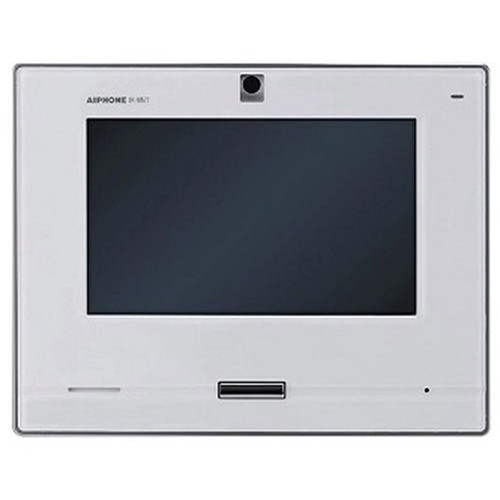
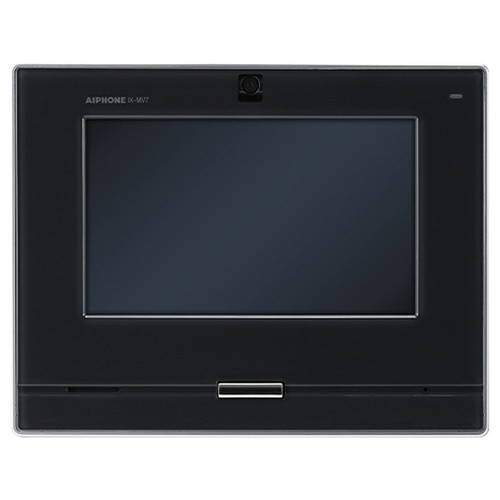
Both the Aiphone IX-MV7-W and IX-MV7-B are 7-inch touchscreen IP video master stations from the IX Series, designed for SIP-compatible intercom systems in commercial and multi-tenant environments. They share the same form factor, PoE power architecture, and core video/audio codec support. This comparison evaluates the two units across integration depth, physical interface controls, and compliance documentation — the dimensions most relevant to installers selecting a master station for a specific deployment context.
In This Guide
- Which model offers broader network protocol and SIP integration support?
- Which unit provides more programmable I/O and addressable station capacity?
- Do both models share the same power, environmental, and compliance specifications?
- Which should you choose: the IX-MV7-W or the IX-MV7-B?
- Side-by-Side Specs
- FAQ
Which model offers broader network protocol and SIP integration support?
The IX-MV7-B specifies an explicit protocol stack: IPv4, IPv6, TCP, UDP, SIP, HTTP, HTTPS, RTSP, RTP, RTCP, IGMP, MLD, SMTP, SFTP, DHCP, NTP, and DNS, plus IEEE 802.1x port security. This gives installers a clear picture of network compatibility, including IPv6 readiness, encrypted SFTP/HTTPS transport, and SMTP for event notifications.
The IX-MV7-W lists ONVIF compatibility and the same core video codecs (H.264/AVC, Motion JPEG) and audio codecs (G.711, G.722), but its provided specifications do not enumerate a protocol stack or port security standard. Buyers integrating into 802.1x-secured enterprise networks or requiring documented IPv6 support will find the IX-MV7-B specs more complete for pre-installation validation.
Which unit provides more programmable I/O and addressable station capacity?
The IX-MV7-B provides quantified functional capacity: 500-entry station address book, 8 speed-dial buttons, 2 contact outputs, 4 trigger inputs, 50 bell schedule events per day, and a specified speaker output of 8Ω at 0.5W with a 600Ω audio input impedance. These figures are directly usable for system design — particularly the contact outputs and trigger inputs, which determine how many doors or external devices can be wired to the master station.
The IX-MV7-W specifications confirm audio input support and full-duplex hands-free communication but do not provide address book size, speed-dial count, contact output count, trigger input count, bell schedule capacity, or speaker impedance/wattage. For deployments where programmable I/O or station scalability is a sizing criterion, the IX-MV7-B supplies the numbers needed; the IX-MV7-W specs do not.
Do both models share the same power, environmental, and compliance specifications?
Both stations are powered by PoE IEEE 802.3af Class 0 at 4.32W draw, and both operate over an identical temperature range of 32°F to 104°F (0°C to 40°C). Physical dimensions are identical at 6-3/4" H x 8-11/16" W x 1-1/4" D. Both support a 7-inch display, 480p built-in camera, and the same H.264/AVC and Motion JPEG video codecs.
On compliance, the IX-MV7-B lists UL 62368-1 and cUL 62368-1 certifications. The IX-MV7-W specs reference a 2-year warranty and 802.3af power compliance but do not cite a UL or safety certification listing. For projects requiring documented UL listing for AHJ approval, the IX-MV7-B provides that specification; it is absent from the IX-MV7-W data as provided.
Which should you choose: the IX-MV7-W or the IX-MV7-B?
Our take: The IX-MV7-B is the stronger choice when installation documentation, network security posture, and I/O capacity are decision drivers. Concretely: (1) the IX-MV7-B documents a 15-protocol stack including IPv6 and IEEE 802.1x port security, neither of which appears in the IX-MV7-W specs; (2) the IX-MV7-B specifies 2 contact outputs and 4 trigger inputs for door and device integration, figures absent from the IX-MV7-W data; (3) the IX-MV7-B carries UL 62368-1 and cUL 62368-1 listings, which the IX-MV7-W specs do not include. Both units are physically and electrically identical — same 4.32W PoE draw, same dimensions, same 480p camera, same operating range. The IX-MV7-W may be fully equivalent in hardware capability, but its published specs leave critical integration and compliance fields unanswered. Specify the IX-MV7-B where AHJ sign-off, 802.1x network enforcement, or documented I/O mapping is required.
Side-by-Side Comparison
Spec-for-spec, from manufacturer data.
| Specification | Aiphone IX-MV7-W | Aiphone IX-MV7-B |
|---|---|---|
| Display Size | 7-inch TFT LCD touchscreen | 7-inch LCD |
| Display Resolution | 800x400 | Not specified in provided specs |
| Built-In Camera | 1/3-inch CMOS, 480p, manual privacy shutter | 480p |
| Minimum Illumination | — | 5 lux |
| Video Codecs | H.264/AVC, Motion JPEG | H.264/AVC, Motion JPEG |
| Audio Codecs | G.711, G.722 | G.711, G.722 |
| Communication Mode | Full-duplex hands-free | Hands-free / Push-to-talk |
| Power Source | PoE IEEE 802.3af Class 0 | PoE IEEE 802.3af Class 0 |
| Power Draw | 4.32W | 4.32W |
| Dimensions | 6-3/4" H x 8-11/16" W x 1-1/4" D | 6-3/4" H x 8-11/16" W x 1-1/4" D |
| Operating Temperature | 32°F to 104°F (0°C to 40°C) | 32°F to 104°F (0°C to 40°C) |
| Protocol Stack | — | IPv4, IPv6, TCP, UDP, SIP, HTTP, HTTPS, RTSP, RTP, RTCP, IGMP, MLD, SMTP, SFTP, DHCP, NTP, DNS |
| Port Security | — | IEEE 802.1x |
| Contact Outputs | — | 2 |
| Trigger Inputs | — | 4 |
| Station Address Book | — | 500 |
| Speed Dial Buttons | — | 8 |
| Bell Schedule Events | — | 50 per day |
| Speaker Output | — | 8Ω 0.5W |
| ONVIF | Yes | — |
| Mount Type | Wall | Not specified in provided specs |
| Safety Compliance | — | UL 62368-1, cUL 62368-1 |
| Warranty | 2-year | — |
| Color | White (W) | Black (B) |
Frequently Asked Questions
Which should you choose: the IX-MV7-W or the IX-MV7-B?
The IX-MV7-B is the stronger choice when installation documentation, network security posture, and I/O capacity are decision drivers. Concretely: (1) the IX-MV7-B documents a 15-protocol stack including IPv6 and IEEE 802.1x port security, neither of which appears in the IX-MV7-W specs; (2) the IX-MV7-B specifies 2 contact outputs and 4 trigger inputs for door and device integration, figures absent from the IX-MV7-W data; (3) the IX-MV7-B carries UL 62368-1 and cUL 62368-1 listings, which the IX-MV7-W specs do not include. Both units are physically and electrically identical — same 4.32W PoE draw, same dimensions, same 480p camera, same operating range. The IX-MV7-W may be fully equivalent in hardware capability, but its published specs leave critical integration and compliance fields unanswered. Specify the IX-MV7-B where AHJ sign-off, 802.1x network enforcement, or documented I/O mapping is required.
Is the IX-MV7-W or IX-MV7-B better for larger multi-door deployments?
Based on available specifications, the IX-MV7-B is better documented for larger deployments: it lists a 500-entry station address book, 8 speed-dial buttons, 2 contact outputs, and 4 trigger inputs — all figures relevant to scaling door count and device integrations. The IX-MV7-W does not provide these capacity specifications in the data available, making it harder to validate against deployment requirements without consulting Aiphone directly.
Do both stations support SIP and work on the same IP intercom network?
Both stations share the same IX Series platform, H.264/AVC and Motion JPEG video codecs, and G.711/G.722 audio codecs. The IX-MV7-B explicitly lists SIP in its protocol stack along with RTSP, RTP, and RTCP. The IX-MV7-W lists ONVIF compatibility but does not enumerate SIP or the full protocol stack in the specifications provided. Confirm SIP support for the IX-MV7-W directly with Aiphone if SIP documentation is required for your project.
Which model is listed for UL compliance — does it matter for my installation?
The IX-MV7-B specifies UL 62368-1 and cUL 62368-1 safety certifications. The IX-MV7-W specifications provided do not include a UL listing. If your project is in a jurisdiction where the Authority Having Jurisdiction (AHJ) requires UL-listed equipment — common in commercial and institutional projects in the US and Canada — the IX-MV7-B provides that documented compliance; the IX-MV7-W does not based on the specs at hand.
More Intercom Comparisons
- Aiphone IX-MV7-HB vs Code Blue SLNP0029
- Aiphone IX-MV7-HB vs Axis I5304
- Aiphone IX-MV7-HB vs Aiphone IX-MV7-B
- Aiphone IX-MV7-HB vs Aiphone IXG-MK
- Code Blue SLNP0029 vs Aiphone IX-MV7-B
- Code Blue SLNP0029 vs Aiphone IXG-MK
Intercom Buying Guides
Get a Second Opinion on Your Camera Choice
Share your site layout, coverage goals, and budget. Our team will validate the camera selection, flag anything we would change, and recommend products that match the use case.