
ACTi E38 vs ACTi Z316: Specification Comparison
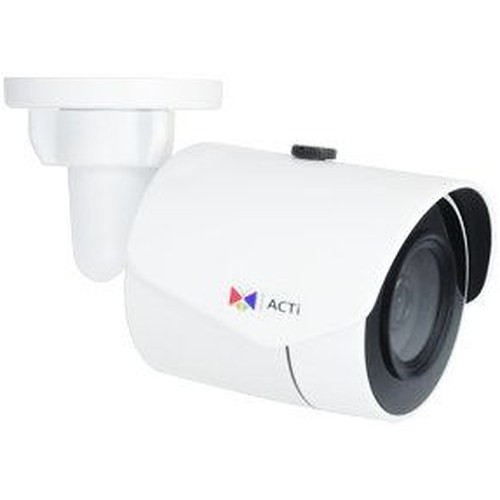
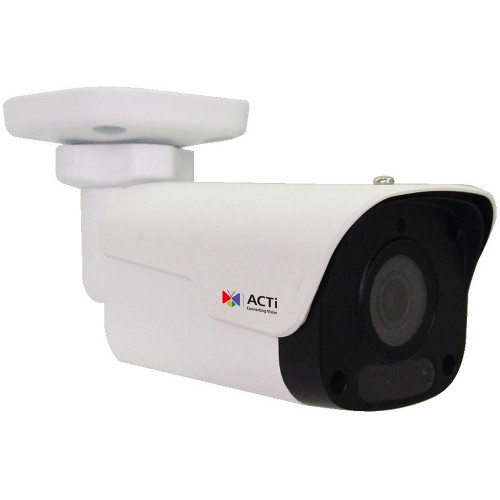
Both the ACTi E38 and ACTi Z316 are 2MP fixed-lens bullet cameras from ACTi, powered over PoE 802.3af and designed for continuous IP surveillance. This comparison covers the imaging, installation, and integration differences that matter most to installers and IT buyers choosing between the two models—frame rate and WDR capability, environmental protection, compression efficiency, and edge storage options.
In This Guide
How do the imaging specs compare?
Both cameras deliver 2MP resolution, but they differ meaningfully in frame rate and compression. The E38 supports up to 60 fps at 1080p with H.264 and MJPEG, making it the stronger choice for capturing fast motion with fluid playback. The Z316 is capped at 30 fps and uses H.265 and H.264—the addition of H.265 provides roughly 50% better compression efficiency over H.264, which can offset the lower frame rate in storage-constrained deployments.
On WDR, the E38 is specified as 'Advanced WDR,' while the Z316 carries a plain 'WDR' designation; neither spec sheet provides a quantified WDR level (in dB), so a direct numerical comparison is not possible. Both cameras include IR night vision with Adaptive IR. The Z316's lens is specified at 2.8mm fixed f/2.0, yielding a wide angle suitable for close-coverage scenes; the E38 lists only 'Fixed' without a focal length or aperture figure in the provided specs.
What about installation and environment?
The Z316 carries an IP68 ingress protection rating, meaning it is rated for continuous immersion beyond 1 meter—suitable for wash-down environments, direct rain exposure, or near-surface water installations. The E38 has no IP rating listed in the provided specifications, so its environmental protection level cannot be confirmed from available data. Buyers deploying in harsh outdoor or wet environments should verify the E38's rating directly with ACTi before specifying it.
Both cameras draw power via PoE 802.3af. The Z316 is explicitly specified at under 13W, fitting comfortably within the 15.4W 802.3af budget and posing no strain on standard PoE switches. The E38's exact wattage is not stated in the provided specs. The E38 supports wall and eave mounting; the Z316's mount options are not listed in the provided specs. No operating temperature range is provided for either model in the available data.
Which fits your VMS and analytics better?
The E38 explicitly lists ONVIF compliance and names compatible platforms: ACTi NVR and any ONVIF-compatible VMS. The Z316 does not list ONVIF certification or VMS compatibility in the provided specifications—buyers integrating into a third-party VMS should confirm Z316 ONVIF support with ACTi before purchase.
The Z316 adds two features absent from the E38 spec sheet: a built-in microphone for onboard audio capture, and MicroSD local edge storage for SD-card recording independent of the NVR. Neither analytics capabilities nor audio are listed for the E38 in the provided specifications. No edge analytics are listed for either model.
Which should you choose: the E38 or the Z316?
Our take: The E38 is the stronger choice when frame rate and broad VMS compatibility are the primary requirements—it delivers 60 fps at 1080p versus the Z316's 30 fps, and its ONVIF compliance is explicitly confirmed, whereas the Z316's ONVIF status is unspecified in the provided data. The Z316 has a meaningful edge in three areas: its IP68 rating versus no stated IP rating for the E38, H.265 compression for lower storage and bandwidth consumption versus the E38's H.264/MJPEG only, and the addition of a built-in microphone and MicroSD edge storage that the E38 lacks. Specify the E38 for motion-intensive scenes on ONVIF VMS platforms; specify the Z316 for wet or immersion-risk environments where audio capture, edge recording, and bandwidth efficiency outweigh the need for high frame rates.
Side-by-Side Comparison
Spec-for-spec, from manufacturer data.
| Specification | ACTi E38 | ACTi Z316 |
|---|---|---|
| Resolution | 2 MP | 2 MP |
| Form Factor | Bullet | Bullet (Mini Bullet) |
| Lens / Focal Length | Fixed (focal length not specified) | 2.8mm fixed f/2.0 |
| Max Frame Rate | 60 fps @ 1080p | 30 fps |
| Video Compression | H.264; MJPEG | H.265; H.264 |
| WDR | Advanced WDR | WDR |
| IR / Night Vision | Adaptive IR; Day/Night | Adaptive IR |
| IP Rating | — | IP68 |
| Power Input | PoE (802.3af) | PoE (802.3af) |
| PoE Wattage | — | Under 13W |
| ONVIF | Yes | — |
| VMS Compatibility | ACTi NVR; ONVIF-compatible VMS | — |
| Audio | — | Built-in microphone |
| Edge Storage | — | MicroSD |
| Mount Type | Wall; Eave | — |
Frequently Asked Questions
Which should you choose: the E38 or the Z316?
The E38 is the stronger choice when frame rate and broad VMS compatibility are the primary requirements—it delivers 60 fps at 1080p versus the Z316's 30 fps, and its ONVIF compliance is explicitly confirmed, whereas the Z316's ONVIF status is unspecified in the provided data. The Z316 has a meaningful edge in three areas: its IP68 rating versus no stated IP rating for the E38, H.265 compression for lower storage and bandwidth consumption versus the E38's H.264/MJPEG only, and the addition of a built-in microphone and MicroSD edge storage that the E38 lacks. Specify the E38 for motion-intensive scenes on ONVIF VMS platforms; specify the Z316 for wet or immersion-risk environments where audio capture, edge recording, and bandwidth efficiency outweigh the need for high frame rates.
Is the E38 or Z316 better for low-light performance?
Both cameras include IR night vision with Adaptive IR, so low-light capability is comparable on that basis. The Z316 specifies a 2.8mm f/2.0 aperture, which admits more light than higher f-number lenses—but no minimum illumination figure is provided for either model in the available specifications, so a definitive numerical comparison cannot be made. Confirm minimum lux ratings with ACTi for your specific deployment.
Can I use either camera with a non-ACTi VMS?
The E38 is explicitly listed as ONVIF-compliant and compatible with any ONVIF-compatible VMS. The Z316 does not list ONVIF compliance or third-party VMS compatibility in its provided specifications. If VMS interoperability is a requirement, the E38 is the confirmed choice; buyers interested in the Z316 should verify ONVIF support directly with ACTi.
Which camera is better suited for outdoor or wet environments?
The Z316 carries an IP68 ingress protection rating, covering continuous immersion and heavy wash-down conditions. The E38 has no IP rating listed in the provided specifications, so its suitability for outdoor or wet environments cannot be confirmed from available data. Until the E38's IP rating is verified with ACTi, the Z316 is the documented choice for harsh or wet outdoor deployments.
Get a Second Opinion on Your Camera Choice
Share your site layout, coverage goals, and budget. Our team will validate the camera selection, flag anything we would change, and recommend products that match the use case.