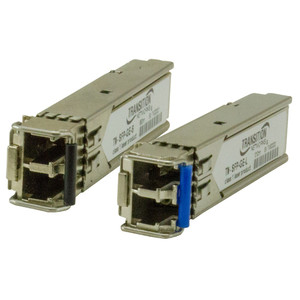
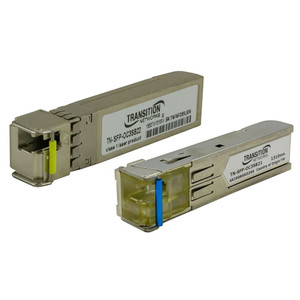
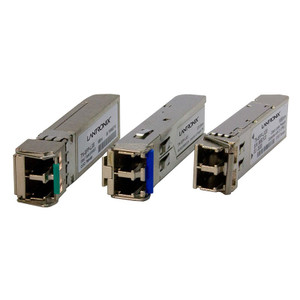
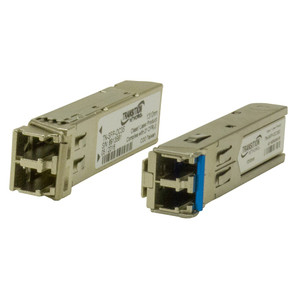
Transition Networks TN-SFP-GE-L Single Mode SFP Gigabit Transceiver
Overview
The Transition Networks TN-SFP-GE-L is a small form-factor pluggable (SFP) transceiver module engineered for gigabit ethernet transmission over single-mode fiber. This module is built for backbone network infrastructure, carrier-class deployments, and managed switch environments where extended reach and long-distance connectivity matter. Single-mode fiber deployed with the TN-SFP-GE-L (often searched as TN SFP GE L) can span several kilometers without signal regeneration—a critical advantage over multimode fiber when interconnecting geographically dispersed facilities or carrier points-of-presence.
Key Features
- Single-Mode Fiber Support: Delivers gigabit-speed data over single-mode fiber optic cable. Single-mode fiber attenuates light far less than multimode, enabling transmission distances measured in kilometers rather than hundreds of meters. This is essential when backbone segments exceed 500 meters or when you need to cross between buildings or campuses without intermediate active equipment.
- Standard LC Fiber Connectors: Field-standard LC duplex connectors allow quick insertion and removal without special tools or reconfiguration. This modularity means you can swap transceivers in the field without powering down the switch or waiting for firmware resets.
- Hot-Swappable Design: The TN-SFP-GE-L plugs directly into any managed switch SFP slot supporting gigabit ethernet. No configuration software, firmware uploads, or module initialization required—insert and the switch recognizes it as a standard gigabit port.
- Carrier-Grade Reliability: Built for telecom and enterprise backbone use where availability expectations exceed 99.99%. Single-mode transceivers in this class are deployed across backbone rings, metro-area networks, and inter-datacenter links where downtime cascades across thousands of users.
- Integration with Managed Switch Ecosystems: Compatible with SNMP management, syslog, and standard network monitoring tools. You can monitor optical signal levels, transmit/receive power, and alarm conditions through your existing switch management interface.
- No Additional Power Consumption: The TN-SFP-GE-L draws power only from the SFP slot itself—typically under 1 watt. Unlike active fiber converters or optical amplifiers, this module adds no load to your switch's power budget or cooling requirements.
Integration and Compatibility
The TN-SFP-GE-L integrates into any managed switch with available SFP slots designed for gigabit SFP modules. This includes enterprise-class switches from Cisco, Juniper, Arista, Dell, and others. Standard ONVIF compatibility across network cameras and recorders means you can deploy gigabit SFP transceivers in backbone segments of a surveillance network without compatibility surprises. For IT architects planning network switch upgrades or expansion, the TN-SFP-GE-L works as a drop-in replacement for equivalent single-mode gigabit SFP modules from other vendors—no firmware, license, or training overhead.
Installation is straightforward: clean the fiber connectors with a lint-free wipe, insert the TN-SFP-GE-L into the switch SFP port, then matte the fiber jumper cable. Standard LC-to-LC single-mode jumper cables (not included) are commodity items, widely stocked by cable suppliers and integrators.
When to Choose a Different Model
If your backbone spans under 300 meters and cost is the primary constraint, a multimode SFP module may reduce transceiver cost by 30–40 percent. However, multimode SFP modules lock you into shorter distances and make future long-distance extensions more expensive to retrofit. If you require wavelength-division multiplexing (WDM) to carry multiple data streams over a single fiber pair, or if you need optical signal conditioning or amplification, consider dedicated optical transport modules or a separate optical line terminal instead.
Frequently Asked Questions
Q: What is the maximum distance the TN-SFP-GE-L can transmit?
A: Single-mode fiber with the TN-SFP-GE-L supports gigabit ethernet transmission over distances up to approximately 10 kilometers (6.2 miles) under typical conditions. Actual range depends on fiber quality, connector cleanliness, and cable attenuation. For distances beyond 10 km, optical amplifiers or regenerators are required.
Q: Can I use the TN-SFP-GE-L with my existing multimode fiber?
A: No. Single-mode transceivers require single-mode fiber. Attempting to use single-mode transceiver pairs with multimode fiber will result in excessive signal loss and link failure. Multimode fiber has a much larger core diameter (50 or 62.5 micrometers) and is optically incompatible with single-mode fiber (9-micrometer core). Verify your installed fiber type before purchasing.
Q: Does the TN-SFP-GE-L require any special management or monitoring?
A: Standard SNMP monitoring of the switch port reports link status and optical signal levels. Many modern managed switches also expose real-time RX power and TX power readings via SNMP, allowing you to detect signal degradation before link failure occurs. No additional software or licensing is required.
Q: Is the TN-SFP-GE-L hot-swappable?
A: Yes. You can remove and insert the TN-SFP-GE-L while the switch is powered and operating on other ports. The affected port will flap momentarily; plan insertions during maintenance windows to avoid traffic disruption on that link.
Q: What connector type does the TN-SFP-GE-L use?
A: LC duplex connectors. This is the industry standard for gigabit SFP modules. You will need LC-to-LC single-mode jumper cables to connect the transceiver to your fiber backbone. LC cables are inexpensive and widely available from any network supply vendor.
Q: What warranty applies to the TN-SFP-GE-L?
A: Refer to the manufacturer datasheet or contact the supplier for warranty terms specific to your region and purchase agreement. Typical commercial electronics warranties range from 1 to 3 years and cover manufacturing defects, not fiber-related signal issues or physical damage.
Ted PerryPerspective based on aggregated IP Security Depot and affiliated engineering team experience.
The TN-SFP-GE-L is a no-frills gigabit single-mode SFP module—exactly what you need when your backbone span exceeds what multimode can deliver. This is not exotic gear; it's foundational infrastructure. The critical decision point is fiber type: if your install uses single-mode fiber runs and you've got SFP slots on your switches, the TN-SFP-GE-L is the right transceiver.
Technical Highlights:
- Single-mode reach (~10 km): Multimode SFP tops out around 300 meters under real-world conditions. Single-mode extends that to kilometers. If your buildings are more than half a kilometer apart, single-mode becomes your economic choice because you avoid the cost and complexity of intermediate optical regeneration.
- LC duplex connectors: Industry standard, field-swappable, no proprietary adapters. Spare jumper cables are generic commodity; your cable supplier will have them in stock same-day.
- Passive design, no power draw: No fans, no cooling requirements, no dedicated power supply. Insertion loss and receiver sensitivity are passive specs—review the datasheet, but typical gigabit single-mode SFP modules operate within a predictable 15–20 dB optical budget.
Deployment Considerations:
- Fiber type verification is non-negotiable: Do not assume your installed fiber is single-mode because it looks the same as multimode. Request and verify SMF-28 or equivalent from your cable plant documentation. Mixing fiber types results in immediate link failure.
- Connector cleanliness matters: LC connectors are small and sensitive. Dust or oil on the ferrule face causes signal loss and intermittent faults. Keep microscope wipes and isopropyl alcohol in your toolbox; inspect both ends of the jumper before mating.
- Optical signal budget monitoring: If your switch supports SNMP reporting of RX power levels, log them at installation. A 2–3 dB drop over weeks or months signals fiber contamination or connector degradation before complete failure—gives you time to schedule preventive maintenance.
The TN-SFP-GE-L is the right module for campus backbones, inter-datacenter fiber rings, or any scenario where you're running single-mode fiber beyond 500 meters and want reliable gigabit transport without active equipment in the middle. It's not exciting, but it's dependable.