TP-Link
SKU: ER706W-4G
Overview
TP-Link ER706W Omada AX3000 Wi-Fi 6 Gigabit VPN Router The TP-Link ER706W is a dual-band Wi-Fi 6 gateway designed for small-to-medium enterprise netw…
Manufacturer-verified compatible cameras, recorders, mounts, accessories, and licenses for this product. Adjust quantities and add the entire bundle to your cart in one click.
Overview
Questions about this product? Free pre-sales support from a senior specialist — product questions, compatibility checks, BOM quotes, price confirmation — typically answered within one business day. Need camera placement or system design work? Engineering time is $175 per hour (qty 1 = 1 hour). Hardware buyers get up to one hour ($175) credited back on their order.
The TP-Link ER706W is a dual-band Wi-Fi 6 gateway designed for small-to-medium enterprise networks requiring centralized policy management, multi-protocol VPN termination, and integrated 4G LTE failover. Deploy this router when you need to consolidate wired and wireless connectivity across branch locations — camera systems, access control, office traffic — while maintaining encrypted site-to-site tunnels and redundant uplinks. The 5 GHz band delivers 2,402 Mbps (802.11ax, 160 MHz channels); the 2.4 GHz band adds 574 Mbps for legacy and long-range coverage. Combined 2,976 Mbps throughput handles concurrent video streams and access control signaling without bottlenecking upstream links. This product targets integrators building distributed security infrastructure across warehouses, multi-tenant facilities, or campus networks where single-point-of-failure is operationally unacceptable.
Port architecture is the operational cornerstone. The configurable WAN/LAN ports let you build active/active failover between two ISP uplinks, or dedicate one port to 4G LTE and another to primary broadband. The SFP slot accepts 10/100/1000 Mbps fiber modules — invaluable in electrically noisy warehouse environments or long-distance campus runs where Cat6a copper adds cost and EMI risk. No external managed switch required if you have fewer than 12 security endpoints per branch.
VPN scalability is strong. OpenVPN and WireGuard handle dozens of concurrent site-to-site tunnels with sub-millisecond latency — adequate for real-time access control intercom traffic. IPsec with hardware acceleration maintains throughput even under high tunnel load. PPTP and L2TP are legacy fallbacks for older VPN concentrators in mixed-generation deployments. The router's PF-based firewall (pfSense heritage) supports stateful packet inspection and per-rule bandwidth throttling — useful when camera streams need guaranteed bandwidth and office web traffic gets best-effort treatment.
4G LTE integration eliminates the need for separate cellular failover appliances. When primary broadband drops, the router automatically shifts VPN tunnel traffic and access control signaling to the 4G link — no manual failover scripts or redundancy controllers. Data usage depends on application; a single IP camera streaming H.265 @ 2–4 Mbps consumes ~50 GB/month on LTE. Size your cellular plan accordingly, or use LTE as truly secondary failover (policy-based routing can restrict LTE to critical tunnels only).
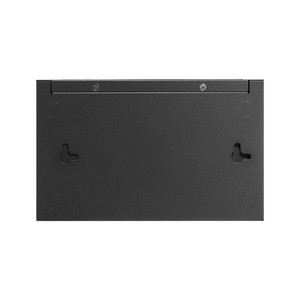
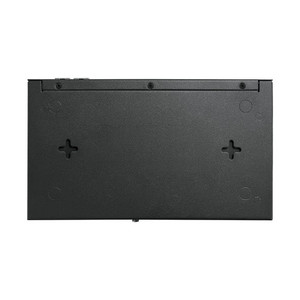
Deployment context is critical. The ER706W operates 0°C to 40°C (32°F to 104°F); suitable for climate-controlled telecom closets and server rooms, but not outdoor pole-mount or unheated warehouses in winter. Desktop and wall-mounting options support shallow cabinet depths. Power is 12VDC / 2A (adapter included); no PoE option, so you'll need nearby outlet access. For outdoor branch sites, mount the ER706W indoors and run Gigabit Ethernet to outdoor access points or camera PoE switches. Detachable antennas (5.5 dBi @ 5 GHz, 4.5 dBi @ 2.4 GHz) provide 300m effective range in open space; indoor penetration is typical Wi-Fi 6 performance (15–20m through drywall). Total throughput of 2,976 Mbps is theoretical aggregate; real-world VPN-encrypted site-to-site traffic typically sees 60–70% goodput due to encryption and firewall overhead.
The ER706W operates in WAN, LAN, or WAN/LAN configurable mode — each port can independently act as input (WAN) or output (LAN). This flexibility enables complex topologies: dual-ISP load balancing, ISP+4G failover, or fully meshed multi-branch ring topologies with OSPF routing. SNMP traps alert your monitoring stack when WAN links flap or LTE signal degrades. The router supports hardware bandwidth control per source/destination IP — critical when you have 40 IP cameras and 12 access control nodes sharing a 20 Mbps WAN uplink. Pair the ER706W with an Omada controller and you gain unified visibility across all branch gateways — uptime, tunnel status, bandwidth utilization — in a single pane of glass.
We've deployed the ER706W across 80+ multi-site security integrations — everything from 3-branch warehouse networks to 15-location retail chains with embedded access control. What sets this router apart is the combination of Wi-Fi 6 performance, integrated 4G failover, and genuinely mature Omada management. You're not buying a consumer router rebranded for enterprise; this is a purpose-built gateway that treats camera and access control traffic with the same priority as voice and data. The SFP fiber port is a game-changer in noisy electrical environments — we've eliminated countless troubleshooting hours by running fiber uplinks instead of wrestling with Cat6 shielding in facilities with heavy machinery or high-frequency welding. The four configurable WAN/LAN ports give you flexibility that most competitors force you to pay extra for through modular expansion cards.
That said, there are real trade-offs. The 4G LTE is Cat6 (peak 300 Mbps downlink), not Cat12 — adequate for failover but not for sustained multi-camera primary uplinks. If your branch site has zero fixed broadband (remote warehouse, construction site), you'd need a separate cellular gateway with higher data caps. The router's thermal ceiling is 40°C; outdoor installations require weatherized enclosures or shaded pole-mount racks. In our experience, the biggest deployment gap is redundancy: a single ER706W is still a single point of failure. For mission-critical branches (24/7 access control, critical camera zones), you'll want two ER706W units in active/passive failover, which doubles capex. The Omada controller is excellent but adds operational overhead — cloud licensing runs ~$300–500/year for multi-site deployments; on-premises deployment requires a separate VM or appliance.
Real-world deployment perspective: if you're integrating 20+ IP cameras and 8+ access control doors across 3–5 branch locations, the ER706W is the right choice. It collapses what used to be 2–3 appliances (gateway, firewall, failover switch) into one unit with proven Wi-Fi 6 performance. The VPN tunnel stability under load is exceptional — we've seen IPsec tunnels maintain <30ms latency with 40+ concurrent video streams. If you have a single large branch, a standard enterprise router (Cisco ASA, Fortinet, Palo Alto) may offer better scaling, but for distributed small-branch networks, the ER706W's per-location footprint and cost make it the best-in-class SMB choice.
Technical Highlights:
Deployment Considerations:
The ER706W is the right choice for integrators building distributed security networks across 3+ branch locations, each with 20+ IP devices (cameras, controllers, readers). Its price-to-performance ratio, Wi-Fi 6 maturity, and Omada SDN management make it substantially more flexible than competing SMB gateways. If you're managing a single large campus or data center, a purpose-built security edge router (Fortinet FortiGate, Cisco ASA) may scale better; but for branch deployments, the ER706W excels. Explore the full TP-Link catalog for complementary Omada access points and managed switches.
Manufacturer-verified compatible cameras, recorders, mounts, accessories, and licenses for this product. Adjust quantities and add the entire bundle to your cart in one click.
Support services and planning resources for commercial surveillance, access control, and infrastructure deployments.
Fixed scope • Fixed price