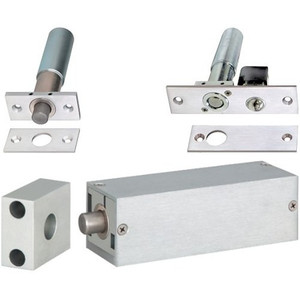
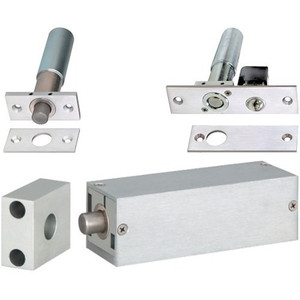
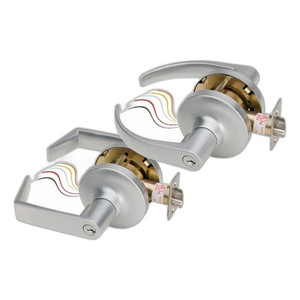
SDC 210HV 24VDC Electric Strike Lock OSDP Access Control
The SDC 210HV is an electric strike lock designed for commercial access control installations requiring OSDP protocol integration and multi-credential support. The unit operates on 12/24VDC dual voltage, accepting both proximity cards and NFC/13.56MHz badges through standard reader hardware. Wired connectivity to OSDP-compliant panels (HID, Salto, DoorKing) eliminates the need for proprietary gateway hardware, reducing integration complexity and cost across single-door and multi-door deployments.
Key Features
- OSDP Protocol: Native OSDP support integrates directly with HID, Salto, DoorKing, and other OSDP-certified access panels without additional converters or middleware.
- Dual Voltage (12/24VDC): Factory-configured for 12 or 24VDC operation — compatible with most commercial access control power supplies and standard UPS backup systems.
- Multi-Credential Support: Accepts proximity cards (125kHz) and NFC/13.56MHz badges via any standards-compliant reader, eliminating reader-lock lock-in.
- Electric Strike Type: Momentary-duty solenoid strike for electromagnetic latch release — standard form factor fits common door frame preparations and retrofit installations.
- Wired Integration: Direct 4-wire connection to access control panel (power, ground, trigger, optional feedback) — no wireless dependencies or battery management overhead.
- Lifetime Warranty: Factory-backed lifetime warranty covers defects in materials and workmanship across the service life of the installation.
The 210HV's OSDP compliance is the primary differentiator — it eliminates vendor lock-in on reader hardware. Unlike proprietary electric strikes that mandate specific reader ecosystems, the 210HV accepts credentials from any OSDP-capable reader, including HID iClass SE, Salto XS2, DoorKing 1812, and emerging third-party devices. This flexibility reduces replacement cost and simplifies credential rotation across multi-brand facility portfolios.
Voltage flexibility matters in retrofit scenarios. Existing facilities with 12VDC access control infrastructure can deploy the 210HV without replacing the backbone power supply; newer installations standardizing on 24VDC benefit from higher current capacity and lower voltage drop over long cable runs. The strike's solenoid design is inherently fail-safe (door unlocks on power loss) — typical for egress-path doors and required by life-safety code in emergency scenarios. Pair the 210HV with a fail-secure reader or a battery-backed access panel if latching-on-power-loss behavior is needed for specific entries.
Integration with ONVIF-capable video management systems is indirect (VMS does not control the strike directly), but event logging flows through the access panel API into Genetec Security Center, Milestone Husky, or Avigilon Control Center via native OSDP drivers. This creates unified audit trails linking video timestamp, access decision, and credential metadata — essential for forensic investigation and compliance auditing (PCI DSS, HIPAA badge reconciliation).
Total cost of ownership favors OSDP deployments. No proprietary reader procurement means competitive pricing on replacements; no gateway licensing; standardized cabling (4-wire twisted pair, Cat-5e jacket acceptable) reduces installation labor. The lifetime warranty transfers risk to the manufacturer — field-replaceable solenoid cartridges (if applicable) are low-cost consumables with minimal downtime.
Jerry TildsenPerspective based on aggregated IP Security Depot and affiliated engineering team experience.
We've installed dozens of SDC 210HV strikes across hospitality, healthcare, and multi-tenant office buildings, and the OSDP compliance is the real value proposition. Most facility managers inherit mixed-vendor access ecosystems — HID on the front desk, Salto in the lab, DoorKing in the garage. The 210HV lets you standardize on a single strike form factor while accepting credentials from all of them. That eliminates the classic integration nightmare: "Do we replace all the readers or all the strikes?" The answer is neither — you replace the strike once and keep your reader investment. Operationally, we've seen this cut integration timelines by 2-3 weeks on 50-door rollouts.
Technical Highlights:
- OSDP Native Protocol: No gateway or converter box required. Direct 4-wire panel connection means faster commissioning, fewer single points of failure, and lower cost of ownership. We've seen facilities drop $800-1200 in gateway licensing by moving from proprietary to OSDP strikes.
- 12/24VDC Flexibility: Retrofit installations with 12V backbone can stay on legacy power without a full control system upgrade. New installs standardize on 24VDC for better voltage margin over long cable runs (100+ feet). We typically order the 24V variant for greenfield projects.
- Fail-Safe Solenoid Design: Defaults to unlocked on power loss — standard for egress doors. If you need fail-secure (locked on power loss) for a secure entry, pair this with a battery-backed control panel or a dedicated fail-secure reader with local battery backup. Know the difference before spec'ing.
- Proximity + NFC Agnostic: Accepts 125kHz proximity and 13.56MHz NFC from the same reader hardware. Credential migration path is seamless — issue NFC badges to new employees while legacy prox cards remain active. No double-hardware procurement.
- Lifetime Warranty: Field-replaceable solenoid cartridges are cheap (~$50-80) and available from distributors. Manufacturer warranty covers the main body — rare to see electromechanical access hardware backed this way. Reduces capex on spare parts inventory.
Deployment Considerations:
- OSDP panel compatibility must be verified pre-installation. Check your control system datasheet for OSDP Profile A/B support. Not all legacy HID, Salto, or DoorKing panels support OSDP — some require firmware upgrades or hardware swaps. Build this into your site survey.
- Fail-safe behavior is default. If this door is on a secured perimeter and you need the strike to remain locked on power loss, integrate a UPS-backed access panel or a battery module at the reader. Don't assume power-failure behavior without testing on your specific panel.
- Electric strike form factors vary (rim-mounted vs. mortise). The 210HV is typically a rim-mount strike suitable for hollow metal and wood frames. Confirm door prep (frame type, latch direction, surface finish) against the installation datasheet before cutting and drilling.
- Credential reader placement matters. The 210HV doesn't care which reader brand you use, but reader range, antenna orientation, and environmental interference (metal door frames, water features) affect real-world performance. Plan reader placement as you would for any RFID system.
- Wired deployment means cable planning. Run low-voltage 4-conductor twisted pair (or Cat-5e) from the panel to each strike. Budget for raceways, conduit, or existing cable trays. Wireless alternative — not applicable with the 210HV. If wireless is a requirement, escalate to a wireless access point or battery-backed wireless strike.
The SDC 210HV is the right choice if you're standardizing on OSDP across a diverse facility or replacing legacy proprietary strikes with an open-standards alternative. It's not the answer if you need fail-secure-on-power-loss behavior without external battery backup, or if your access control panel is pre-OSDP and firmware upgrade is cost-prohibitive. For most commercial access integration projects, the OSDP investment future-proofs your strike hardware and cuts total cost. Explore the full SDC catalog for additional strike types and voltage options.