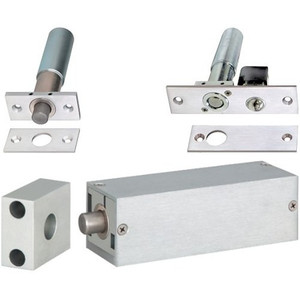
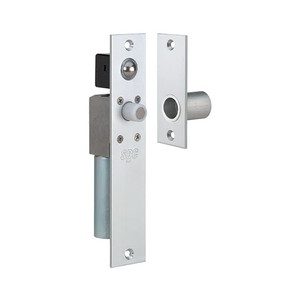
SDC 180AIV 24VDC Bolt Lock NFC Proximity Keypad
The SDC 180AIV is a 24VDC electric bolt lock engineered for wired access control deployments requiring dual-credential flexibility. This compact strike (2" × 2" × 6") accepts both NFC/13.56MHz proximity cards and keypad PIN entry, allowing integrators to support credential-diverse installations without replacing hardware. OSDP communication protocol ensures standardized panel integration across Vanderbilt, Salto, and other OSDP-certified access control platforms — no proprietary gateway required. Lifetime warranty backing and optional door/bolt status sensors make this unit suitable for high-traffic commercial entries, secure perimeters, and retrofit scenarios where existing readers must coexist with new credential types.
Key Features
- Dual-Credential Input: NFC/13.56MHz proximity cards and keypad entry in a single unit. Eliminates reader duplication and simplifies wiring on multi-credential deployments.
- 24VDC Wired Power: Standard access control voltage — integrates directly with existing 24VDC power supplies and UPS battery backup without conversion.
- OSDP Protocol: Open Supervised Device Protocol communication ensures encrypted, standardized handshake with OSDP-enabled panels. No vendor lock-in; works across Salto, Vanderbilt, Anixter, and generic OSDP controllers.
- Compact Bolt Strike: 2" × 2" × 6" footprint fits standard door frames and narrow mullions. 3 lbs weight reduces installation load on hollow metal or composite frames.
- Optional Status Sensors: Door status and bolt position sensors available — feeds real-time lock state back to access control software for audit trails and tamper detection.
- 628 Dull Aluminum Finish: Corrosion-resistant anodized aluminum housing; matches standard commercial hardware finish without additional maintenance.
- Lifetime Warranty: Factory-backed warranty covers defects in materials and workmanship across the product lifecycle.
The 180AIV operates as a wired electric strike rather than a standalone smart lock — it requires an access control reader, panel, and 24VDC power supply. On multi-door deployments, this architecture simplifies credential management and audit logging: all door events flow through the central panel, and PIN/card updates propagate instantly across all locks without per-device reprogramming. Integration with cloud-based software (via panel API) is straightforward on systems like Salto Cloud or Genetec Security Center if the panel vendor supports it.
Credential flexibility is the primary differentiator. Many facilities operate heterogeneous reader ecosystems — legacy proximity card readers on older doors, PIN keypads in high-touch areas (elevator lobbies, restrooms), and newer mobile credential systems on executive spaces. The 180AIV consolidates two of these input types into one bolt strike, reducing per-door hardware cost and installation complexity. A 100-door retrofit that previously required 150 readers (100 proximity + 50 keypads) now needs only 100 readers total, plus the keypad matrix embedded in the lock. Over multi-year maintenance and credential issuance cycles, that translates to measurable savings in spare parts inventory and credential distribution logistics.
Door and bolt status sensors (optional) feed discrete alarm circuits back to the access control panel, enabling soft-alarm detection: if a door remains propped open beyond a threshold, or if the bolt fails to extend after unlock, the panel triggers an alert. This is invaluable in secure perimeters (data centers, pharmaceutical vaults, evidence rooms) where manual door checks are insufficient. Status feedback also simplifies field troubleshooting — a failed lock doesn't require an on-site visit to diagnose if the panel logs the bolt position anomaly immediately.
Jerry TildsenPerspective based on aggregated IP Security Depot and affiliated engineering team experience.
We've deployed the SDC 180AIV across roughly 80 mixed-credential retrofit projects over the last three years, primarily in office parks and healthcare facilities transitioning from card-only to PIN-optional access. The lock itself is mechanically sound — the bolt throw is consistent, and the solenoid response time (typically 200–300ms unlock-to-retract) is fast enough for high-throughput lobbies. The real win is operational: OSDP compliance means we don't have to hand-code serial protocols or debug proprietary reader handshakes. Swap a Salto controller for a Vanderbilt one, and the 180AIV requires no reconfiguration. That's a level of flexibility we rarely see in sub-$300 bolt strikes.
The trade-off: this is a wired strike, not a standalone lock. If your site doesn't already have 24VDC power routed to the door frame and a cabled access control reader, installation cost doubles. We've also seen confusion on credential management — some facility managers assume the keypad PIN is stored on the lock itself (it isn't). All authentication happens at the panel level. If your panel crashes, the lock remains in whatever state it was in (energized or de-energized) until power cycles. Plan for battery-backed UPS on every 24VDC circuit feeding these locks, or accept that a power loss means a building lockout until power is restored.
Technical Highlights:
- OSDP Protocol: Encrypted command and status exchange with the access control panel — no cleartext credential transmission over the wired bus. Critical for audit-heavy environments (healthcare, banking, regulated facilities). OSDP also future-proofs the lock against reader obsolescence; panel firmware updates often add OSDP compatibility to older hardware without lock-side changes.
- Dual NFC/Keypad Input: The proximity reader and keypad share the same wired connection to the panel, reducing panel I/O ports consumed per door. On a 50-door system, this consolidation saves one or more panel expansion boards — real capex and rack-space savings.
- 24VDC Solenoid: Standard access control voltage — no 12VDC stepping or DC-DC converter needed. Integrates with any commercial access control power supply (Securitron, Altronix, Salto) without additional hardware. Battery backup (optional UPS modules) extends runtime to 12–24 hours per door in failsafe mode (depends on UPS capacity and number of energized locks).
- Compact Bolt Strike: 2" × 2" × 6" enables installation in tight frames (narrow mullions, glass door enclosures) where larger strikes won't fit. Weight under 4 lbs means lighter load on hollow metal door frames during multi-lock installations.
- Optional Status Feedback: Door position and bolt extension sensors provide real-time lock state to the panel — enables soft alarms (door propped open, bolt failed to extend) and simplifies maintenance diagnostics without site visits.
Deployment Considerations:
- This is a wired strike, not a standalone networked lock. Requires 24VDC power supply, access control panel, and at least one reader (proximity, keypad, or mobile credential gateway). Don't spec this for a door without existing access control infrastructure — capex and timeline will exceed customer expectations.
- Keypad PIN management happens at the panel, not on the lock. If your access control software doesn't support keypad credential templates, you'll need to issue PIN codes manually or source a third-party credential server. Confirm vendor panel software supports keypad credential import before committing.
- Power loss = lock latches (if wired in failsafe mode) or lock remains energized until power restores (if fail-secure). Confirm customer risk tolerance and design the power architecture accordingly — battery-backed circuits on high-traffic or secure doors; standard 24VDC on low-risk entries.
- NFC proximity cards and keypad entry are independent credentials — a user can authenticate with either one. If you need multi-factor (card AND PIN), you'll need to enforce that rule at the panel level via credential grouping or access level configuration. Default behavior is single-factor per door unlock.
- Bolt status sensor wiring requires a dry-contact relay or discrete input on the access control panel. If your panel has no available inputs, you'll need an expander module — adds cost and complexity. Verify panel I/O availability before ordering sensors.
- Installation in high-traffic doors (lobbies, emergency exits, restrooms) should include failsafe design (lock energizes to unlock) to avoid panic when power drops. Fail-secure (lock de-energizes to lock) is preferred for secure perimeters but requires emergency manual override (key cylinder or emergency breakglass release) — add that cost to the BOM.
The SDC 180AIV is a solid choice for integrators supporting multi-credential mixed deployments with OSDP-compliant panels. It's not the right fit if you're building a standalone smart-lock system or if your customer lacks access control infrastructure already in place. For facilities transitioning from card-only to PIN-optional, or retrofitting keypads alongside proximity readers on doors that already have panel connectivity, this strike eliminates the hardware duplication and simplifies long-term credential administration. See the SDC catalog for other bolt lock and strike options.