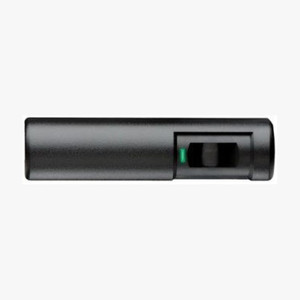
SDC MD-31DB Request-To-Exit PIR Sensor Controller
The SDC MD-31DB is a wired request-to-exit (RTE) controller purpose-built for multi-door access control deployments where passive infrared motion detection triggers exit verification. This controller manages credential authentication and egress detection across up to four access points simultaneously, supporting a credential capacity of 250,000 user profiles — practical for enterprise facilities, secure data centers, and distributed warehouse environments where controlled egress is non-negotiable.
Key Features
- 4-Door Capacity: Manages credential authentication and exit detection across four separate controlled access points from a single controller. This reduces panel count and simplifies wiring compared to four independent readers, cutting installation labor and cabinet footprint in facilities requiring coordinated multi-door access logic.
- 250,000 Credential Support: Stores up to 250,000 user profiles on the controller itself. For mid-to-large deployments without real-time network connectivity to an access management system, this eliminates the need for redundant local credential storage or a secondary authorization server.
- 30VDC Operating Voltage: Runs on standard 30VDC — a common backup and main power rail in access control cabinets. This simplifies power distribution design and reduces the need for dedicated isolated power supplies, especially in multi-reader installations already running 30VDC door locks or magnetic locks.
- OSDP Protocol Support: Communicates via Open Supervised Device Protocol (OSDP), the industry-standard secure credential transport for access readers and controllers. OSDP encrypts communication between the controller and management software, mitigating credential interception and man-in-the-middle attacks — a critical requirement in regulated facilities and those subject to compliance audits.
- TCP/IP Networking: Integrates with your LAN via standard TCP/IP, enabling the MD-31DB to receive real-time policy updates, credential revocation, and access logs from your central access management platform. For deployments where networked communication is available, this provides audit visibility and remote policy changes without physical controller programming.
- HID Credential Compatibility: Works with HID card and fob reader ecosystems already deployed in your facility. If your site is standardized on HID iClass or HID Prox infrastructure, the MD-31DB eliminates the need to replace or dual-provision reader hardware during controller upgrades or system expansion.
Integration & Compatibility
The MD-31DB operates in hybrid-connected and stand-alone modes. When networked via TCP/IP, it synchronizes credentials and access policies with your access control management system in near-real time. In network-down scenarios, the locally cached 250,000-credential database ensures that valid badge holders continue to gain access and exit — a practical safeguard for mission-critical facilities where access control interruption is unacceptable.
For integrators specifying access control solutions, the MD-31DB fits both retrofit and new-build scenarios. Retrofit deployments benefit from its compact form factor and standard 30VDC power. New builds can leverage its OSDP and TCP/IP interfaces to eliminate legacy Wiegand or RS-485 serial wiring, simplifying cable runs and reducing noise-susceptible analog signaling.
Consult your access control management system documentation to confirm OSDP profile support — not all VMS platforms support OSDP controllers natively, and some require firmware updates or module licensing. Early integration testing is recommended, especially in multi-vendor installations.
When to Choose a Different Model
If your facility requires more than four doors, consider a higher-capacity controller in the SDC family or a modular system that allows cascaded devices. If you are not standardized on HID credentials and plan long-term credential standardization around a different vendor (such as Mifare or DESFire), verify that the MD-31DB supports that ecosystem or evaluate alternative controllers that do. If your site has no intention to deploy networked access management — only hardwired, standalone door readers — the additional cost of OSDP and TCP/IP capability may not be justified; simpler relay-output RTE controllers may suffice.
Frequently Asked Questions
Q: Does the MD-31DB work with non-HID credential technologies (Mifare, DESFire, magnetic stripe)?
A: The MD-31DB is HID-native. It is not confirmed to support Mifare or DESFire natively. Verify compatibility with the specific reader hardware you plan to pair with the controller before committing to this model in mixed-technology environments.
Q: What happens if the network connection drops? Will exits still be detected?
A: Yes. The MD-31DB caches up to 250,000 credentials locally and continues to process PIR exit detection and authentication via its stored credential database when the network is offline. However, real-time policy updates and audit logs will not transmit until connectivity is restored.
Q: Is the MD-31DB NDAA Section 889 compliant?
A: No compliance certifications (NDAA, TAA, UL, FCC, CE) are documented in the available evidence. Consult the manufacturer directly for federal contracting eligibility or regulated-facility certification requirements.
Q: Can the MD-31DB be mounted in a standard access control cabinet?
A: The controller is wired and designed for cabinet installation. Specific mounting dimensions and DIN-rail compatibility are not detailed in the available evidence. Consult the datasheet or manufacturer for exact form factor and footprint.
Q: What is the typical credential programming time for 250,000 users?
A: Programming time depends on whether credentials are loaded locally via USB/serial or synchronized via OSDP/TCP-IP from a management server. Method and speed are not specified in the available evidence. Consult the manufacturer for bulk provisioning guidance.
Q: Does the MD-31DB support redundancy or failover to a secondary controller?
A: Redundancy and failover capability are not documented in the available evidence. If high-availability access control is required, consult the manufacturer or your integrator on multi-controller architectures.
Ted PerryPerspective based on aggregated IP Security Depot and affiliated engineering team experience.
The MD-31DB fills a real gap in small-to-mid-scale access control: a wired, local-authority 4-door controller that doesn't force you into a fully networked architecture if your facility can't justify it yet. The 250,000-credential capacity is the standout here — it means you can deploy the MD-31DB in standby mode, caching your entire user base locally without constant network dependency. In warehouse and manufacturing settings where network reliability is spotty and downtime costs money, that matters.
Technical Highlights:
- OSDP Protocol: Encrypted credential transport eliminates the security liability of legacy Wiegand signaling. If your compliance audit or integrator requires encrypted reader communication, OSDP is non-negotiable; standard wiegand readers cannot provide it.
- Local 250K Credential Cache: For a 4-door facility, storing a quarter-million credentials locally means you can expand user counts without hitting a per-device ceiling. Network outages don't stop egress detection — the PIR sensor and local database keep the controller functional.
- 30VDC Standard Power: Nearly every access control cabinet already has 30VDC rails for locks and magnets. This controller doesn't require a separate 12VDC supply or AC adapter — one less power distribution problem during installation.
Deployment Considerations:
- HID Lock-in: The MD-31DB is HID-native. If you're migrating to a different credential platform (Mifare, DESFire, or proprietary RF) in the next 3–5 years, this controller will not follow you without reader replacement.
- Network-Optional, Not Network-Free: Yes, it works offline with cached credentials. But real-time policy enforcement, immediate credential revocation, and audit logs all depend on TCP/IP. Plan for a network connection — don't rely on this for a permanently air-gapped facility.
- PIR Accuracy in High-Traffic Zones: Request-to-exit via passive infrared works well in corridors and individual workspaces. In busy break rooms or warehouse floors with ambient heat sources (loading dock, HVAC discharge), PIR false triggers or missed detections can become a support burden. Test thoroughly before full rollout.
Position the MD-31DB for facilities already committed to HID infrastructure, where 4-door capacity matches your footprint, and where hybrid online/offline operation is a feature rather than a weakness. Warehouse loading docks, secure data centers with controlled server-room access, and multi-tenant office buildings with standardized badge readers are strong fits. Avoid it if you're building toward a larger, fully networked multi-site access platform — the 4-door ceiling will force you to replace it sooner rather than later.