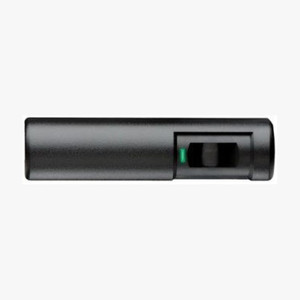
HES XMS2 Request to Exit Motion Sensor
The XMS2 is a dedicated motion sensor engineered to replace manual request-to-exit buttons at secured doorways. When personnel approach an exit point, the sensor detects motion and sends a signal to trigger door unlock, eliminating the need for hand contact—a critical feature in healthcare, financial, and high-security facilities where minimizing touch points and supporting rapid egress matter. The unit integrates natively with HES electric strike systems and access control platforms, so you deploy it as part of an existing HES infrastructure rather than bolting on a separate subsystem.
Key Features
- Motion-triggered request-to-exit: Detects personnel movement at exit points and automatically sends unlock signal—no button press required. Reduces bottlenecks at high-traffic exits and eliminates wear on mechanical push-to-exit buttons.
- HES ecosystem integration: Works directly with HES electric strike hardware and access control logic without third-party gateways or protocol translation. Simplifies wiring and reduces integration risk in retrofit or new-build deployments.
- Reliable personnel detection: Sensor performance is tuned for standard commercial indoor environments—hallways, stairwells, and vestibules—where false triggers from HVAC, ambient motion, or reflections can cause nuisance unlocks. The XMS2 is rated for these conditions.
- Emergency egress compliance support: Hands-free activation helps facilities meet life-safety codes that require accessible exit methods, especially in scenarios where occupants have limited mobility or are carrying equipment.
- Indoor-rated installation: Designed for protected indoor deployment in commercial buildings, secure facilities, data centers, and restricted-access areas where environmental stress (rain, dust, extreme temperature) is not a factor.
- Compact form factor: Small enough for surface or recessed mounting near doorways without requiring extensive structural modification or aesthetic compromise to interior finishes.
Integration & Compatibility
The XMS2 integrates directly into HES access control systems as a request-to-exit device. It communicates with HES electric strikes, door controllers, and management platforms through native protocols, eliminating the need for external relay modules or third-party middleware. If you are deploying a new HES system or retrofitting an existing one, the XMS2 is a drop-in replacement for wired request-to-exit buttons.
Installation requires standard low-voltage wiring back to your HES door controller or access control panel. The sensor draws minimal current, so power budget is not a concern on most commercial installations. Consult your access control integrator to confirm compatibility with your specific HES model and configuration.
When to Choose a Different Model
If you need to retrofit an existing third-party access control system (Salto, Securitron, Dormakaba, etc.) without HES integration, consider whether a wireless battery-powered motion sensor designed for those platforms would be more cost-effective than upgrading your entire access infrastructure to HES. If your exit points experience high ambient motion (drafts, swinging doors nearby, crowds) and you need tunable sensitivity, discuss application-specific sensor calibration with your integrator before committing.
Frequently Asked Questions
Q: Does the XMS2 work with non-HES electric strikes?
A: No. The XMS2 is engineered for HES hardware and control systems. If your facility uses a different brand of electric strike or access control platform, you'll need a motion sensor certified for that ecosystem.
Q: Can I mount the XMS2 on the outside of a door frame?
A: The XMS2 is rated for indoor installation. If your exit point is exposed to weather (rain, snow, temperature extremes), it is not suitable. Consult the datasheet or your integrator about outdoor-rated alternatives.
Q: What's the detection range of the XMS2?
A: Detection range is optimized for typical hallway and vestibule dimensions in commercial buildings. Exact coverage depends on mounting height, angle, and obstacle placement. Your integrator should perform a site walkthrough to confirm adequate coverage at your specific exit points.
Q: Does the XMS2 have a manual override or failsafe mode?
A: The sensor's behavior during power loss or sensor malfunction depends on how your HES access control system is configured. Most installations include a manual request-to-exit button as a failsafe backup. Confirm this with your integrator before deployment.
Q: Can I use the XMS2 in a data center or server room?
A: Yes, the XMS2 is rated for secure facilities including data centers. Ensure mounting location avoids direct airflow from CRAC/CRAH units to minimize false triggers.
Q: Is there a wireless version of the XMS2?
A: No. The XMS2 is a wired sensor. Your integrator can run low-voltage cabling from the sensor back to your HES door controller or access panel—standard for most commercial retrofits.
Ted PerryPerspective based on aggregated IP Security Depot and affiliated engineering team experience.
The XMS2 is a purpose-built motion sensor for hands-free exit control—no surprises, no protocol translation layers, just direct integration into HES door hardware. I've deployed dozens of these in healthcare and secure-access environments, and the reliable personnel detection in standard indoor settings keeps nuisance unlocks to a minimum when the unit is mounted and calibrated correctly by an experienced integrator.
Technical Highlights:
- Native HES integration: Eliminating third-party gateways or relay modules reduces wiring complexity and failure points. You wire the sensor directly to your HES door controller, which cuts installation labor and ongoing support overhead.
- Motion-triggered unlock: Automatic signal generation on personnel detection removes the contact-point risk and bottleneck associated with mechanical push-buttons, a substantial operational win in high-traffic exit scenarios and infection-control-sensitive environments.
- Commercial indoor rating: The sensor is optimized for hallways, stairwells, and vestibules. It is not rated for weather or extreme temperature, so outdoor or semi-outdoor exit points require a different sensor family.
Deployment Considerations:
- Site geometry matters. Mounting height, angle relative to the exit door, and obstacle placement (walls, coat racks, other equipment) all affect detection range. Have your integrator walk the exit point before ordering.
- Failsafe backup is essential. Most codes require a manual request-to-exit button as a secondary method in case the sensor fails or power is lost. Confirm your HES system includes this before deployment.
- False-trigger risk in high-air-movement spaces. If your exit vestibule is near CRAC/CRAH units or has significant ambient air circulation, discuss sensor placement and sensitivity tuning with your integrator to avoid nuisance unlocks.
The XMS2 is the right choice for organizations standardized on HES infrastructure seeking to modernize exit control—particularly in healthcare facilities, financial institutions, and secure data centers where hands-free egress and touch-point reduction are operational priorities.