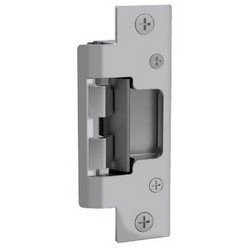
HES EH-40 Concealed Electric Hinge 6W
Overview
The HES EH-40 is a concealed electric hinge designed to integrate power delivery directly into the hinge body, eliminating the need for external wiring conduits on door frames. This approach solves a real problem in commercial access control: maintaining clean architectural aesthetics while delivering reliable power to electromagnetic locks and related access hardware. Rather than running visible power cables down the door frame or jamb, the EH-40 channels power through the hinge itself, keeping the door hardware clean and secure-looking. The 6W nominal capacity supports standard electromagnetic locks in single-door applications, making it suitable for offices, educational facilities, and secure entry points where design standards or security requirements prohibit exposed wiring infrastructure.
Key Features
- Concealed power delivery: Integrates power routing within the hinge body itself—no external conduits or surface-mounted power blocks on the door frame. This approach is particularly valuable in high-visibility or customer-facing areas where conventional access control wiring would compromise the visual or security appearance of the entrance.
- 6W nominal power capacity: Sufficient for standard electromagnetic locks, solenoid-operated devices, and low-power access control hardware in typical single-door installations. Verify your lock's power draw against this rating before deployment.
- Dual voltage support (24VDC or 12VDC): The EH-40 accepts both 24VDC and 12VDC configurations, allowing integration into existing facility power supplies without requiring separate voltage regulators or converters. This flexibility reduces installation complexity when retrofitting into mixed-voltage environments.
- AC/DC operating input: Accepts both AC and DC input power, converting internally to the DC output required by access control devices. This simplifies power sourcing—you can feed it from standard commercial AC supply or dedicated 24VDC/12VDC access control power supplies.
- Seamless access control integration: Works within standard access control ecosystems without proprietary software or controllers. The hinge acts as a power conduit; your existing lock release logic, badge readers, and control panels operate unchanged.
- Indoor commercial and institutional rated construction: Engineered for standard office, educational, and institutional environments. Not rated for outdoor, corrosive, or high-humidity deployments—if you need outdoor or wet-location performance, step up to stainless or hardened variants from the broader HES lineup.
Integration and Deployment Context
The EH-40 mounts as a standard concealed hinge on the door itself. Power connects to the hinge via a DC input connector (typically hardwired or screw-terminal), and the hinge routes power through its structure to the lock or solenoid mounted on the door edge or frame. This eliminates the need to drill separate power pathways through the door or run external power harnesses alongside the door swing. Typical installations pair the EH-40 with a 24VDC or 12VDC access control power supply, a lock release solenoid, and a badge reader or keypad on the frame. The hinge itself remains invisible once the door is mounted, with only the electrical connections visible during installation. Configure your access control panel to trigger the lock release via standard relay outputs—the EH-40 hinge does not require special programming or integration logic.
When to Choose a Different Model
If your application requires outdoor, wet-location, or high-corrosive-environment performance, the EH-40's indoor rating won't suffice—consult the broader HES product family for stainless steel or hardened variants. If you need more than 6W of power capacity (for example, heavy-duty electromagnetic locks or multiple solenoids on a single door), stepping up to a higher-wattage concealed hinge option may be necessary. Similarly, if your architecture allows visible power conduits or if you're installing in a retrofit situation where power routing is already exposed, a conventional external power block may be simpler and less costly than a concealed hinge retrofit.
Frequently Asked Questions
Q: Can the EH-40 power both a lock and an exit device on the same door?
A: The 6W capacity limits simultaneous power draw. If your lock solenoid draws 4W and your exit device draws 3W, you'll exceed the rating. Verify the combined power demand of all connected devices before proceeding. Some installations use separate power supplies for lock and exit device to avoid this constraint.
Q: Is the EH-40 reversible (suitable for both left-hand and right-hand doors)?
A: Yes, concealed hinges are typically reversible. Confirm with the manufacturer or installation documentation that the specific unit you receive supports bidirectional mounting.
Q: What voltage should I specify—24VDC or 12VDC?
A: 24VDC is the industry standard for access control and delivers more robust performance across longer cable runs. Choose 24VDC unless your existing facility infrastructure is exclusively 12VDC or your lock explicitly requires 12V operation.
Q: Will the EH-40 work with my existing access control panel and badge reader?
A: Yes, as long as your control panel has a relay output rated for the lock's voltage and current draw, and your power supply can deliver the 6W needed. The hinge itself is a passive power conduit—it doesn't require special protocol or driver support.
Q: How do I route power to the hinge during installation?
A: Power typically connects via a hardwired or screw-terminal connector on the hinge body. Consult the installation guide for the exact connector type and pin-out. Run power through the hinge during frame assembly, before the door is hung.
Q: What happens if I exceed the 6W power rating?
A: Overloading will cause the internal wiring or terminals to overheat, risking thermal shutdown or damage to the hinge and connected devices. Verify all connected device power draws sum to 6W or less before deployment.
Ted PerryPerspective based on aggregated IP Security Depot and affiliated engineering team experience.
The EH-40 solves a specific integration problem: delivering power to access control hardware without compromising door aesthetics or creating a security vulnerability through exposed wiring. In my experience, facility managers and architects often reject conventional surface-mounted power blocks on door frames because they look ungainly and can hide security gaps. The concealed hinge approach keeps everything clean and inside the door structure itself. The 6W specification is the critical guardrail here—it's adequate for standard solenoid locks and low-draw access devices, but it's not a buffer. You need to know your lock's current draw in amperes and multiply by voltage to confirm you're within spec.
Technical Highlights:
- 6W nominal power capacity: Sufficient for standard electromagnetic locks pulling 250–300 mA at 24VDC. At 12VDC, that's 500 mA. Double-check your solenoid's rated current before you commit to the EH-40—exceeding it by even 1–2W will cause the hinge to thermal-limit or fail.
- Dual voltage (24VDC/12VDC) with AC/DC input flexibility: This flexibility means you can source power from either a dedicated 24VDC access control supply or retrofit into a mixed-voltage facility without a separate buck converter. Real time-saver in renovation work.
- Concealed routing eliminates external conduit: The hinge itself becomes the power bus. You avoid drilling power pathways through the door, which saves installation labor and eliminates the aesthetic and security compromises of exposed cable runs.
Deployment Considerations:
- Power must be wired during frame assembly, before the door is hung. If you mess up the connection or need to troubleshoot after installation, you're pulling the door off its hinges. Plan your electrical runs and test voltage at the connector before final door mounting.
- The 6W limit is real and non-negotiable. If your lock and exit device combined draw more than 6W, the EH-40 is not the right hinge. You'll need either a higher-capacity concealed hinge, separate power supplies for different devices, or a conventional external power block.
- Indoor commercial rating only—no wet-location or outdoor use. If your door is exposed to weather, direct moisture, or corrosive environments, you need a stainless or hardened variant.
Position the EH-40 in office buildings, educational facilities, and institutional clean-entrance scenarios where power-discrete aesthetics matter and your lock load is light to moderate. It's not a universal retrofit—it's a purpose-built hinge for facilities that specifically reject visible power infrastructure and can stay within the 6W envelope.