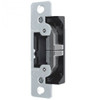
HES 7401-130 Fail-Secure Electric Strike
The HES 7401-130 is a fail-secure electric strike engineered for integration into access control systems where controlled locking enforcement is non-negotiable. Unlike fail-safe strikes (which release when power is lost), the 7401-130 holds the latch in a locked state when de-energized—a critical distinction in high-security environments where an unexpected power loss cannot compromise entry control. This model replaces the traditional strike plate on a standard door frame, allowing the access control system to electronically release the latch on authorized credential presentation while maintaining physical security when the system is offline or an access request is denied.
Key Features
- Fail-secure locking design: Latch remains locked when power is absent—no bypass risk during power loss or system failure. This matters in controlled-access zones (server rooms, secure corridors, administrative areas) where you cannot tolerate an unlocked door if infrastructure fails.
- Standard door frame integration: Mounts in place of a conventional strike plate, eliminating the need for custom frame modifications or specialized hardware. Reduces installation labor and retrofit cost compared to panic hardware conversions.
- Compatible with conventional electrified locks: Works with industry-standard access control readers, controllers, and electromagnetic or solenoid-based locking devices already deployed in commercial facilities. No proprietary ecosystem lock-in.
- Indoor-rated construction: Designed for climate-controlled commercial and institutional environments—offices, government buildings, healthcare facilities, secure corridors. Not rated for outdoor weather exposure or high-moisture areas; do not deploy in wet locations without additional housing.
- Professional-grade reliability: Heavy-duty construction intended for continuous duty cycles in busy entrances and controlled-access points. Handles repeated unlock-lock cycles without mechanical degradation.
- Direct access control system integration: Wires directly to existing access control panels or readers without intermediate hardware. Simplifies commissioning in new installations and retrofits where access infrastructure is already in place.
Integration & Compatibility
The 7401-130 integrates into any access control system capable of controlling an electromagnetic strike or solenoid lock. It does not require specialized controllers or proprietary software—standard access control platforms (Honeywell, Salto, HID, Genetec, and equivalent enterprise systems) support strike control natively via relay outputs or dedicated lock control circuits. The unit operates on standard low-voltage control signals (typically 12VDC or 24VDC) supplied by the access control panel. Wire the strike to the lock control output; verify polarity and voltage compliance with your access control documentation before energizing. In retrofit scenarios, confirm that your existing access control panel has available lock control capacity—a busy multi-door installation may require expansion modules if the panel is at output limit.
Indoor deployment is mandatory. The 7401-130 is not sealed against rain, dust, or temperature extremes. Avoid installation in loading docks, covered outdoor areas, or uncontrolled-temperature facilities. For exterior entrances or weather-exposed locations, specify a housing or vestibule rated for the environmental conditions, or evaluate an outdoor-rated strike alternative from the access control hardware category.
When to Choose a Different Model
If your application requires fail-safe operation (latch releases when power fails—common in emergency egress scenarios), the 7401-130 is the wrong choice; consult your access control integrator for fail-safe alternatives. If you need outdoor environmental ratings (IP67, NEMA 4X stainless steel construction), or if you require wireless credential integration without hardwired control circuits, explore other strike families in the electric strikes catalog that offer those capabilities. For high-security applications involving biometric readers, encrypted credential transmission, or audit-trail requirements beyond basic lock state logging, coordinate strike selection with your overall access control and identity management strategy—the strike itself is a mechanical component, and its security posture depends on the control system upstream.
Frequently Asked Questions
Q: Is the HES 7401-130 fail-safe or fail-secure?
A: The 7401-130 is fail-secure—it locks when power is removed or lost. This design prioritizes access denial over emergency egress. Verify this matches your security and life-safety requirements before purchase. Consult your access control integrator and local fire code for any special egress considerations.
Q: Can I use the 7401-130 on an exterior door?
A: No. The 7401-130 is rated for indoor, climate-controlled environments only. It is not sealed against rain or extreme temperature. For exterior installations, you will need a weatherproof strike rated for outdoor exposure (IP67 or equivalent).
Q: What voltage does the 7401-130 require?
A: The unit operates on standard low-voltage control signals (12VDC or 24VDC) supplied by the access control panel's lock control output. Verify your panel's available voltage and amperage before installation; consult the access control system documentation or contact the panel manufacturer.
Q: Does the 7401-130 work with my existing access control system?
A: Yes, provided your access control panel has a lock control output (relay or dedicated circuit) that can energize an electromagnetic or solenoid-based strike. Standard platforms (Honeywell, HID, Salto, Genetec) support strike control. If you are uncertain, contact your integrator or access control vendor to confirm compatibility before ordering.
Q: What is the expected lifespan or warranty period?
A: Consult the product datasheet or contact the manufacturer for warranty details and expected service life under normal duty cycles.
Q: Can I retrofit the 7401-130 into an existing door frame without modifications?
A: In most cases, yes—the strike mounts where a standard strike plate would sit. However, verify that your door frame strike hole is sized for the 7401-130 (standard dimensions apply, but some custom or older frames may differ). Have your installer measure the frame opening before ordering to avoid fit issues.
Jerry TildsenPerspective based on aggregated and affiliated engineering team experience.
The HES 7401-130 is a straightforward fail-secure strike—no bells, no firmware, no remote cloud connectivity. That simplicity is both its strength and its constraint. In a typical enterprise deployment, you're relying on the access control panel upstream to handle the logic; the strike itself is purely mechanical, wired directly to a lock control relay. This means the 7401-130 is only as secure as your access control infrastructure and only as available as your building power and backup power architecture. If that foundation is solid, the strike will do its job reliably for years.
Technical Highlights:
- Fail-secure-only design: Unlike fail-safe strikes that unlock on power loss, the 7401-130 holds the latch locked when de-energized. Deploy this only in access-denial-priority scenarios (secure corridors, server rooms, administrative areas). Never use fail-secure on emergency egress paths without explicit approval from your fire code authority and life-safety consultant.
- Standard strike plate footprint: The unit replaces a conventional strike plate mounting, eliminating frame modifications. This matters for retrofit budgets—you avoid custom carpentry and frame reinforcement if your existing door hardware is modern enough to accept a standard strike cavity.
- Low-voltage control: Operates on typical 12VDC or 24VDC supplied by the access control panel. Verify your panel's lock control output has sufficient amperage headroom (typically 2–5 amps per strike); a multi-door installation will quickly exceed small panel budgets if you don't add an expansion module.
Deployment Considerations:
- Indoor-only environment: The 7401-130 has no environmental rating for outdoor, wet, or temperature-extreme locations. Do not attempt to deploy this in a covered loading dock, vestibule, or uncontrolled storage area without enclosure protection. If you're retrofitting a facility with mixed indoor-outdoor access points, source the correct strike variants for each zone—don't force one model across different conditions.
- Power and backup strategy critical: A fail-secure strike in a power-loss scenario will keep doors locked. If your facility experiences brownouts or extended outages, ensure your access control panel and strike power supply are on UPS or generator—otherwise, occupants may be locked in or locked out depending on the outage duration and your fail-safe routing logic. Coordinate with your facilities team on backup power architecture before commissioning.
- Credential control upstream: The strike itself does no authentication. All access decisions happen at the reader and controller. If your reader is wireless, ensure encrypted credential transmission and secure pairing to prevent credential replay or spoofing attacks. The 7401-130 will unlock on command regardless of the legitimacy of the upstream credential decision.
The 7401-130 is a good fit for corporate office entrances, government secure areas, and healthcare administrative zones where fail-secure operation is mandated, power infrastructure is robust, and access control is centralized on a reliable enterprise platform. It is not appropriate for emergency egress paths, outdoor deployments, or standalone applications where wireless or battery-powered actuation is expected.