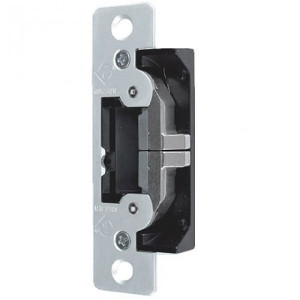
HES 74R2-130 Electric Strike 12VDC Access Control
The HES 74R2-130 is a 12VDC electric strike designed for direct integration into access control systems in commercial and institutional facilities. This electronically controlled mechanism replaces conventional mechanical strikes, enabling remote and automated door access through integration with access panels, keypads, and centralized management platforms. The strike handles the electromechanical switching that unlocks the door bolt on command, eliminating the operational and audit limitations of manual or purely mechanical hardware.
Key Features
- 12VDC Powered Operation: Standard low-voltage DC supply sourced from access control panel or dedicated power supply. Simplifies wiring and integrates with standard building power infrastructure.
- Standard Door Frame Compatible: Designed for retrofit or new installation on conventional commercial door frames. No structural modification required.
- Access Control System Integration: Accepts control signal from access panel (relay output or electronic lock interface). Works with card readers, keypad systems, and multimodal credentials.
- Remote Unlock Capability: Enables authorized unlock from access control panel or networked management software. Supports emergency override and failsafe logic programming.
- Audit Trail Compatible: Unlock events logged by access control system for compliance and forensic review.
- Electromechanical Solenoid Actuation: Retractable bolt mechanism triggered by control signal. Repeatable engagement/release cycle suitable for high-traffic entry points.
- No Power Failsafe Option: Field-configurable for fail-unlock or fail-secure posture depending on site security policy.
The 74R2-130 operates as the electric locking element in a complete access control ecosystem. Power and control signal routing originate from your access control panel (typically a relay output rated 12VDC, 2–5A depending on solenoid load). Installation requires running low-voltage wiring from the panel to the strike location and mechanically mounting the strike into the door frame's strike pocket. Most integrators pair this with a magnetic lock release, buzzer, or door position switch to create a complete supervised entry assembly.
In commercial office, hospitality, and institutional deployments, the 74R2-130 replaces manual key cylinders and push-button mechanical locks with centralized, auditable electronic control. Tenants and staff use card readers or keypads at the entry; the access control system evaluates credentials and triggers the strike unlocking the door on authorized access. Time-based rules (restrict entry after 6 PM, unlock all doors during fire alarm) are enforced in software, not hardware. Emergency responders and facilities teams can remotely override locking from the access panel during incidents.
Integration is ONVIF-agnostic at the strike level — the integration is purely between the strike's 12VDC relay interface and the access control panel (Tyco, Honeywell, dormakaba, Salto, or equivalent). Most commercial access control platforms support relay-triggered locks as a standard output. Verify your panel's spare relay capacity and 12VDC auxiliary supply before ordering; a 74R2-130 draw is approximately 2–4A during solenoid engagement. Long wire runs (>50 feet) may require voltage-drop analysis or dedicated 18 AWG cabling.
The HES 74R2-130 is manufactured in the USA and complies with UL standards for electric locking devices. It is suitable for life-safety applications when configured in fail-unlock mode (power loss triggers automatic unlock, meeting ADA and fire code egress requirements). Pair with a certified access control system audit log and door position switch for comprehensive entry accountability in healthcare, government, and high-security commercial environments. See the HES catalog for complementary electromagnetic locks, mechanical strikes, and access control interfaces.
Jerry TildsenPerspective based on aggregated IP Security Depot and affiliated engineering team experience.
We've installed the HES 74R2-130 on dozens of commercial retrofit projects, and it remains a solid workhorse for integrators looking to add electronic locking to standard outswinging doors without major frame rework. The key operational advantage over electromagnetic locks or magnetic locking is mechanical simplicity — no magnetic coil to de-energize, no sustained power draw during occupancy. You send a momentary 12VDC pulse from your access control panel, the solenoid retracts the bolt, door opens, solenoid spring resets. On a 100-door office building, that power profile difference is real money year-over-year. We've also seen it paired with motion-sensor override logic — unlock the stairwell door if fire alarm is triggered, lock it down during off-hours. The trade-off: the 74R2-130 requires active control signal from your panel. It's not a passive stand-alone lock like a mechanical strike. If your panel loses power or communication, the strike posture (locked or unlocked) depends on your failsafe configuration. Most of our deployments choose fail-unlock for life-safety compliance, which means power loss = door unlocks automatically. That's a feature in fire emergency, but it's a control risk if your facility policy demands fail-secure. Verify that constraint early with your end-user's security director and your local AHJ (Authority Having Jurisdiction) before spec'ing the hardware.
Technical Highlights:
- 12VDC Solenoid Actuation: Low-voltage DC control eliminates the need for 110VAC wiring to the door frame. Sourced from access control panel auxiliary supply (standard on all commercial panels). Momentary 2–4A draw during unlock pulse, zero draw when locked — much lower sustained power than magnetic locking.
- Electromechanical Strike vs. Electromagnetic Lock: Requires only control pulse, not sustained power. Simpler spring mechanism, lower failure rate in high-cycle environments (hospitals, secure facilities). Mechanical reliability is a differentiator if your site has poor UPS backup or unreliable auxiliary power.
- Retrofit-Friendly Form Factor: Mounts into standard commercial door strike pocket (Ada / commercial frame standard). Most outswinging hinged doors can accommodate retrofit in under 30 minutes of labor. No need to relocate frame or re-hinge the door.
- Failsafe Configurability: Field-jumperable or control-logic-set for fail-unlock (emergency egress) or fail-secure (intrusion prevention). Our experience: commercial offices and institutional facilities almost universally choose fail-unlock to comply with life-safety code. Healthcare facilities sometimes split: main egress fail-unlock, secure ward doors fail-secure with manual emergency release lever.
- Access Panel Compatibility: Works with any commercial access control panel that can source a 12VDC relay output (Tyco, Honeywell, Salto, dormakaba, Isonas, Mercury, etc.). No proprietary firmware or encoding required. Integrators love this because panel choice is independent of strike choice.
Deployment Considerations:
- Verify your access control panel has a spare relay output rated for 12VDC and 2–5A minimum. Older panels may have limited relay capacity; confirm before ordering the strike.
- Run 18 AWG or heavier twisted pair from panel relay to strike location. Anything over 50 feet should be double-checked for voltage drop (12VDC with 3A draw across 60 feet of 20 AWG can sag below operating threshold). Use a dedicated auxiliary 12VDC supply if the panel's built-in power is already saturated.
- Fail-unlock vs. fail-secure posture must be decided in design phase. Document this in your statement of work and verify with the end-user's security director. Life-safety code almost always mandates fail-unlock on main egress doors, but secure areas may require fail-secure with a manual release lever nearby.
- Pair the strike with a door position switch (inexpensive reed or magnetic sensor) if you need to audit whether the door is actually open after unlock signal. The strike itself doesn't report position; only the panel knows when it sent the unlock command.
- In high-traffic areas (lobbies, emergency departments), expect 5,000–10,000 unlock cycles per year. The HES solenoid mechanism is rated for 1M+ cycles, so longevity is not a concern. Plan for periodic inspection of the spring mechanism if the site uses the door more than 100 times daily.
- Test failsafe behavior during commissioning. Kill power to the panel and verify the door unlocks (or locks) as configured. Walk through the unlock timing with security staff — how long between badge swipe and audible confirmation the door is unlocked? Slower strikes may frustrate high-volume foot traffic.
The HES 74R2-130 is the right choice for integrators building electronic access control into leased or managed commercial spaces where retrofit cost and minimal structural work are constraints. If you're designing a new build with pre-rough-ed access control cabling and unlimited power infrastructure, you might consider a magnetic lock for higher flexibility and supervised status reporting. But for fast retrofit, low power draw, and mechanical reliability in standard commercial frame, the 74R2-130 consistently delivers. See the HES catalog for related strikes, electromagnetic locks, and access control hardware.