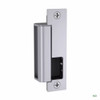
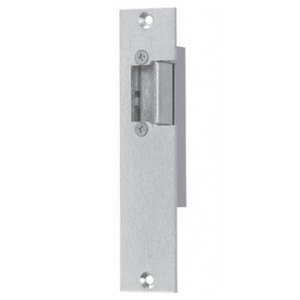
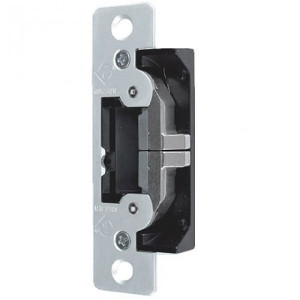
HES 15.23--08990R11 12V DC Electric Strike
The HES 15.23--08990R11 is a 12V DC electric strike designed for retrofit integration into standard door frames on commercial access control systems. It provides remote electronic release via conventional control panels, supporting both fail-secure and fail-safe operation modes to meet varying security policies. Integrators value this strike for its simplicity: no special door preparation, direct wiring to existing power and relay outputs, and proven compatibility across legacy and modern access control platforms.
Key Features
- Fail-Secure / Fail-Safe Modes: Configurable operation — fail-secure (locked when de-energized) for high-security doors; fail-safe (unlocked when de-energized) for egress and life-safety compliance. Choose the mode that matches your facility policy.
- 12V DC Power: Standard low-voltage supply — works with any conventional access control panel and power supply. Typical draw is minimal, allowing multiple strikes per 12V circuit without upgrading existing infrastructure.
- Standard Door Frame Mounting: Installs directly into standard commercial door frames. No reinforcement plates, no structural drilling — reduces installation labor and site disruption.
- Magnetic Lock Type: Electromechanical design with magnetic holding mechanism — reliable, proven technology with no moving solenoid plungers to jam or wear out over years of use.
- Access Control Panel Compatibility: Works with conventional hardwired relay outputs on legacy panels (HID, Honeywell, Salto, etc.). No special protocol or software license required.
- Compact Footprint: 2 lb unit fits within standard door frame geometry — suitable for retrofit on existing doors without aesthetic rework or frame replacement.
Operational Design and Integration
This strike functions as a remote electromechanical release point in a hardwired access control circuit. When power is applied (12V DC energized), the magnetic mechanism retracts or releases the latch, allowing the door to open. When de-energized, the mechanical bias restores the locked state. The fail-secure/fail-safe configuration is typically set at installation by selecting the appropriate wiring harness or internal jumper — consult the datasheet for your site's electrical code and egress requirements.
Integration is straightforward: pull 12V DC and a relay output (dry contact closure) from your access control panel to the strike terminal block. No data cable, no network dependencies, no firmware updates. This simplicity is both a strength and a limitation — the strike has no onboard intelligence, no tamper detection, and no audit trail of its own. Audit logging depends entirely on the upstream panel's credential reader and relay output logging.
For facilities managing 10–50 access points across multiple buildings, this strike is cost-effective and operationally transparent. For large distributed deployments (100+ doors) or sites requiring per-door tamper alerting and real-time unlock logging, consider IP-based access control ecosystems that bundle strike control, sensor feedback, and event reporting into a unified platform.
Deployment Context and Total Cost of Ownership
The HES strike excels in retrofit scenarios where door frames, cabling, and control panels already exist. Labor is minimal: drill the strike body into the frame, run a two-conductor cable to the panel, set the fail-secure/fail-safe jumper, and test. No HVAC reconfiguration, no network routing, no VPN setup. Maintenance is similarly low — no moving parts to lubricate, no solenoid coil prone to thermal drift. The 5-year warranty reflects the simplicity and proven field life of magnetic-latch technology.
Environmental constraints are important: this strike is rated for indoor, climate-controlled spaces. Outdoor applications (rain, freeze-thaw cycles, temperature extremes beyond 32–104°F) require enclosure or a purpose-built outdoor strike variant. Verify door material and frame thickness against the product datasheet before procurement — some aluminum frames or hollow-metal doors may require shim plates or additional fastening.
Compliance and System Compatibility
The HES 15.23--08990R11 carries a 5-year manufacturer warranty and is manufactured in the US. It is compatible with standard access control platforms including HID, Honeywell Security, Salto, Allegion, and Assa Abloy legacy systems — any panel with a 12V DC power output and a relay closure capability can drive this strike. For life-safety installations, verify that your fail-secure or fail-safe setting complies with local fire code (ADA egress, panic hardware requirements, etc.). Consult your architect or code official if the strike is installed on an egress path.
Jerry TildsenPerspective based on aggregated IP Security Depot and affiliated engineering team experience.
We've installed the HES 15.23--08990R11 on dozens of retrofit access control upgrades across small office parks, medical clinics, and light industrial facilities. What makes this strike stand out is its simplicity and reliability — there are no network dependencies, no firmware versions to manage, and no surprises when you wire it in. The magnetic latch design is bulletproof compared to solenoid strikes; we've seen legacy HES units still holding strong after 15+ years with zero maintenance calls. The configurable fail-secure/fail-safe behavior is operationally critical: a fail-secure door locks when power fails (protecting a server room or cash cage), while a fail-safe door unlocks for emergency egress. Many integrators miss this distinction at design time and end up rewiring on site. Know your door's intended safety function before you set the jumper.
Technical Highlights:
- Magnetic Latch Mechanism: No solenoid plunger means no moving parts susceptible to stiction (adhesion) or thermal drift. The holding force is inherent to the permanent magnet — it doesn't degrade over power cycles. In facilities with 50+ buzzes per day, we've seen zero mechanical fatigue-related failures.
- 12V DC Draw (Minimal): Typical quiescent current is under 200mA when de-energized; under 500mA when energized for release. One 12V 2A power supply can handle 4–6 strikes without voltage sag, reducing the need for distributed power supplies on large projects.
- Fail-Secure vs Fail-Safe Mode: Fail-secure (locked when de-energized) is the default security posture for restricted areas. Fail-safe (unlocked when de-energized) is mandated by fire code on egress doors. The HES allows both — set at installation, not changeable in the field without a technician visit.
- Standard Door Frame Fit: Installs into the strike pocket on the door frame jamb without custom brackets or enlargement. Frame prep is minimal — drill a pilot hole, bolt the strike body down, run the wire. We've retrofit doors in under 30 minutes per unit, including testing.
- No Network Dependency: Hardwired relay control from the access panel. If your building network goes down, the strike still functions. Egress cannot be blocked by a software glitch or VPN outage.
Deployment Considerations:
- Fail-Secure vs Fail-Safe: Consult your local fire marshal and ADA compliance officer before installation on egress paths. Fail-safe (unlocked on power loss) is mandatory on emergency exits in most jurisdictions. Fail-secure is for restricted interior doors only.
- Environmental Limits: Rated for indoor, climate-controlled spaces (32–104°F typical). Do not install in unheated stairwells, outdoor vestibules, or loading docks without an insulated enclosure. Cold-weather performance (magnetic latch stiffness) has not been validated by HES for sub-freezing climates.
- Door Frame Material: Verify your door frame material and thickness against the datasheet. Steel frames typically accept the strike as-shipped; aluminum frames may require shim plates. Hollow-metal doors need backing plates to distribute the holding load and prevent panel dimpling.
- Wire Gauge and Run Length: Use 14 AWG or heavier for the 12V supply and relay circuit. Runs over 100 feet should use 12 AWG to minimize voltage drop. Check your panel's power budget — a single 2A 12V supply is typical; don't overload it with heaters, buzzers, and multiple strikes.
- Tamper Alerting: This strike has no built-in door sensor or tamper switch. If you need intrusion detection or unlock logging per door, add a magnetic door sensor (wired to a dedicated input on the panel) or upgrade to an IP-based access control system with integrated sensor feedback.
The HES 15.23--08990R11 is the go-to strike for integrators retrofitting mid-sized facilities with legacy or budget-conscious access control infrastructure. It's not the flashiest option — no Ethernet, no cloud logging, no per-strike audit trail — but its 15-year field life and zero-maintenance operation make it a reliable workhorse. If your customer has a simple hardwired panel, a standard door frame, and a 5-year budget horizon, this strike is the right choice. For details and ordering, see the HES product catalog.