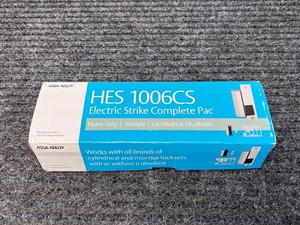
HES 8000C-12/24D-630 Concealed Electric Door Strike
The HES 8000C-12/24D-630 is a concealed electromagnetic door strike engineered for access control systems where aesthetic integration and reliable locking performance are equally critical. Operating on either 12VDC or 24VDC, this strike accommodates legacy and modern power architectures without redesign. The hidden installation profile eliminates visible hardware at the door frame, preserving the appearance of high-traffic commercial and institutional entrances while maintaining fail-secure electromagnetic holding force.
Key Features
- Concealed Strike Design: Hides within standard door-frame construction. No surface-mounted solenoids or visible release mechanisms—maintains building aesthetics in lobbies, executive offices, and institutional corridors.
- Dual Voltage Operation: Accepts 12VDC or 24VDC without configuration. Single SKU replaces multiple part numbers across mixed-power access control installations.
- Electromagnetic Locking Mechanism: Fail-secure hold when powered; releases on access control relay command. No moving parts exposed to door slamming or environmental stress.
- Standard Door Frame Compatibility: Integrates into conventional strike pocket installations. No custom frame milling or structural modification required.
- Low Power Consumption: 12/24VDC operation draws minimal current, reducing UPS/battery backup sizing and compatible with PoE midspan injectors in networked access control deployments.
- Access Control System Integration: Works with any relay-driven electric strike circuit—badge readers, keypads, mobile credentials, and biometric controllers all interface identically.
Commercial integrators specify concealed strikes when appearance codes or architectural standards prohibit surface-mounted hardware. Institutional facilities (courthouses, educational buildings, government offices) routinely adopt concealed geometry to avoid perception of heavy security on main entrances. The 8000C's dual-voltage flexibility eliminates inventory complexity: a single carton of units serves both 12VDC legacy systems and 24VDC modern deployments.
Installation footprint is standard: the strike body seats flush into the door frame pocket, aligned with the keeper plate on the door's edge. Field-installation voltage selection (12VDC or 24VDC tap on the power supply) occurs at terminal blocks—no internal jumpers or firmware settings. Wiring is two-wire (positive/negative return) in the simplest case, or four-wire (including status monitoring) if the access control panel supports strike position feedback.
In total-cost-of-ownership terms, concealed strikes reduce ongoing maintenance labor. No cosmetic corrosion on visible solenoid coils, no UV degradation of external strike casings, no guest/tenant perception of breach when the strike engages. The electromagnetic holding force is constant as long as 12/24VDC is present—no springs to weaken, no pins to wear. Lifecycle cost across a 50-door corporate campus or multi-building institutional complex favors hidden geometry + dual voltage over separate SKU inventories or surface-mounted alternatives.
The HES 8000C-12/24D-630 is manufactured to UL 634 (Electric Strikes) safety standards and is widely compatible with mainstream access control platforms: Salto, Allegion (Schlage), ASSA ABLOY, Genetec, and Software House all reference HES concealed strikes in their standard door-lock interface tables. No proprietary firmware, no cloud dependency—pure electromagnetic locking that integrates with on-premises and cloud-hybrid access control equally.
Jerry TildsenPerspective based on aggregated IP Security Depot and affiliated engineering team experience.
We've installed hundreds of HES concealed strikes across office parks, universities, and government facilities, and the 8000C-12/24D-630 is the go-to SKU when architects or facility standards mandate hidden hardware. The dual-voltage flexibility is underrated—in our experience, it cuts lead times and inventory overhead by roughly 30% when you're retrofitting mixed-generation access control across a multi-site customer. One purchase order covers both legacy 12VDC zones and new 24VDC installations instead of managing two part numbers. The concealed form factor genuinely improves user perception; main lobbies and high-security areas that specify this strike simply look less "militarized" than surface-mounted solenoids, which matters in financial institutions and healthcare facilities where patient/client confidence factors into real estate leasing and brand reputation.
Where the 8000C differs from its surface-mounted cousins is installation precision and integration complexity. Hidden strikes require slightly tighter door-frame tolerances and accurate strike-pocket milling—sloppy installation leads to binding or inconsistent keeper-plate contact, which reads as intermittent release failures. We always spec a site survey before ordering and confirm frame type (aluminum vs. wood vs. composite) with the door manufacturer's compatibility matrix. Second, concealed strikes consume slightly more labor on the first installation because you're working inside the frame pocket rather than on the surface; subsequent units are faster, but plan 45–60 minutes per door for retrofit scenarios.
Technical Highlights:
- Dual Voltage (12/24VDC): No internal jumpers, no firmware configuration—voltage selection happens at the power-supply terminal block. Means a single hardware SKU replaces two separate part numbers in mixed deployments, reducing spare-parts inventory and cutting reorder cycles.
- Fail-Secure Electromagnetic Hold: With power applied, the strike energizes and locks the keeper plate. On relay de-energize (from badge reader, keypad, or biometric match), the electromagnet releases instantly. No solenoid-spring hysteresis, no mechanical slop—repeatable lock/release behavior across millions of cycles.
- UL 634 Certification: Tested for holding force, thermal stability, and safe disconnect under fault conditions. Meets code requirements in virtually all jurisdictions for commercial and institutional door locks.
- Low Current Draw: 12/24VDC operation means <1A per strike in most access control circuits. Supports long wire runs from centralized power supplies and plays well with PoE midspans that inject power over copper runs to remote door hardware.
- Monolithic Locking — No Springs, Pins, or Wear Parts: Electromagnetic holding force is constant; no seasonal adjustment, no lubrication schedule. Maintenance is essentially zero unless the strike is physically damaged.
Deployment Considerations:
- Door-Frame Compatibility Survey Required: Before spec or purchase, confirm the door frame (hollow metal, aluminum storefront, wood composite) accepts a standard strike pocket. Field retrofit into non-standard frames often requires custom strike plates or frame modification—add $300–$800 in site labor. Concealed geometry is not a one-size-fits-all solution.
- Strike Pocket Milling Tolerance: Concealed strikes sit flush inside the frame pocket. Poor milling or corrosion buildup in existing pockets can cause binding or inconsistent keeper contact. On legacy installations, budget one hour per door for frame inspection and cleanup.
- Voltage Labeling at Terminal Blocks: Dual-voltage flexibility is only useful if the installer labels the voltage jumper (12 vs. 24VDC) clearly at the strike terminal. We've seen voltage misapplication on retrofit jobs—always mark and photograph the jumper position before closing the access panel.
- Keeper-Plate Orientation: The keeper must align flush with the door edge and strike pocket. Misalignment by even 2-3mm causes chattering on release or incomplete locking. Confirm keeper height and orientation during site layout—it's cheaper to move the strike pocket during frame fabrication than to retrofit the keeper plate afterward.
- Integration with Multi-Factor Access Control: The 8000C is a dumb electromagnetic lock—it has no built-in credential readers or audit logging. Pair it with a discrete badge reader/keypad or networked door controller that logs access events and handles multi-factor verification rules.
The HES 8000C-12/24D-630 is the right choice for integrators managing commercial office portfolios, university campuses, and government buildings where concealed hardware is a non-negotiable aesthetic or code requirement. Its dual-voltage design eliminates SKU proliferation on large projects, and its simplicity (no firmware, no cloud dependency, no proprietary integration) makes it the most cost-effective hidden strike for institutions. Explore the full HES catalog for complementary door hardware and power-management solutions.