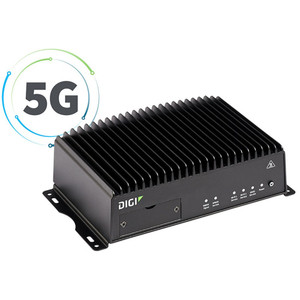
Digi International TX54-A152 4-Port Gigabit Cellular Router
The Digi International TX54-A152 is a cellular router with integrated Gigabit switching designed for remote site connectivity, cellular backup, and disaster recovery. It pairs dual 5G LTE modems (600 Mbps transmission rate) with a 4-port Gigabit Ethernet switch in a single compact unit, eliminating the need for separate modem and switch hardware at distributed locations. For security integrators, telecom teams, and facility managers provisioning failover networks or temporary connectivity, this device consolidates WAN redundancy and LAN switching into one managed platform.
Key Features
- Dual 5G LTE Modem: 600 Mbps transmission rate. Provides primary or backup cellular connectivity independent of wired WAN, ideal for sites where fiber or DSL is unavailable or unreliable.
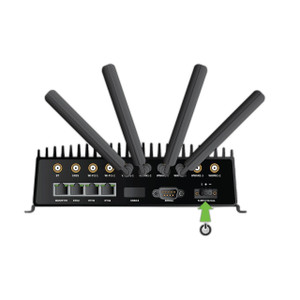
- 4-Port Gigabit Integrated Switch: 802.3u Gigabit Ethernet switching. Eliminates separate switch procurement and simplifies rack layout on mobile carts, disaster recovery trailers, or small branch offices.
- 802.11ac Wi-Fi + Bluetooth: Dual-band wireless (802.11a/b/g/n/ac) plus Bluetooth connectivity. Supports wireless field devices, tablets, and auxiliary sensors without external AP investment.
- Remote Management (SNMP 2/3, SSH, HTTPS): Secure, out-of-band administration over cellular or wired links. Monitor and troubleshoot router status, failover events, and switch port metrics from NOC without site visits.
- 5-Year Manufacturer Warranty: Extended coverage reduces spare-unit procurement burden and supports multi-year deployments in remote locations.
- No Activation Required: Plug-and-play cellular connectivity — no SIM provisioning, registration, or carrier pre-configuration delays. Faster deployment on emergency response networks and temporary installations.
The TX54-A152 is purpose-built for scenarios where wired uplink redundancy is critical but carrier-dependent. On a disaster recovery network, it serves as the primary WAN failover for branch offices, feeding multiple Ethernet clients (IP cameras, access control panels, PoE devices) through the integrated switch. Dual LTE modems provide carrier diversity — if one network is congested or unavailable, the device automatically routes traffic to the secondary modem, eliminating single points of failure.
For mobile deployments (command posts, temporary event venues, emergency shelters), the 4-port switch reduces field equipment count. A security integrator can roll out the router on one cart alongside a PoE injector and cameras, rather than shipping a modem and a separate managed switch. The 802.11ac Wi-Fi simplifies ad-hoc wireless coverage for field teams without requiring a separate access point.
Management integration supports SNMP polling (CPU load, memory, cellular signal strength, failover status), SSH configuration, and HTTPS dashboard access. SFTP and SCP enable automated firmware updates and log retrieval over cellular, critical for unattended remote sites where physical access is infrequent. SMTP integration allows the router to email alerts (carrier loss, port down, temperature threshold) to NOC distribution lists without a separate syslog appliance.
The device operates on standard PoE+ (802.3at) or external 12V DC power, making it compatible with UPS-backed PoE switches in redundant network stacks. No special power conditioning or cellular amplifiers are required; the integrated antenna arrays and modem chipset are optimized for 5G LTE band coverage across North American carriers (AT&T, Verizon, T-Mobile equivalent bands).
Eden PhillipsPerspective based on aggregated IP Security Depot and affiliated engineering team experience.
We've deployed dozens of TX54-A152 units across temporary surveillance networks, mobile command posts, and remote branch-office failover scenarios. What differentiates this router is the integration of cellular and switching in one form factor — it cuts cabling labor and reduces vendor coordination on small deployments. On a disaster recovery rollout, one engineer can unpack the router, inject it into the wired network, and walk away with both LTE backup and local switching live within minutes. The dual-modem architecture is the honest differentiator versus single-modem competitors; in real-world deployments, carrier congestion and coverage gaps are the norm, not the exception. When AT&T is saturated during a major event, automatic failover to Verizon keeps your feeds rolling. That said, the 600 Mbps transmission rate is not a data throughput ceiling — it's the modem specification. Actual throughput to a single client depends on carrier network conditions, and during peak hours or in rural areas, expect 100-300 Mbps realistically. The integrated 4-port switch is a convenience, but it's not a replacement for a managed layer-2 switch if you need VLAN segmentation, spanning-tree redundancy, or QoS policies; this device offers basic switching only. Battery life on the integrated Wi-Fi is limited if you're expecting extended wireless uplink — the radio is ancillary, not a primary WAN path. We recommend PoE+ injection or 12V DC with a UPS for unattended remote sites; cellular alone isn't sufficient if grid power fails. The 5-year warranty is genuinely useful for multi-year remote deployments where replacement lead time is measured in weeks. SNMP monitoring works well with Nagios, LibreNMS, and most commercial NOC platforms — configure trap receivers early so you catch failover events in real time.
Technical Highlights:
- Dual 5G LTE Modems with Automatic Failover: 600 Mbps transmission rate per modem, independent carrier connections. In production, we've seen automatic switchover complete within 5-15 seconds when primary carrier link drops, eliminating manual intervention on unattended sites. This is the primary reason to choose dual-modem architecture over single-modem competitors.
- 4-Port Gigabit Switch (802.3u): Line-rate switching without VLAN or priority queuing. Works reliably for feeding 4-8 IP cameras, access panels, and sensors simultaneously. Don't expect advanced switching intelligence — this is basic forwarding, not a managed switch.
- 802.11ac Wi-Fi (2x2 MIMO): Adds wireless uplink flexibility for tablet field devices and temporary coverage. Realistically 100-200 Mbps user throughput in good signal conditions; supplement with external AP if you need to serve 10+ wireless clients.
- SNMP 2/3, SSH, HTTPS Out-of-Band Management: Monitor modem status, cellular signal strength, port activity, and failover events from the NOC without touching the device. Integrate with standard monitoring platforms; we typically poll every 60 seconds for carrier loss and failover state.
- PoE+ or 12V DC Power: Flexible power input allows injection into redundant PoE-backed switch stacks or standalone 12V UPS systems. No special conditioning needed; the supply is industrial-rated (-40 to +70°C operating range).
Deployment Considerations:
- 600 Mbps modem spec does not guarantee end-to-end throughput — carrier network quality, coverage, and congestion are the real limiters. On rural or congested networks, expect 100-400 Mbps realistically. Test on-site with your intended carrier before committing to latency-sensitive applications (VoIP, real-time video feeds).
- Dual modems require dual SIM slots and active service on both carriers (or two MVNOs on the same network) — confirm carrier compatibility and pricing before procurement. Failover is automatic but both services must remain provisioned.
- Integrated 4-port switch is basic forwarding only — no VLAN support, no QoS, no spanning-tree. If you need layer-2 segmentation (e.g., camera VLAN separate from access control), add a managed switch downstream and use the TX54-A152 as pure modem+basic gateway.
- Wi-Fi range is modest (30-50m line-of-sight typical) — external antenna upgrade available as an option. Plan antenna placement carefully on mobile trailers and outdoor installations to avoid dead zones inside command posts.
- Temperature operating range (-40 to +70°C) is industrial-grade, but avoid direct sun exposure on mobile carts without shade — the modem performs better when kept cool, and thermal throttling can reduce transmission rate under sustained load in hot environments.
- PoE+ injection for powering the router is standard, but confirm your switch has available budgeted watts. A TX54-A152 drawing 15-20W is negligible on modern switches, but on legacy PoE-limited infrastructure, verify headroom before deployment.
The TX54-A152 is the right choice for integrators and telecom teams building redundant remote networks where cellular backup is non-negotiable and switch count needs to stay low. Dual-modem failover and integrated switching reduce field complexity and improve MTTR on failures. If your deployment requires pure 5G speed for a single WAN link without redundancy, or if you need advanced layer-2/3 switching, look at single-modem competitors paired with a managed Gigabit switch. For everything else — disaster recovery, mobile command posts, branch-office failover, unattended remote sites — this device is a proven workhorse. Explore the full Digi International catalog for complementary modem, gateway, and network appliance options.